Anand Mahindra Praises Sikkim's Clean Culture on X

Synopsis
Mahindra Group chairman Anand Mahindra on 24 May 2026 praised Sikkim on X, saying the state's civic mindset — built on decades of anti-littering norms, a 1998 polythene ban, and India's first fully organic status — makes it a model destination for responsible travellers.
Key Takeaways
Mahindra Group chairman Anand Mahindra posted on 24 May 2026 calling Sikkim a destination defined by its people's civic mindset, not just its landscape.
Sikkim banned polythene bags in 1998 , one of India's earliest such prohibitions.
The state was declared India's first fully organic state in 2016 under the Sikkim Organic Mission .
Sikkim has consistently ranked among top performers in the Swachh Survekshan cleanliness survey since 2016 .
Mahindra's post implicitly challenges the widespread habit of littering from vehicles, framing Sikkim as a destination that self-selects environmentally conscious visitors.
The post feeds into ongoing national conversations around Swachh Bharat Abhiyan and sustainable tourism in fragile Himalayan ecosystems.
Mahindra Group chairman Anand Mahindra on Sunday, 24 May 2026, used his widely-followed X account to champion Sikkim as a travel destination, arguing that the Himalayan state's appeal lies not merely in its scenery but in the civic consciousness of its residents. The post, tagged #SundayWanderer, carried a pointed warning: those who casually litter from moving vehicles should 'not even think of visiting Sikkim.'
Context
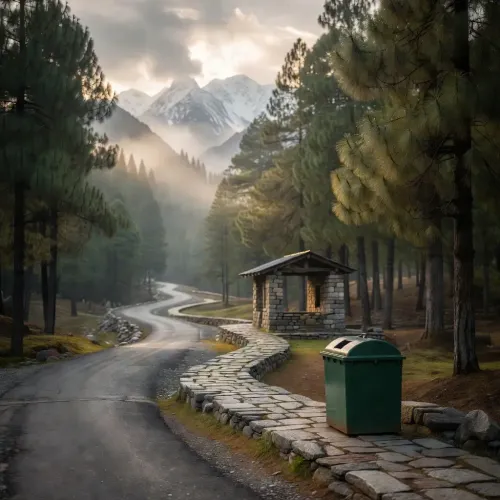
Mahindra's post shared a video clip depicting what he described as the 'mindset' of Sikkim's people — implying a culture of cleanliness and environmental respect that distinguishes the state from many other Indian tourist destinations. 'What makes Sikkim a truly beautiful destination isn't just the landscape. It's the mindset of its people,' he wrote, calling a trip there 'one of the best travel decisions you'll ever make' for those who appreciate that ethos.
The post drew a sharp line between two kinds of travellers: those who treat public spaces carelessly and those who value environmental stewardship. Coming from one of India's most prominent industrialists with millions of followers, the endorsement carries significant weight in shaping domestic travel sentiment.
Policy Backdrop
Sikkim has long been at the forefront of India's environmental governance. The state imposed one of the country's earliest bans on polythene bags in 1998, well before national-level plastic restrictions came into force. In 2016, it became India's first fully organic state under the Sikkim Organic Mission, eliminating synthetic pesticides and fertilisers across its agricultural sector.
The state has consistently ranked among top performers in Swachh Survekshan, the Centre's annual urban cleanliness survey, since 2016. These achievements reflect a combination of regulatory enforcement and deeply embedded community norms — a model that national policymakers have cited in discussions on sustainable tourism and plastic reduction.
The broader national context is India's Swachh Bharat Abhiyan, which has pushed waste management onto the policy agenda since 2014. Himalayan states including Sikkim have added urgency to these efforts by emphasising the fragility of mountain ecosystems, where unmanaged tourism waste can cause lasting ecological damage.
Stakeholders and Impact
Domestic tourists represent the most direct audience for Mahindra's message. India's outbound travel to the Northeast has grown steadily, and a high-profile endorsement from a business leader of his stature can meaningfully influence travel decisions among urban, middle-class Indians who follow him online.
For Sikkim's residents, the post affirms a civic identity they have cultivated over decades. Local tourism operators and state government officials have consistently argued that responsible tourism — not mass, unregulated footfall — is the only viable model for a small Himalayan state with a population of roughly 6.5 lakh.
The post also implicitly challenges a broader behavioural norm: casual littering from vehicles remains widespread across India despite legal prohibitions. By framing Sikkim as a destination that self-selects its visitors on the basis of values, Mahindra's message doubles as a nudge toward civic responsibility nationwide.
What's Next
The next round of Swachh Survekshan rankings will test whether Sikkim retains its position among India's cleanest states as tourist volumes rise. Policymakers in the Northeast are also expected to revisit tourism guidelines on waste management, and Mahindra's post may add momentum to calls for stricter enforcement of anti-littering rules at popular hill destinations across the country.
Point of View
Framing civic behaviour as a prerequisite for tourism rather than an afterthought. By explicitly excluding litterbugs, he inverts the usual logic of destination marketing, which prioritises reach over selectivity. This aligns with a growing policy current in India's Himalayan states: that sustainable tourism requires cultural gatekeeping, not just regulatory enforcement. The post also arrives as the Centre prepares the next Swachh Survekshan cycle, lending informal but influential momentum to cleanliness as a marker of state-level governance quality.
NationPress
10 Oct 2026
Frequently Asked Questions
Why is Sikkim considered one of India's cleanest states?
Sikkim has enforced strict anti-littering norms for decades, banned polythene bags as early as 1998, and was declared India's first fully organic state in 2016, earning it consistently high rankings in the Swachh Survekshan cleanliness survey.
What did Anand Mahindra say about Sikkim?
Mahindra Group chairman Anand Mahindra said on X that Sikkim's true beauty lies in the mindset of its people, not just its landscape, and warned that anyone who casually litters from their car should not visit the state.
When did Sikkim become India's first organic state?
Sikkim was officially declared India's first fully organic state in 2016 under the Sikkim Organic Mission, which eliminated synthetic pesticides and fertilisers from the state's agriculture.
What is the Swachh Survekshan and how does Sikkim perform?
Swachh Survekshan is the Central Government's annual urban cleanliness ranking under the Swachh Bharat Abhiyan. Sikkim has ranked among India's top performers in the survey consistently since 2016.
Is littering from a vehicle illegal in India?
Yes, littering from vehicles is prohibited under municipal and environmental laws in most Indian states, though enforcement varies widely. States like Sikkim are known for stricter community-level compliance compared to much of the country.