Anand Mahindra: Cost edge pulls global supply chains to India
Synopsis
Mahindra Group chairman Anand Mahindra argued on 18 June 2026 that when a country achieves unmatchable costs on commodity products — including shipping — global supply-chain networks seek it out naturally, spotlighting India's ongoing push to lower logistics costs and attract export-oriented manufacturing.
Key Takeaways
Mahindra Group chairman Anand Mahindra posted on 18 June 2026 that 'unmatchable cost' on commodity products, including shipping, causes global networks to seek out a producer country.
India's logistics costs have historically been around 13-14 per cent of GDP , well above the 8-9 per cent benchmark of advanced economies.
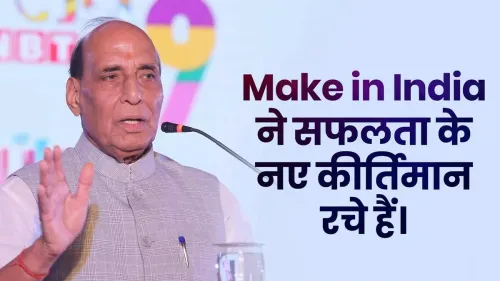
The Make in India programme, launched in September 2014 , targets exactly this cost gap through investment incentives and infrastructure development.
Frameworks such as PM Gati Shakti and the National Logistics Policy aim to integrate road, rail, port, and air freight to reduce landed costs for exporters.
The next Union Budget is being watched for further production-linked incentives and logistics subsidies to sharpen India's commodity-export competitiveness.
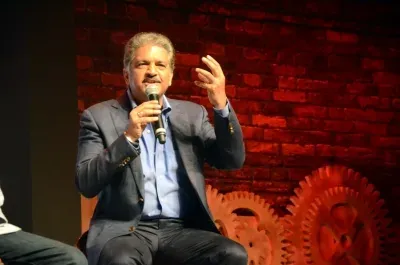
Mahindra Group chairman Anand Mahindra weighed in on global supply-chain economics on Thursday, 18 June 2026, arguing that unbeatable cost competitiveness — including shipping costs — is what ultimately draws international trade networks to a country, not the other way around.
Context
Mahindra's post — 'True. But when you have unmatchable cost for such commodity products, including shipping costs, the network looks for you…' — was a reply in an ongoing conversation about how global supply chains select manufacturing hubs. The remark distils a long-debated principle in trade economics: that price advantage in commodity goods is a gravitational force, compelling buyers and logistics networks to seek out the low-cost producer rather than waiting for the producer to integrate itself into existing networks.
For India, the observation carries particular resonance. Indian manufacturers in sectors ranging from textiles and chemicals to auto components have historically competed on labour cost, but freight and logistics expenses have repeatedly eroded that edge when benchmarked against rivals such as Vietnam, Bangladesh, and China.
Policy Backdrop
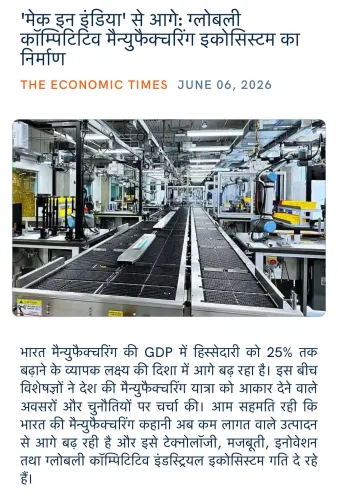
The Make in India programme, launched in September 2014, was designed precisely to address this gap — attracting investment, raising manufacturing's share of GDP, and integrating Indian firms into global supply chains. Successive governments have paired the promotional campaign with production-linked incentive schemes and logistics infrastructure projects aimed at reducing the cost of moving goods to port.
Logistics costs in India have historically run at roughly 13-14 per cent of GDP, compared with 8-9 per cent in advanced economies — a differential that policymakers have identified as a structural drag on export competitiveness. The PM Gati Shakti national master plan and the National Logistics Policy are among the frameworks designed to close this gap by integrating road, rail, port, and air freight infrastructure.
Stakeholders and Impact
Indian exporters of commodity products — including steel, chemicals, generic pharmaceuticals, and agricultural goods — stand most directly in the frame of Mahindra's observation. For these sectors, marginal cost differences determine whether a global buyer routes an order through Mumbai, Chennai, or a rival port in Southeast Asia.
The comment also speaks to the calculus of multinational firms scouting for China-plus-one manufacturing destinations. Where India can demonstrate an 'unmatchable' landed cost — factory price plus freight — the supply-chain network reconfigures itself organically, reducing the dependence on government-to-government deal-making or diplomatic incentives alone.
Mahindra Group itself, with its significant automotive and farm-equipment export operations, has direct experience of this dynamic. The group's push into global markets has made it a first-hand observer of how shipping-cost volatility and port efficiency shape buyer decisions.
What's Next
Analysts and industry bodies will be watching the next Union Budget for further refinements to production-linked incentive schemes and targeted logistics subsidies that could sharpen India's cost advantage in commodity manufacturing. If freight and last-mile logistics costs can be brought closer to global benchmarks, Mahindra's thesis — that the network eventually comes to the low-cost producer — could be tested at scale across several export-oriented sectors.
Point of View
Though brief, cuts to the heart of India's manufacturing-diplomacy debate: state promotion and bilateral agreements matter less than structural cost advantage in commodity sectors. His framing implicitly critiques over-reliance on policy optics over operational fundamentals — a pointed message at a moment when India is competing hard for China-plus-one supply-chain mandates. The observation aligns with a broader policy arc in which the government has shifted from pure branding exercises toward hard infrastructure investment under PM Gati Shakti. Whether India can translate that infrastructure push into the 'unmatchable' landed cost Mahindra describes will be the defining test of the next phase of its export strategy.
NationPress
19 Sept 2026
Frequently Asked Questions
What did Anand Mahindra say about supply chains and cost competitiveness?
Anand Mahindra posted on 18 June 2026 that when a country offers unmatchable costs on commodity products — including shipping costs — global supply-chain networks seek it out rather than the country having to chase them.
Why are shipping costs important for India's manufacturing ambitions?
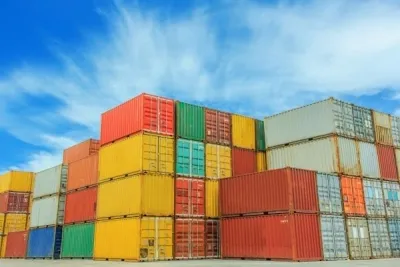
Shipping and logistics costs directly affect the landed price of Indian goods in export markets. India's logistics costs have historically been around 13-14 per cent of GDP, higher than global benchmarks, which erodes the price advantage Indian manufacturers gain from lower labour costs.
What is the Make in India programme and how does it relate to supply-chain costs?
Make in India was launched in September 2014 to attract investment and raise manufacturing's share of GDP. A core goal is integrating Indian firms into global supply chains by reducing costs, including through logistics infrastructure upgrades under PM Gati Shakti and the National Logistics Policy.
What is the China-plus-one strategy and does it benefit India?
The China-plus-one strategy refers to multinational companies diversifying manufacturing away from China to reduce risk. India is a leading candidate, but analysts say it can fully capitalise only if its total landed cost — factory price plus freight — is competitive with rivals like Vietnam and Bangladesh.
What policy changes could improve India's logistics costs?
Analysts are watching the next Union Budget for further refinements to production-linked incentive schemes and targeted logistics subsidies, as well as continued investment in the PM Gati Shakti multimodal infrastructure framework.