Anand Mahindra Flags Drought Risk, Urges Water Conservation
Synopsis
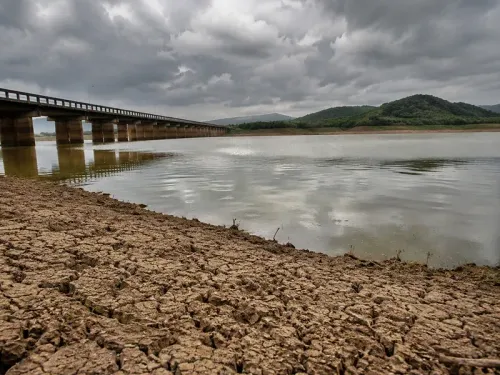
Mahindra Group chairman Anand Mahindra on 30 May 2026 flagged IMD's elevated drought forecast and called water conservation an urgent national priority, citing a Northeast India village where all 292 homes have rainwater harvesting — and warning that El Nino-driven reversals can no longer be dismissed as one-off events.
Key Takeaways
IMD's latest forecast has raised the probability of a poor monsoon to drought-level concern, according to Anand Mahindra's post dated 30 May 2026 .
Mahindra warned India is 'no longer in a comfortable zone of tolerance' and that climate change makes recurring poor monsoons a real possibility.
A village in Northeast India where all 292 homes have installed rainwater harvesting mechanisms was cited as a model for community-led resilience.
El Niño — Pacific Ocean warming that historically weakens the Indian monsoon — was identified as the underlying climate driver of current drought risk.
Mahindra called for action at every level: individual households, communities and government, rather than relying solely on central policy programmes.
Existing frameworks including the Jal Shakti Abhiyan (2019) and the National Water Policy (2012) provide a policy foundation, but community-scale implementation remains the key gap.
Mahindra Group chairman Anand Mahindra on Saturday, 30 May 2026, called for water conservation to be treated as an 'urgent national priority,' citing the India Meteorological Department's latest forecast raising the probability of a poor monsoon to drought-level concern. Mahindra warned that India is 'no longer in a comfortable zone of tolerance' and pointed to community-led rainwater harvesting in Northeast India as a model for bottom-up resilience.
Context
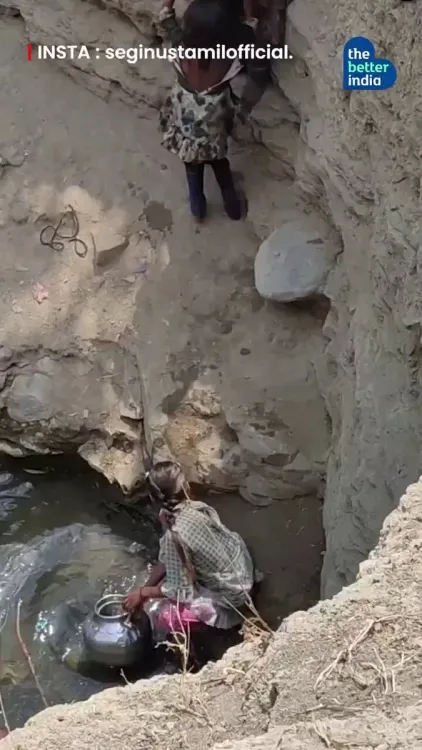
In his post, Mahindra noted that the IMD's forecast has elevated drought risk to a point where complacency is no longer an option. He cautioned that with climate change, 'we can no longer assume this will be just one aberrant year,' observing that an unusual run of strong monsoons in succession makes a reversal equally plausible. The post was accompanied by a video showing a village in Northeast India where each of its 292 homes has installed its own rainwater harvesting mechanism.
Mahindra closed with a pointed reference to the climate phenomenon driving the risk: 'El Niño' — Spanish for 'the child' — adding, 'Surely we should be able to welcome a child without fear.' The rhetorical flourish underscored the urgency he attached to the issue.
Policy Backdrop
India's vulnerability to monsoon variability is well-documented in national policy. The National Water Policy (2012) emphasised integrated water resources management and rainwater harvesting, while the Jal Shakti Abhiyan, launched in 2019, rolled out a nationwide campaign targeting water conservation and groundwater recharge in stressed districts. The National Action Plan on Climate Change (2008) had earlier identified water security and monsoon variability as core adaptation priorities.
El Niño events — driven by warming of Pacific Ocean surface waters — have historically correlated with weakened Indian monsoon rainfall and occur roughly every 3 to 7 years. Successive strong monsoons in the early 2020s have now given way to official warnings of possible reversal amid rising climate variability.
Stakeholders and Impact
Indian agriculture, which remains heavily monsoon-dependent, stands at the centre of drought risk. Farmers, rural communities and village panchayats are the most directly exposed stakeholders, with livelihoods tied to seasonal rainfall patterns. Mahindra explicitly argued that the solution must not rely solely on large central programmes, saying, 'The most enduring change always comes from the bottom up — from villages, towns and communities.'
The Northeast India example he cited — where community adoption of individual household rainwater harvesting has been near-universal — points to a model that policy planners and local governments could replicate at scale. Mahindra also called on 'individuals, families and neighbourhoods to conserve every drop of water possible,' framing resilience as a shared civic responsibility.
What's Next
Attention will now turn to IMD's subsequent monsoon updates through June and July 2026, which will determine whether drought contingency plans are activated at the state level. Any escalation in the forecast could prompt NITI Aayog or parliamentary committees to fast-track discussions on integrating community rainwater harvesting into national climate adaptation frameworks. Mahindra's intervention, given his public reach, is likely to amplify civic pressure on both government and the private sector to accelerate water-security investments ahead of the critical kharif sowing season.
Point of View
He implicitly nudges the policy conversation away from top-down irrigation mega-projects toward decentralised, low-cost solutions — a position that aligns with the direction NITI Aayog and the Jal Shakti ministry have been moving toward in recent years. His framing of El Nino as 'the child' that India should be able to 'welcome without fear' is a rhetorical device that personalises an abstract climate risk, likely designed to mobilise civic behaviour as much as policy attention. For the government, a high-profile industrialist amplifying drought risk publicly could accelerate the political timeline for activating contingency measures.
NationPress
13 Oct 2026
Frequently Asked Questions
What did Anand Mahindra say about the monsoon in 2026?
On 30 May 2026 , Anand Mahindra said the IMD's latest forecast raises the probability of a poor monsoon to drought-level concern and called water conservation an 'urgent national priority,' warning that climate change means India can no longer treat a bad monsoon as a one-off event.
What is El Nino and how does it affect India's monsoon?
El Niño is a climate phenomenon caused by warming of Pacific Ocean surface waters that historically correlates with weakened Indian monsoon rainfall, increasing the risk of drought. It occurs roughly every 3 to 7 years and can significantly reduce agricultural output across India.
What is the Northeast India rainwater harvesting example Mahindra mentioned?
Mahindra shared a video of a village in Northeast India where each of its 292 homes has installed its own rainwater harvesting mechanism, presenting it as a model of community-led water resilience that can be replicated elsewhere.
What government schemes exist for water conservation in India?
The Jal Shakti Abhiyan , launched in 2019 , is a nationwide campaign for water conservation and groundwater recharge in stressed districts. The National Water Policy (2012) also emphasises integrated water management and rainwater harvesting as national priorities.
What should Indians do to conserve water amid drought risk?
Anand Mahindra urged 'individuals, families and neighbourhoods' to make daily choices to conserve every drop of water, and pointed to household-level rainwater harvesting as one practical step, arguing that lasting resilience comes from the bottom up rather than from central government programmes alone.