Maruti Suzuki's Kharkhoda mega plant inaugurated by Modi, Japan PM; ₹35,000 crore investment
Synopsis
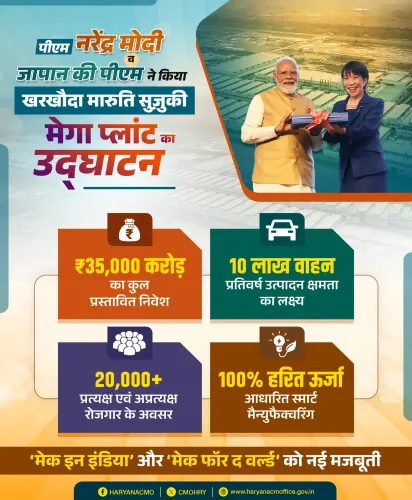
Two prime ministers, one mega plant: Modi and Japan's Takaichi jointly inaugurated Maruti Suzuki's ₹35,000 crore Kharkhoda facility on 2 July — an 800-acre 'Smart Factory' built on Industry 5.0 principles, starting at 5 lakh vehicles annually and scaling to 10 lakh. With 21,000 jobs on the line and the e VITARA already shipping to 100 countries from Gujarat, India is now the Suzuki Group's most consequential manufacturing base.
Key Takeaways
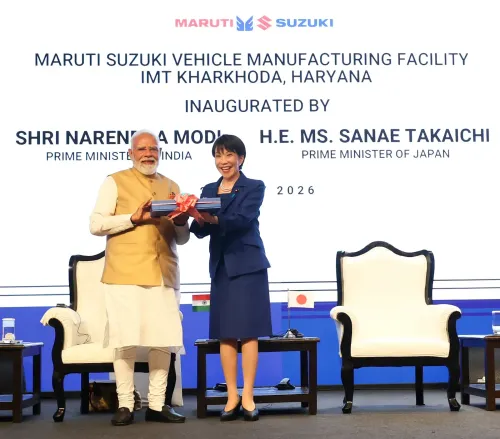
Maruti Suzuki India inaugurated its IMT Kharkhoda plant in Haryana on 2 July 2025 , jointly dedicated by PM Narendra Modi and Japanese PM Sanae Takaichi via video conferencing.
The facility spans 800 acres with an initial annual capacity of 5 lakh vehicles , to be scaled to 10 lakh units in the next phase.
Total planned investment stands at ₹35,000 crore , with more than 21,000 jobs expected upon full completion.
The plant is built on Suzuki's 'Smart Factory' concept using Industry 5.0 technologies and will run entirely on renewable energy .
At full capacity, Kharkhoda will support Maruti Suzuki's goal of producing 4 million vehicles annually across its India operations.
Suzuki's first BEV, the e VITARA , is being manufactured exclusively in Gujarat for export to 100 countries .
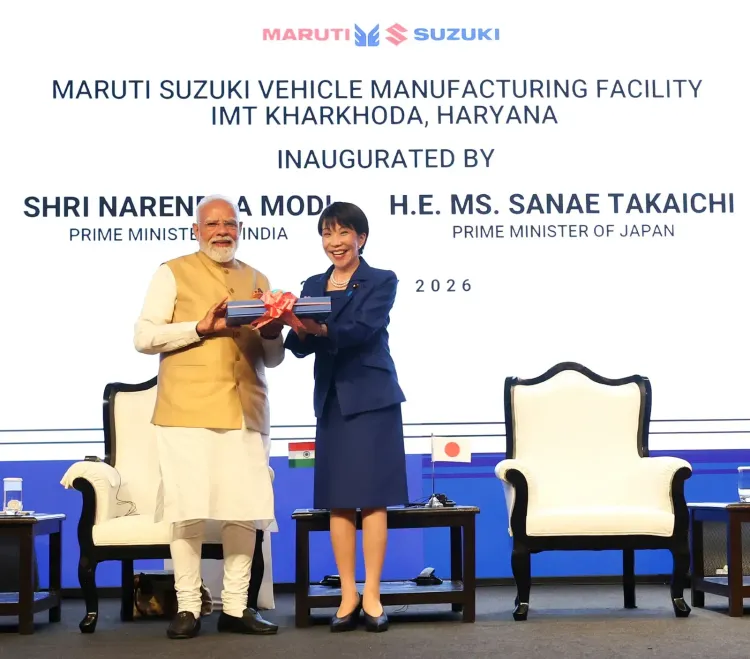
Maruti Suzuki India on Thursday, 2 July inaugurated its most advanced vehicle manufacturing facility at IMT Kharkhoda in Haryana, with Prime Minister Narendra Modi and Japanese Prime Minister Sanae Takaichi jointly dedicating the plant via video conferencing during the India-Japan Joint Economic Forum in New Delhi. The ₹35,000 crore facility is set to become one of the world's largest automobile manufacturing complexes when fully operational.
Scale and Capacity
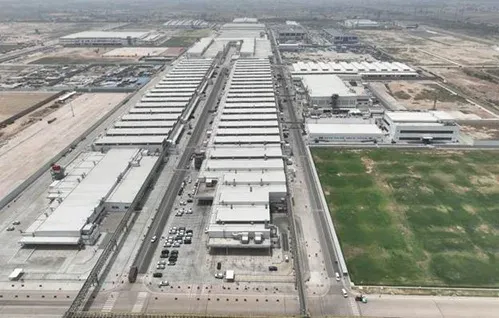
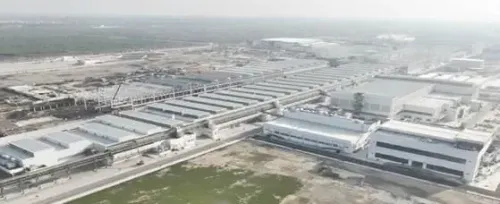
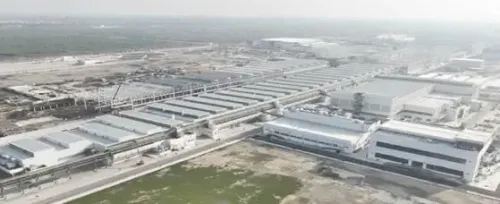
Spread across 800 acres, the integrated manufacturing complex has been developed alongside an adjoining supplier park. The plant has commenced operations with an annual production capacity of 5 lakh vehicles, which is slated to be doubled to 10 lakh units in its next phase. At full capacity, the Kharkhoda facility will be central to Maruti Suzuki's broader ambition of achieving an annual production target of 4 million vehicles.
Technology and Sustainability
The Kharkhoda plant has been constructed on Suzuki's 'Smart Factory' concept, incorporating Industry 5.0 technologies aimed at improving safety, quality, and productivity. On the sustainability front, the facility integrates solar power, biogas, battery energy storage systems, and green energy procurement — with its entire electricity requirement designed to be met through renewable energy sources.
Jobs and Economic Impact
The project is expected to generate more than 21,000 jobs upon completion, adding significant employment weight to Haryana's industrial corridor. The investment also underscores the deepening of the India-Japan strategic economic partnership, coming more than four decades after Maruti Suzuki first began operations in India.
What the Suzuki Group Said
Toshihiro Suzuki, calling the project a landmark for the Suzuki Group, said it was an honour that the company's most advanced manufacturing facility had been inaugurated by the two prime ministers. He described the initiative as a reflection of the success of the India-Japan partnership and the 'Make in India' programme, adding that Suzuki is accelerating investments, employment generation, exports, and technology development in India under the policy environment created by the Modi government. Notably, Suzuki's first battery electric vehicle, the e VITARA, is being manufactured exclusively at Maruti Suzuki's Gujarat plant for exports to 100 countries — signalling India's growing centrality within the global Suzuki supply chain.
What Comes Next
With the first phase now operational, Maruti Suzuki is expected to move swiftly toward the capacity expansion to 10 lakh units annually — a scale that would rank the Kharkhoda plant among the largest single automobile facilities in the world. Industry observers will watch whether the employment and export projections materialise on the timelines the company has outlined.
Point of View
000 is the stated figure, yet India's automotive history is littered with employment projections that were quietly revised downward once automation targets were met. The 'Smart Factory' and Industry 5.0 framing, while progressive, typically implies higher capital intensity and fewer direct jobs per unit of output — a tension the company has not yet addressed publicly. Whether Kharkhoda becomes a genuine employment anchor for Haryana or a showcase facility with a modest headcount will depend on how aggressively the supplier park is populated with labour-intensive tier-2 and tier-3 vendors.
NationPress
1 Oct 2026
Frequently Asked Questions
Where is the new Maruti Suzuki Kharkhoda plant located?
The plant is located at IMT Kharkhoda in Haryana, spread across 800 acres with an adjoining supplier park. It was inaugurated on 2 July 2025 by PM Narendra Modi and Japanese PM Sanae Takaichi via video conferencing.
How much is Maruti Suzuki investing in the Kharkhoda facility?
Maruti Suzuki plans to invest a total of ₹35,000 crore in the Kharkhoda facility. The plant is expected to generate more than 21,000 jobs upon full completion.
What is the production capacity of the Kharkhoda plant?
The plant has started operations with an annual capacity of 5 lakh vehicles. This is planned to be doubled to 10 lakh units in the next phase, which would make it one of the largest automobile manufacturing facilities in the world.
What technologies does the Kharkhoda Smart Factory use?
The facility is built on Suzuki's 'Smart Factory' concept incorporating Industry 5.0 technologies to enhance safety, quality, and productivity. It also integrates solar power, biogas, battery energy storage systems, and green energy procurement, with all electricity to be sourced from renewable energy.
What is the e VITARA and where is it made?
The e VITARA is Suzuki's first battery electric vehicle and is manufactured exclusively at Maruti Suzuki's Gujarat plant. It is exported to 100 countries, highlighting India's growing role as a global manufacturing hub for the Suzuki Group.