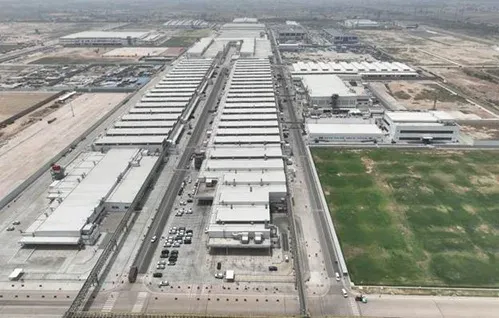
Maruti Suzuki's Kharkhoda Plant 2 begins production, total capacity hits 26.5L units
Synopsis
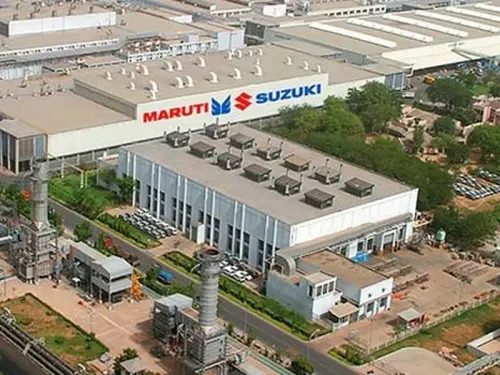
Maruti Suzuki has quietly crossed a major manufacturing threshold — its second Kharkhoda plant is now live, pushing total capacity to 26.5 lakh units. When fully built out, Kharkhoda alone will hit 10 lakh units a year, making it one of Suzuki's biggest four-wheeler hubs on the planet. The stock fell 2.8 per cent on the day, but the long game here is about India's largest carmaker cementing its lead before rivals can catch up.
Key Takeaways
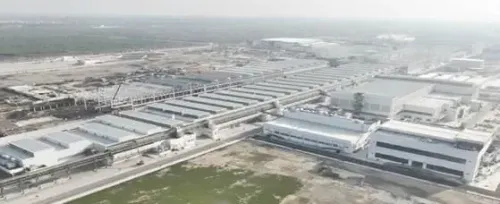
Maruti Suzuki commenced commercial production at the second plant of its Kharkhoda facility in Haryana on 18 May 2025 .
The second plant adds 2.5 lakh units of annual capacity, taking Kharkhoda's total to 5 lakh units per annum .
Maruti's combined capacity across Gurugram , Manesar , Kharkhoda , and Hansalpur now stands at 26.5 lakh units annually.
At full build-out, Kharkhoda is projected to produce 10 lakh vehicles per year , making it one of Suzuki's largest global four-wheeler hubs .
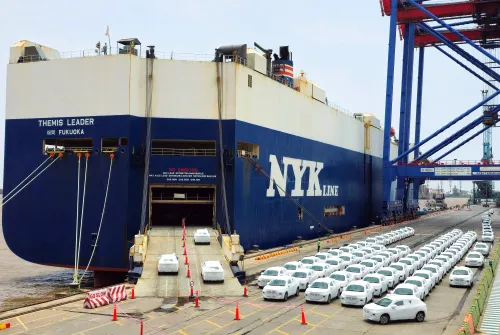
Rail-based vehicle dispatches rose from 5 per cent in FY2014-15 to 26.5 per cent in FY2025-26; cumulative rail dispatches crossed 30 lakh vehicles in May.
Maruti shares fell 2.8 per cent to an intraday low of ₹12,855 on the BSE on Monday.
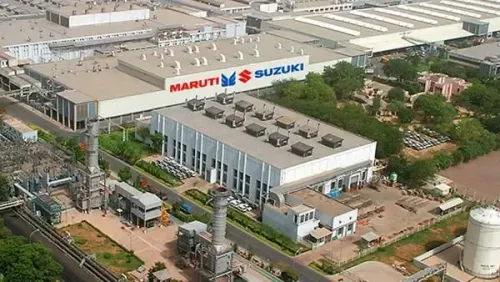
Maruti Suzuki India on Monday, 18 May commenced commercial production at the second plant of its Kharkhoda manufacturing facility in Haryana, adding 2.5 lakh units of annual capacity and lifting the company's total production footprint to 26.5 lakh units per year. The milestone keeps Maruti on track with its stated target of adding 5 lakh units of capacity during FY2026-27.
What the Second Plant Adds
The newly commissioned plant carries an annual production capacity of 2.5 lakh units, bringing the Kharkhoda facility's combined output to 5 lakh units per annum. Maruti's overall capacity now spans four locations — Gurugram, Manesar, and Kharkhoda in Haryana, and Hansalpur in Gujarat. The company currently manufactures the compact SUV Brezza and the mid-size SUV Fronx at the Kharkhoda facility.
Kharkhoda's Long-Term Scale
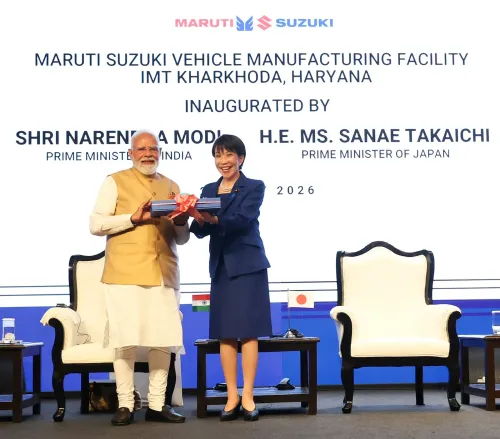
Once fully operational, the Kharkhoda facility is expected to reach a total production capacity of 10 lakh vehicles annually, which the company says would make it one of Suzuki's largest four-wheeler manufacturing hubs globally. The foundation stone for the facility was laid by Prime Minister Narendra Modi in August 2022, and the ramp-up since then reflects how quickly Maruti has moved to convert greenfield land into operating capacity.
Expansion Driven by Demand and Export Push
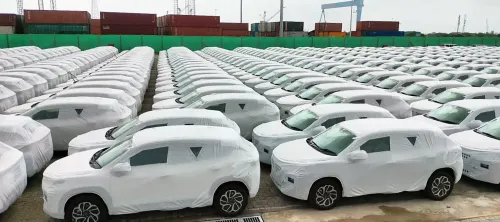
The acceleration in manufacturing capacity comes amid sustained domestic demand for SUVs and a sharpening focus on exports. Maruti has also been diversifying its logistics mix: rail-based vehicle dispatches, which accounted for just 5 per cent of total dispatches in FY2014-15, climbed to 26.5 per cent in FY2025-26. The company crossed a cumulative milestone of 30 lakh vehicles dispatched via the Indian Railways network earlier in May — a signal of both scale and supply-chain maturity.
Market Reaction
Despite the capacity announcement, shares of Maruti Suzuki India traded lower on Monday, falling as much as 2.8 per cent to an intraday low of ₹12,855 on the BSE. The stock has traded between a 52-week high of ₹17,371.60 and a 52-week low of ₹12,019.75, suggesting the broader market correction outweighed the positive operational news on the day.
What Comes Next
With the second Kharkhoda plant now live, attention will turn to how quickly Maruti can ramp utilisation toward full capacity. Analysts will watch whether rising SUV volumes and export orders can absorb the incremental output without putting pressure on pricing. The company's path to 10 lakh units at Kharkhoda alone will require further phased investment, and the pace of that rollout will be a key indicator of Maruti's confidence in medium-term demand.
Point of View
Maruti is betting heavily that India's SUV appetite and export volumes will keep pace. If domestic demand softens or the rupee complicates export economics, that capacity could become a liability. The rail logistics pivot — from 5 per cent to 26.5 per cent in a decade — is underreported and signals a supply-chain discipline that most competitors have not matched.
NationPress
25 Sept 2026
Frequently Asked Questions
What is the Maruti Suzuki Kharkhoda plant and why is it significant?
The Kharkhoda plant is Maruti Suzuki's greenfield manufacturing facility in Haryana, whose foundation stone was laid by Prime Minister Narendra Modi in August 2022. Once fully operational, it is projected to produce 10 lakh vehicles annually, making it one of Suzuki's largest four-wheeler manufacturing hubs in the world.
How much capacity does the second Kharkhoda plant add?
The second plant adds 2.5 lakh units of annual production capacity, taking the Kharkhoda facility's combined total to 5 lakh units per annum. Maruti's overall capacity across all four locations now stands at 26.5 lakh units per year.
Which vehicles does Maruti Suzuki manufacture at Kharkhoda?
Maruti Suzuki currently manufactures the compact SUV Brezza and the mid-size SUV Victoris at the Kharkhoda facility. The product mix reflects the company's strategic shift toward higher-margin SUV segments.
How did Maruti Suzuki shares react to the announcement?
Maruti Suzuki shares fell as much as 2.8 per cent to an intraday low of ₹12,855 on the BSE on Monday despite the production milestone. The stock's 52-week range stands between ₹12,019.75 and ₹17,371.60.
What is Maruti Suzuki's rail logistics milestone?
Maruti Suzuki crossed a cumulative milestone of 30 lakh vehicles dispatched through the Indian Railways network earlier in May 2025. Rail-based dispatches have grown from 5 per cent of total vehicle dispatches in FY2014-15 to 26.5 per cent in FY2025-26.