Historic! Maruti Suzuki Sets All-Time Production Record of 23.4 Lakh Units in FY26
Synopsis
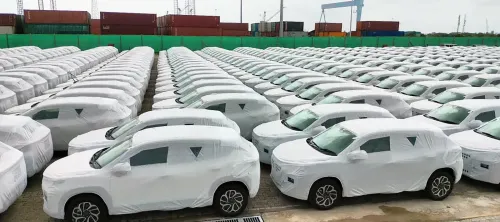
Maruti Suzuki India shattered all production records in FY2025-26, manufacturing 23.4 lakh passenger vehicles, a first for any OEM in India and any Suzuki global facility. With five models crossing 2 lakh units each and a fifth plant planned in Gujarat, the company is now targeting a staggering 40 lakh units annually.
Key Takeaways
Maruti Suzuki India achieved a record annual production of 23.4 lakh passenger vehicles in FY2025-26 , the highest ever by any OEM in India.
The company is the only manufacturing facility under Suzuki Motor Corporation's global network to reach this production volume.
Five models, Dzire, Fronx, Swift, Ertiga, and Baleno , each individually crossed the 2 lakh unit production mark during the year.
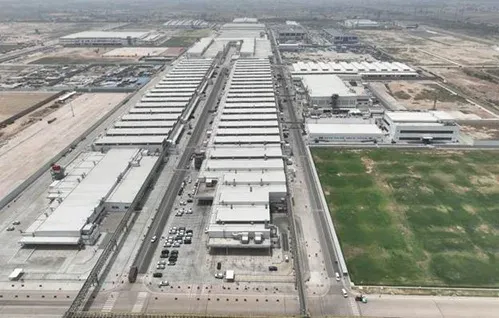
Maruti Suzuki operates four plants in Gurugram, Manesar, Kharkhoda (Haryana) and Hansalpur (Gujarat) with a combined capacity of 24 lakh units .
A fifth manufacturing plant has been planned at Khoraj Industrial Estate, Sanand, Gujarat , with a capacity of 10 lakh units per annum .
The company targets scaling total production to 40 lakh units annually , signalling major capacity expansion ahead.
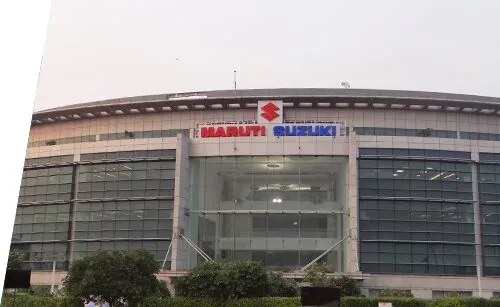
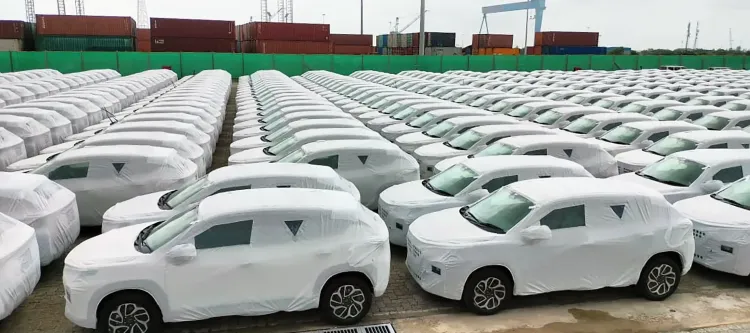
Maruti Suzuki India Limited has scripted automotive history by rolling out a record 23.4 lakh passenger vehicles in FY2025-26, cementing its position as the undisputed production powerhouse of the Indian auto industry. The New Delhi-headquartered carmaker is not only the sole original equipment manufacturer (OEM) in India to achieve this milestone but also stands alone among all global manufacturing units under the Suzuki Motor Corporation umbrella. This landmark achievement signals a transformative phase for India's passenger vehicle segment and reflects surging domestic demand.
Record-Breaking Output Across Four Plants
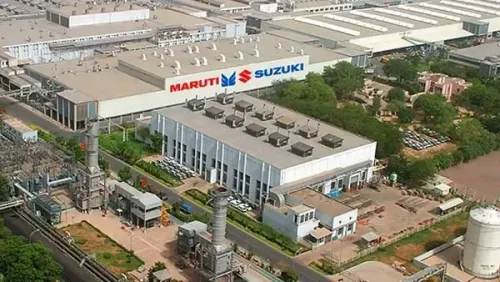
Maruti Suzuki currently operates four manufacturing facilities located in Gurugram, Manesar, and Kharkhoda in Haryana, and Hansalpur in Gujarat. Together, these plants carry a combined installed annual capacity of 24 lakh units, meaning the company operated at near-peak utilisation in FY26.
The achievement is particularly significant given that India's total passenger vehicle industry crossed the 43 lakh unit mark in FY26, meaning Maruti alone accounted for over 54% of national output. This level of market concentration by a single manufacturer is rare in any major global automotive economy.
Top Models That Drove the Numbers
Five models individually crossed the 2 lakh unit production mark during the fiscal year: the Dzire, Fronx, Swift, Ertiga, and Baleno. This diverse mix spanning sedans, compact SUVs, hatchbacks, and MPVs underscores the breadth of Maruti's product portfolio and its ability to capture demand across multiple segments simultaneously.
The Fronx's inclusion in this elite list is particularly noteworthy. Launched in 2023, it has rapidly scaled volumes, validating Maruti's aggressive push into the compact SUV space where rivals like Hyundai, Tata Motors, and Kia have been eating into its market share.
Leadership Speaks: Trust, Ecosystem, and Policy Tailwinds
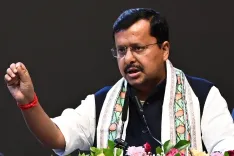
Hisashi Takeuchi, Managing Director and CEO of Maruti Suzuki India Limited, called it a proud moment for the organisation, stating that very few companies across the world have been able to manufacture such large volumes in a single country. He attributed the milestone to decades of customer trust built across generations.
Takeuchi also credited the broader ecosystem including employees, vendor partners, and dealer networks, alongside the current government's policy environment. He specifically mentioned the rollout of GST 2.0 as a factor that strengthened market confidence and stimulated demand at a critical time, a notable endorsement of fiscal policy as the auto industry navigates EV transition and global supply chain realignment.
Fifth Plant Coming: Khoraj Industrial Estate, Sanand
As part of its long-term capacity expansion roadmap, Maruti Suzuki identified land for its fifth manufacturing facility at Khoraj Industrial Estate in Sanand, Gujarat in March 2026. Once fully operational, the new plant will add an annual production capacity of 10 lakh units, pushing the company's total installed capacity to approximately 34 lakh units.
The company's stated ambition is to scale total annual production to 40 lakh units, a target that would require either further greenfield expansion or brownfield upgrades at existing facilities. Notably, Gujarat is emerging as the preferred destination for Maruti's next growth chapter, given its port connectivity, industrial infrastructure, and state government incentives.
Broader Industry Significance and What Comes Next
This milestone arrives at a pivotal moment for Indian manufacturing. Under the Make in India initiative and PLI schemes for the auto sector, India has been positioning itself as a global automotive export hub. Maruti's record production adds credibility to that narrative, demonstrating that India can sustain large-scale, high-quality vehicle manufacturing at globally competitive volumes.
However, the road ahead carries challenges. The EV transition remains a key variable as Maruti has been a late mover in electric vehicles compared to Tata Motors and Hyundai, and its production dominance in internal combustion engine vehicles must eventually evolve. The company's upcoming e Vitara electric SUV will be a critical test of whether its manufacturing scale can translate into EV leadership as well.
With the Khoraj plant in the pipeline and a 40 lakh unit annual target firmly set, Maruti Suzuki is betting big on India's long-term consumption story, and the FY26 record suggests that bet may well pay off.
Point of View
It is a statement about India's manufacturing ambitions and the enduring dominance of a single player in a market that has long promised greater competition. While rivals like Tata Motors and Hyundai have made inroads in EVs and SUVs, Maruti's sheer production scale remains unmatched, raising a critical question about whether volume dominance in ICE vehicles can coexist with a credible EV strategy. The CEO's specific mention of GST 2.0 as a demand driver is politically significant, framing government policy as a growth catalyst at a time when industry-government relations are under close scrutiny. The real test for Maruti begins now, as the 40 lakh unit target will demand both greenfield investment and an EV pivot the company has so far navigated cautiously.
NationPress
16 Sept 2026
Frequently Asked Questions
What is Maruti Suzuki's production record in FY2025-26?
Maruti Suzuki India achieved its highest-ever annual production of 23.4 lakh passenger vehicles in FY2025-26. This makes it the only OEM in India and the only Suzuki global manufacturing facility to reach this production volume.
Which Maruti Suzuki models crossed 2 lakh units in FY26?
Five models, the Dzire, Fronx, Swift, Ertiga, and Baleno, each individually crossed the 2 lakh unit production mark in FY2025-26. This reflects strong demand across sedans, hatchbacks, compact SUVs, and MPVs.
Where is Maruti Suzuki's new fifth manufacturing plant?
Maruti Suzuki identified land for its fifth plant at Khoraj Industrial Estate in Sanand, Gujarat, in March 2026. The facility will have an annual production capacity of 10 lakh units once fully operational.
What is Maruti Suzuki's long-term production target?
Maruti Suzuki aims to scale its annual production capacity to approximately 40 lakh units. The company currently has an installed capacity of 24 lakh units across four plants, with the fifth plant in Gujarat set to add 10 lakh units more.
How does Maruti Suzuki's FY26 production compare to the overall Indian auto industry?
India's total passenger vehicle production crossed approximately 43 lakh units in FY26, meaning Maruti Suzuki alone accounted for over half of the country's entire passenger vehicle output. This underscores its unrivalled dominance in Indian automotive manufacturing.