Is a New 0.05% Transaction Tax Coming to KOSPI Trading in 2026?
Synopsis
A groundbreaking 0.05% transaction tax on KOSPI trading is set to debut in 2026. This new levy marks a pivotal change for investors. Discover how this impacts the stock market landscape and what it means for your investments.
Key Takeaways
Introduction of a 0.05 percent transaction tax on KOSPI stock trades.
This is the first time such a tax is implemented on the benchmark market.
Other markets like KOSDAQ and K-OTC will see increased rates.
Effective date for the new tax is January 1, 2026 .
Market reaction shows slight declines in stock prices.
Seoul, Dec 1 (NationPress) The government has announced plans to implement a new 0.05 percent transaction tax on KOSPI stock transactions starting next year, as confirmed by the finance ministry on Monday. This marks a historic moment as it's the first time that the benchmark market will enforce such a tax.
According to the revised tax legislation, which was sanctioned in July, the tax rate for KOSPI transactions will increase from zero percent to 0.05 percent. The existing 0.15 percent special tax for agricultural and fishery villages will stay the same, as reported by Yonhap news agency.
The smaller KOSDAQ market and the K-OTC platform for unlisted companies will see their rates rise from 0.15 percent to 0.2 percent, according to ministry statements.
The updated rates will take effect on January 1.
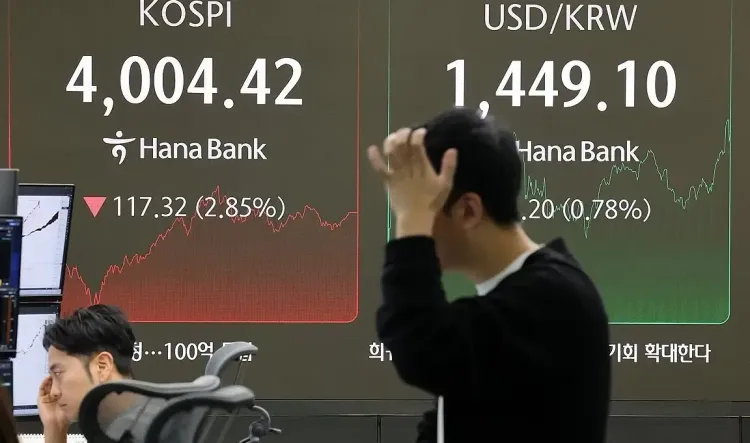
Meanwhile, South Korean stocks experienced a slight decline late on Monday morning, following earlier gains, due to profit-taking.
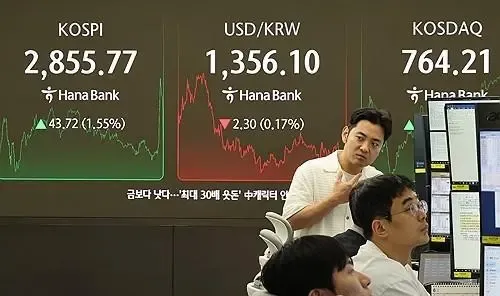
After opening higher, the Korea Composite Stock Price Index (KOSPI) fell by 5.47 points, or 0.14 percent, to 3,921.12 as of 11:20 a.m.
On the previous Friday (local time), Wall Street closed in positive territory, marking its fifth consecutive day of gains during the Thanksgiving holiday. The S&P 500 increased by 0.54 percent, the Dow Jones Industrial Average rose 0.61 percent, and the tech-centric Nasdaq composite climbed 0.65 percent.
In Seoul, large-cap stocks presented a mixed performance.
Chip leader Samsung Electronics improved by 0.6 percent, while competitor SK Hynix rose 0.57 percent. Leading battery manufacturer LG Energy Solution experienced a 1.23 percent increase.
Biotech stocks also saw gains, with Samsung Biologics up by 3.11 percent and Celltrion rising 0.65 percent.
Major banking group KB Financial Group gained 0.88 percent.
The local currency was trading at 1,468.76 won against the U.S. dollar at 11:20 a.m., reflecting an increase of 1.85 won from the previous session.
Point of View
I observe that the introduction of a transaction tax on KOSPI trading represents a significant shift in South Korea's financial landscape. This change aims to generate revenue while potentially influencing investor behavior. We at NationPress will continue to monitor the effects of this new tax on the market and its implications for economic growth.
NationPress
19 Sept 2026
Frequently Asked Questions
When will the new transaction tax on KOSPI trading take effect?
The new transaction tax is set to take effect on January 1, 2026.
What is the rate of the new transaction tax?
The rate of the new transaction tax on KOSPI trading will be 0.05 percent.
Does this tax apply to other markets?
Yes, the KOSDAQ market and K-OTC platform will see their rates rise from 0.15 percent to 0.2 percent.
How will this tax impact investors?
This tax may influence trading costs and investor behavior in the KOSPI market.
What was the performance of South Korean stocks on December 1?
South Korean stocks traded slightly lower on December 1, with the KOSPI index down by 0.14 percent.