UPI MDR policy: 75% of merchants unaffected, says NPCI chief Dilip Asbe

Synopsis
NPCI chief Dilip Asbe has put a precise number to the UPI MDR debate: 75% of India's 60 million UPI merchants have never seen a transaction above ₹2,000, leaving them entirely outside the new levy's reach. The real MDR load sits with large businesses doing over ₹1,000 crore in annual GMV — and consumer risk is capped at just 10% of overall transaction value, according to Asbe.
Key Takeaways
NPCI chief Dilip Asbe said 75% of India's 60 million UPI merchants will be unaffected by the new MDR on transactions above ₹2,000 .
About 80% of total MDR value is expected to come from merchants with annual GMV exceeding ₹1,000 crore .
Nearly half of the remaining MDR will come from businesses with annual GMV above ₹1 crore .
Consumer pass-through risk is estimated at only 10% of overall merchant transaction value.
Banks, payment aggregators, and NPCI will work to ensure MDR is not passed on to customers.
Asbe said UPI transaction volumes and values are not expected to be significantly impacted.
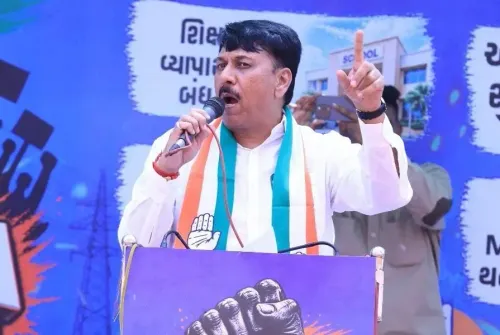
National Payments Corporation of India (NPCI) Managing Director and CEO Dilip Asbe on Thursday said that approximately three-fourths of India's digital payment-accepting merchants will remain completely unaffected by the newly introduced merchant discount rate (MDR) on Unified Payments Interface (UPI) transactions exceeding ₹2,000. Speaking at the SBI Banking and Economic Conclave in Mumbai, Asbe said the policy's limited reach is because the vast majority of merchants have never processed a single transaction above that threshold.
Scale of the merchant base
India currently has more than 60 million unique merchants accepting digital payments via UPI. According to Asbe, 75 per cent of these merchants have not recorded even a single transaction above ₹2,000, meaning the MDR levy will have no practical impact on them. 'We have about 60 million unique UPI merchants, and 75 per cent of them have not seen a transaction above ₹2,000. Therefore, the majority of merchants will not be impacted by the MDR,' he stated.
Where the MDR burden will fall
Asbe clarified that the bulk of the MDR revenue will be generated by large enterprises. Around 80 per cent of the total MDR value is expected to come from merchants with an annual gross merchandise value (GMV) exceeding ₹1,000 crore. Of the remaining share, nearly half is projected to come from businesses with annual GMV above ₹1 crore. Asbe noted that most of these larger merchants already accept credit card payments and are therefore familiar with similar transaction charges — making it unlikely they will pass the additional cost on to customers. 'A significant portion of MDR is expected to come from large businesses, most of which already accept card payments and pay MDR,' he said.
Consumer risk limited to 10 per cent of transaction value
Asbe acknowledged a residual concern: a small segment accounting for roughly 10 per cent of merchant transaction value could potentially attempt to transfer the MDR cost to end consumers. However, he said banks, payment aggregators, acquiring banks, and NPCI itself would actively work to prevent such pass-through charges. 'The real risk of a consumer getting charged is just 10 per cent of the overall value,' Asbe said. This is in keeping with broader regulatory intent to keep UPI free at the consumer end.
Impact on UPI volumes and adoption
The NPCI chief expressed confidence that the new MDR framework would not significantly dent UPI transaction volumes or overall payment values. This comes amid ongoing debate over UPI monetisation — a long-standing policy tension between sustaining payment infrastructure investment and protecting the zero-cost model that drove mass adoption. Notably, UPI's rapid penetration among small merchants was built largely on the promise of no charges, making any fee structure a politically and commercially sensitive shift.
All eyes will now be on how the policy is implemented and whether regulatory guardrails prove effective in shielding consumers and small traders from unintended consequences.
Point of View
In practice, a large-merchant levy dressed up as a system-wide reform. Concentrating 80% of MDR revenue in the ₹1,000-crore-GMV bracket does protect small traders, but it also reveals how narrow the actual monetisation base is — raising questions about whether the revenue generated will be sufficient to sustainably fund UPI infrastructure at scale. The 10% consumer-risk acknowledgement is candid, but assurances from banks and aggregators are not the same as enforceable guardrails. The real test is whether NPCI builds a transparent complaints mechanism before the first charge inadvertently reaches a consumer's bill.
NationPress
24 Sept 2026
Frequently Asked Questions
What is the new UPI MDR policy and who does it affect?
The new policy introduces a merchant discount rate (MDR) on UPI transactions above ₹2,000. According to NPCI chief Dilip Asbe, it primarily affects large merchants, while approximately 75% of India's 60 million UPI merchants — who have never processed a transaction above ₹2,000 — remain unaffected.
Will consumers have to pay extra under the new UPI MDR?
NPCI has indicated that the risk of MDR being passed on to consumers is limited to about 10% of overall transaction value. Banks, payment aggregators, and NPCI have committed to preventing such pass-through charges, though no formal enforcement mechanism has been publicly detailed yet.
Which merchants will bear the most MDR cost?
Around 80% of total MDR revenue is expected to come from merchants with annual gross merchandise value (GMV) exceeding ₹1,000 crore. Most of these large businesses already pay MDR on credit card transactions, making them familiar with such charges.
Will the MDR policy slow down UPI adoption in India?
NPCI chief Dilip Asbe has expressed confidence that the new MDR framework will not significantly affect UPI transaction volumes or values. Because three-fourths of merchants are unaffected, the structural foundation of UPI's mass-market reach is expected to remain intact.
Why was MDR introduced on UPI transactions above ₹2,000?
The MDR is aimed at generating sustainable revenue to fund UPI's payment infrastructure, which has until now operated largely on a zero-cost model. The policy targets higher-value transactions to balance monetisation needs against the inclusivity goals that drove UPI's rapid adoption among small merchants.