NPCI, HSBC India tie up for real-time forex on cross-border UPI
Synopsis
Indian travellers using UPI abroad have long faced opaque forex conversion — that gap is now being addressed. NPCI's tie-up with HSBC India brings real-time FX rates via direct API, letting users see the exact rupee cost before they tap to pay. With UPI already live in nine countries, this is a meaningful upgrade to India's cross-border payments stack.
Key Takeaways
NPCI and HSBC India announced a strategic partnership on 1 July for real-time forex settlement on cross-border UPI transactions.
HSBC India will deliver live FX rates via API integration , showing users the exact INR amount at the point of payment abroad.
Merchants and financial institutions overseas will receive funds in their local currencies .
UPI is currently active in nine countries , including Singapore , UAE , France , and Qatar .
NPCI operates under the guidance of the RBI and the Indian Banks' Association (IBA) .
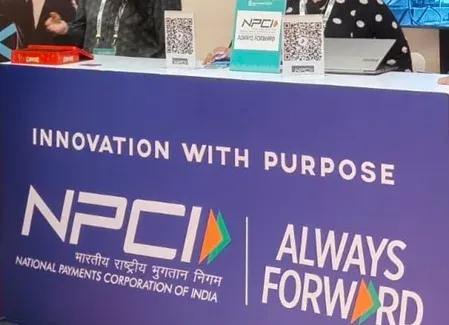
The National Payments Corporation of India (NPCI) on Wednesday, 1 July announced a strategic partnership with HSBC India to enable real-time foreign exchange (FX) settlement for cross-border Unified Payments Interface (UPI) transactions, making international digital payments more transparent and seamless for Indian travellers abroad.
How the Integration Works
Under the arrangement, HSBC India will deliver real-time FX rates via direct API integration, allowing users to see the exact Indian rupee (INR) amount payable at the precise moment of a transaction — eliminating the guesswork that has long frustrated Indians using UPI overseas. The framework will also enable merchants and financial institutions in destination countries to receive funds in their respective local currencies.
The API-enabled system leverages HSBC India's global payments infrastructure and international banking network to support secure, round-the-clock cross-border settlements.
What NPCI Said
'Our collaboration with HSBC represents an important step toward enabling efficient forex conversion and real-time settlement for cross-border transactions, delivering transparent payment experiences for users,' an NPCI spokesperson said. The spokesperson added that the tie-up would improve convenience in international payments while supporting wider adoption of India's digital public infrastructure.
Where UPI Already Operates
UPI is currently live in nine countries — Singapore, the United Arab Emirates, Nepal, Bhutan, Mauritius, France, Sri Lanka, Qatar, and Cambodia — allowing Indian users to make QR code-based payments directly from domestic bank accounts in rupees. The NPCI-HSBC partnership is expected to sharpen the FX pricing layer across these corridors and any future markets where UPI expands.
NPCI's Broader Role in India's Payments Ecosystem
NPCI, which operates as an umbrella organisation for retail payments in India, has built and manages key systems including UPI, RuPay, IMPS, NACH, NETC, AePS, and eRUPI. It functions under the guidance of the Reserve Bank of India (RBI) and the Indian Banks' Association (IBA). This collaboration marks a continued push to position India's digital payments stack as a globally competitive infrastructure — one that now increasingly targets frictionless forex settlement alongside domestic payment convenience.
Point of View
And real-time API-driven rates change that calculus. The deeper question is whether HSBC's integration becomes a template that other global banking partners replicate — because UPI's nine-country footprint is only as strong as the settlement infrastructure behind it. India's ambition to export its digital payments stack will ultimately be judged not by QR code reach, but by whether the forex layer is competitive with incumbent card networks.
NationPress
29 Sept 2026
Frequently Asked Questions
What is the NPCI-HSBC India partnership about?
NPCI and HSBC India have partnered to enable real-time foreign exchange settlement for cross-border UPI transactions, announced on 1 July. The tie-up allows Indian users to see the exact rupee amount payable at the moment of a transaction while making purchases abroad.
How will the real-time forex integration work for UPI users?
HSBC India will provide live FX rates through direct API integration with UPI. When an Indian traveller initiates a payment overseas, the system will display the precise INR equivalent in real time, before the transaction is confirmed, removing post-facto conversion surprises.
In which countries is UPI currently accepted?
UPI is live in nine countries as of now: Singapore, the United Arab Emirates, Nepal, Bhutan, Mauritius, France, Sri Lanka, Qatar, and Cambodia. Users can make QR code-based payments directly from their Indian bank accounts in rupees.
Who benefits from this partnership?
Indian travellers abroad gain transparent FX pricing at the point of sale, while overseas merchants and financial institutions benefit from receiving settlements in their local currencies. The broader ecosystem gains faster and more efficient cross-border settlement infrastructure.
What is NPCI's role in India's payments ecosystem?
NPCI is the umbrella organisation for retail payments in India, operating under the guidance of the RBI and the Indian Banks' Association. It manages key systems including UPI, RuPay, IMPS, NACH, NETC, AePS, and eRUPI.