NSE-BSE closing price gaps widen after SEBI's new CAS rollout

Synopsis
SEBI's new Closing Auction Session was meant to align India with global market standards — but its early sessions have produced direction-reversing price gaps between the NSE and BSE in blue-chip stocks, triggered forced retail square-offs, and widened the Nifty-Sensex spread to an unusual 0.9 percentage points. The mechanism designed to reduce tracking error may be creating a new one.
Key Takeaways
SEBI's Closing Auction Session (CAS) has produced sharp closing price divergences between the NSE and BSE from its first sessions.
Trent closed at ₹3,070 on BSE versus ₹3,107.70 on NSE on 4 August ; BEL closed in opposite directions on the two exchanges.
The Nifty surged roughly 1.6% in one session while the Sensex gained only about 0.7% — an unusually wide index-level spread.
Global passive investors pushed for CAS to reduce tracking error; domestic brokers and institutions had flagged liquidity concerns during the consultation phase.
Analysts attribute part of the distortion to the overlap of Tuesday's weekly F&O expiry with the new closing price methodology, triggering forced retail square-offs in the 15-minute blind derivatives window .
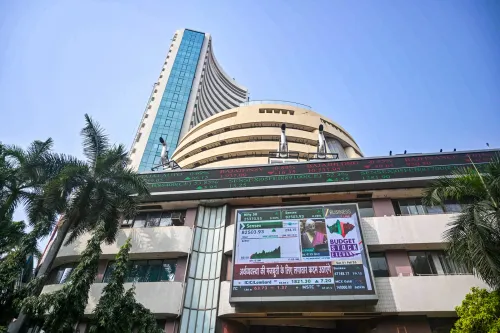
A sharp divergence in stock and benchmark closing prices across the NSE and BSE has reignited debate among market participants following the rollout of the Closing Auction Session (CAS) introduced by the Securities and Exchange Board of India (SEBI). Investors have taken to social media to question whether the new mechanism is delivering reliable end-of-day price discovery, with several high-profile stocks posting markedly different closing levels on the two exchanges.
What the Divergences Look Like
The scale of the pricing gaps became apparent in the first few sessions under the new framework. On Tuesday, 4 August, Trent shares closed at ₹3,070 on the BSE — a gain of 1.15% — while the same stock ended at ₹3,107.70 on the NSE, registering a 1.89% advance.
Bharat Electronics Ltd (BEL) closed 0.94% higher at ₹392 on the BSE, but ended 0.17% lower at ₹391.50 on the NSE — a direction reversal between the two exchanges. Bajaj Finance settled 1.06% higher at ₹1,153 on the BSE while finishing 0.35% lower at ₹1,149 on the NSE. Mahindra & Mahindra ended at ₹3,405 on the BSE versus ₹3,433 on the NSE. Similar discrepancies were observed in Bajaj Finserv, Titan, TCS, and UltraTech Cement.
Index-Level Gap Adds to Concern
The divergence has extended to the headline indices. In one session since the CAS came into force, the Nifty surged roughly 1.6% while the Sensex gained only about 0.7% — an unusually wide spread that has drawn scrutiny from institutional and retail investors alike. Analysts note that such index-level divergences can distort portfolio benchmarking and complicate hedging strategies.
Why the New System Was Introduced
According to reports, the strongest backing for the CAS came from global passive investors, who wanted India's market structure to align with international practices. Foreign funds sought the ability to execute trades at the same prices used for benchmark index calculations, thereby reducing tracking error — a standard feature of auction-based closings in developed markets.
Domestic institutions, brokers, traders, and exchanges, however, reportedly expressed reservations during the consultation phase. Critics argued that Indian markets lacked the institutional depth and two-sided liquidity required for an auction-based mechanism to deliver efficient and reliable price discovery.
What Analysts Are Saying
Market experts suggest the transition may be causing temporary disruptions, with the first sessions compounded by unusual circumstances. One analyst pointed to the confluence of Tuesday's weekly derivatives expiry and the simultaneous shift in the methodology for determining futures and options (F&O) closing prices as key amplifiers of volatility.
'Tuesday's weekly expiry, combined with the implementation of the new mechanism for determining F&O closing prices, has led to a distortion in market trends. The significant gap between the 3:30 pm and 3:40 pm closing prices of Nifty stocks and the index, along with the divergence with Sensex, suggests that the new system is not functioning as intended, resulting in heightened price volatility,' the analyst said.
The analyst further noted that the dislocation has triggered 'forced square-offs of positions, particularly among retail investors, ahead of the 15-minute blind derivatives window closing session.' Whether these disruptions are transitional or structural will likely determine SEBI's next move on the CAS framework.
Point of View
Especially on derivatives expiry days. The mechanism was designed to serve global passive investors, but its early sessions have hurt domestic retail participants most — the very constituency regulators are most publicly committed to protecting. If the divergences persist beyond the transitional phase, SEBI will face pressure either to recalibrate the auction window or accept that the tracking-error benefit for foreign funds comes at a price-discovery cost for everyone else.
NationPress
4 Aug 2026
Frequently Asked Questions
What is the Closing Auction Session (CAS) introduced by SEBI?
The Closing Auction Session is a new end-of-day price discovery mechanism introduced by SEBI to align India's market structure with international practices. It determines official closing prices through an auction window rather than a simple last-traded-price average, aiming to reduce tracking error for investors benchmarked to indices.
Why are NSE and BSE showing different closing prices for the same stocks?
The divergences have emerged because the two exchanges are implementing the new CAS framework, and the auction dynamics — including order flow and liquidity depth — differ between them. Stocks like Trent, BEL, and Bajaj Finance posted materially different closing levels, and in BEL's case, the stock closed in opposite directions on the two exchanges on 4 August.
Who wanted the Closing Auction Session and who opposed it?
Global passive investors were reportedly the strongest proponents, seeking to execute trades at benchmark index prices to reduce tracking error. Domestic institutions, brokers, traders, and exchanges had expressed reservations during the consultation phase, arguing that Indian markets lacked the liquidity depth needed for an auction-based close to work efficiently.
How has the new mechanism affected retail investors?
According to analysts, the CAS has triggered forced square-offs of positions among retail investors ahead of the 15-minute blind derivatives window closing session. The distortion was reportedly amplified on Tuesday by the simultaneous occurrence of the weekly F&O expiry and the shift in F&O closing price methodology.
Is the Nifty-Sensex divergence under CAS a temporary or permanent issue?
Market experts suggest the disruptions may be transitional, partly explained by the unusual confluence of the weekly derivatives expiry and the new methodology. However, if the index-level and stock-level gaps persist in normal sessions, it could indicate a structural problem with the CAS design in the Indian market context.