NSE Q1 FY27 revenue falls 8.2% to ₹4,560 crore ahead of landmark IPO

Synopsis
NSE's Q1 FY27 numbers tell two stories at once: revenue slipped 8.2% sequentially to ₹4,560 crore, yet net profit jumped 8.7% and EBITDA margins hit a striking 77.9%. With its DRHP filed and a ₹1,400 crore-plus SEBI co-location settlement reportedly imminent, India's largest bourse may finally be clearing the last regulatory hurdles before one of the country's most anticipated IPOs.
Key Takeaways
NSE reported Q1 FY27 consolidated revenue of ₹4,560 crore , down 8.2% sequentially from ₹4,968 crore in Q4 FY26.
Net profit rose 8.7% quarter-on-quarter to ₹3,120 crore , up from ₹2,871 crore .
EBITDA margin expanded sharply to 77.9% from 73.1% in the previous quarter.
NSE filed its DRHP with SEBI on 17 June ; the IPO is a pure OFS of 14.89 crore shares — no fresh capital raised.
SEBI 's final settlement in the co-location case is reportedly imminent, with the amount likely exceeding ₹1,400 crore .
NSE's listing plans date back to 2016 , stalled by regulatory scrutiny over the co-location controversy first flagged in 2015 .
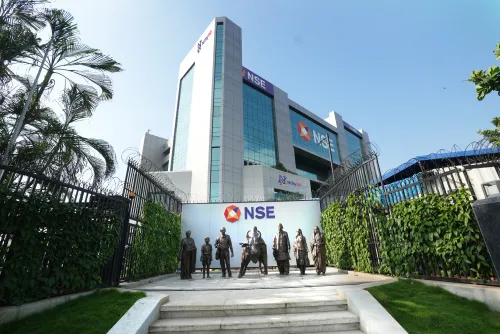
The National Stock Exchange of India (NSE) on Thursday, 30 July posted an 8.2% sequential decline in consolidated revenue from operations for Q1 FY27 (quarter ended 30 June), even as the country's largest stock exchange inches closer to its long-awaited public listing. Revenue fell to ₹4,560 crore from ₹4,968 crore in Q4 FY26, according to NSE's stock exchange filing.
Profit Rises Despite Revenue Dip
Despite the topline contraction, NSE's net profit rose 8.7% quarter-on-quarter to ₹3,120 crore, up from ₹2,871 crore in the March 2025 quarter. The divergence between falling revenue and rising profit points to tighter cost discipline in the run-up to the IPO.
Earnings before interest, tax, depreciation and amortisation (EBITDA) came in at ₹3,551 crore, marginally below the ₹3,633 crore reported in the preceding quarter. Notably, the EBITDA margin expanded sharply to 77.9% from 73.1% — a near 5 percentage point improvement — signalling that operational efficiency gains are outpacing revenue headwinds.
IPO Filing and Offer Structure
On 17 June, NSE filed its Draft Red Herring Prospectus (DRHP) with the Securities and Exchange Board of India (SEBI) for its proposed initial public offering. The issue is structured entirely as an offer for sale (OFS) of 14.89 crore equity shares, meaning NSE itself will not receive any proceeds from the listing — all funds will flow to existing shareholders offloading their stakes.
This comes amid renewed optimism that the exchange's decade-long listing journey may finally reach its conclusion, after regulatory hurdles repeatedly delayed the process since plans were first mooted in 2016.
The Co-location Controversy: A Decade in the Making
NSE's listing plans were derailed in 2016 following regulatory scrutiny triggered by the co-location controversy. The case originated from complaints filed in 2015 alleging that certain co-location clients received preferential access to NSE's trading infrastructure, giving them an unfair advantage in executing high-frequency trades — a serious market integrity concern that drew SEBI's sustained attention.
In a related development, SEBI is reportedly expected to issue its final settlement order in the co-location matter shortly. According to reports, the settlement amount is likely to exceed ₹1,400 crore. The resolution of this long-pending case is widely seen as a key precondition for the IPO to proceed.
What the Numbers Signal for the IPO
The Q1 FY27 results present a nuanced picture for prospective investors. A sequential revenue dip may raise questions about near-term growth momentum, but the sharp margin expansion and profit growth suggest NSE's core business remains highly cash-generative. As an OFS, valuation will hinge on existing shareholders' pricing expectations and SEBI's clearance timeline. The exchange's listing, if completed, would rank among the largest in Indian capital market history.
Point of View
The OFS structure means the exchange raises nothing; this is an exit play for existing shareholders, not a growth capital raise. Investors will need to price in not just the business quality but the residual regulatory overhang: a ₹1,400 crore-plus co-location settlement is a material liability disclosure, and how SEBI frames the final order will shape market sentiment. A decade of delays has built anticipation, but it has also built scrutiny — this IPO will face a more forensic investor base than most.
NationPress
14 Sept 2026
Frequently Asked Questions
What were NSE's Q1 FY27 financial results?
NSE reported consolidated revenue of ₹4,560 crore in Q1 FY27 (quarter ended 30 June), an 8.2% sequential decline from ₹4,968 crore in Q4 FY26. However, net profit rose 8.7% to ₹3,120 crore, and the EBITDA margin expanded to 77.9% from 73.1%.
What is the NSE IPO structure?
NSE's IPO is entirely an offer for sale (OFS) of 14.89 crore equity shares, meaning the exchange itself will not receive any proceeds. All funds will go to existing shareholders selling their stakes. The DRHP was filed with SEBI on 17 June.
Why was NSE's IPO delayed for nearly a decade?
NSE's listing plans, first initiated in 2016, were put on hold due to regulatory scrutiny arising from the co-location controversy. Complaints filed in 2015 alleged that certain clients received preferential access to NSE's trading systems, prompting a prolonged SEBI investigation.
What is the SEBI co-location settlement and how does it affect the IPO?
SEBI is reportedly expected to issue its final settlement order in the co-location case soon, with the settlement amount likely exceeding ₹1,400 crore. Resolution of this matter is widely regarded as a key regulatory precondition for NSE's IPO to move forward.
How does NSE's EBITDA margin compare to its previous quarter?
NSE's EBITDA margin improved to 77.9% in Q1 FY27 from 73.1% in Q4 FY26 — a near 5 percentage point expansion — even as absolute EBITDA dipped marginally to ₹3,551 crore from ₹3,633 crore, reflecting improved cost efficiency.