E20 petrol quality confirmed: OMCs say nationwide tests show no contamination
Synopsis
India's Oil Marketing Companies have pushed back hard against E20 contamination fears, releasing testing data showing chloride levels at or below 1 ppm across more than 100 refinery samples — and revealing a surveillance regime that checks quality up to 12 times a day at every retail outlet. For a programme central to India's energy transition, the credibility of this rebuttal matters as much as the data itself.
Key Takeaways
Oil Marketing Companies (OMCs) on 7 August confirmed E20 petrol quality is within prescribed limits after intensive nationwide testing.
More than 100 refinery samples tested for chloride content; all returned levels at or below 1 part per million (ppm) .
Quality checks include water-ingress and density tests conducted 8 to 12 times daily at all retail outlets.
Mobile fuel quality testing laboratories have been deployed across locations, with independent sample validation.
Chloride monitoring covers the full supply chain — refineries, distilleries, depots, terminals, and retail outlets.
The rebuttal comes after media reports raised concerns over moisture and chloride contamination in E20 fuel.
Oil Marketing Companies (OMCs) on Friday, 7 August declared that comprehensive nationwide testing of ethanol blended motor spirit (EBMS), commonly known as E20 petrol, has confirmed fuel quality remains fully within prescribed standards — directly rebutting recent media reports that flagged concerns over moisture and chloride contamination.
What the Testing Found
In an official statement, the OMCs said they conducted an additional intensive testing exercise covering the entire E20 supply chain after the contamination reports surfaced. The findings returned no evidence of fuel contamination, with all measured parameters consistently within regulatory limits. More than 100 randomly selected petrol samples collected from refineries across the country were tested for chloride content, with results showing levels at or below 1 part per million (ppm) — well within the prescribed specification.
How the Quality Control System Works
According to the OMCs, the government has prescribed stringent chloride specifications for ethanol used in petrol blending and has established a high-frequency monitoring mechanism to ensure compliance across the supply chain. Chloride levels are tracked at multiple stages — including refineries, distilleries, depots, terminals, and retail outlets nationwide.
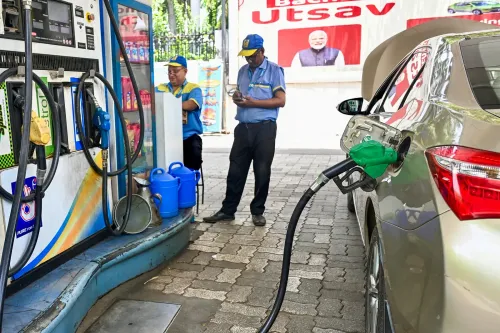
Surveillance has been further strengthened through water-ingress and density tests conducted between eight and twelve times every day at all retail outlets. Mobile fuel quality testing laboratories have also been deployed at various locations, with samples independently validated through dedicated fuel testing laboratories.
OMCs' Position on Consumer Confidence
The companies stated that fuel quality is treated as a matter of the highest priority, and that any issue with potential to affect vehicle performance or consumer confidence is addressed promptly through scientific investigation and corrective measures. The OMCs said the enhanced, multi-layered testing protocols have validated India's fuel quality standards and found no cause for concern.
Context: India's E20 Rollout
India's push toward 20% ethanol blending in petrol is a central plank of the government's energy transition and farm-income strategy, with the programme having been rolled out nationally in phases. This is the first major public quality dispute to surface around E20 since its broader rollout, making the OMCs' swift and data-backed rebuttal significant for the programme's credibility. The government has set an accelerated timeline for full E20 adoption, and any sustained public doubt over fuel quality could complicate that trajectory.
With testing data now in the public domain, the OMCs have signalled that monitoring intensity will be maintained going forward.
Point of View
Linking energy security, farm income, and climate commitments. A contamination narrative, even an unsubstantiated one, can erode consumer trust faster than a press release can restore it. The real question mainstream coverage has not asked: whether the existing monitoring framework — however rigorous — is independently audited or self-reported by the same companies whose product is under scrutiny. That distinction matters for long-term programme credibility.
NationPress
22 Sept 2026
Frequently Asked Questions
What is E20 petrol and why is it in the news?
E20 petrol is a blend of petrol containing 20% ethanol , part of India's national ethanol blending programme. It is in the news after media reports raised concerns about moisture and chloride contamination in E20 fuel, which the Oil Marketing Companies have now formally dismissed based on nationwide testing data.
What did the OMC tests find about E20 fuel quality?
Tests on more than 100 randomly selected samples from refineries across India found chloride levels at or below 1 part per million (ppm) , well within prescribed specifications. No evidence of contamination was found across the entire supply chain.
How frequently is E20 fuel quality tested at petrol stations?
Water-ingress and density tests are conducted between 8 and 12 times every day at all retail outlets. Mobile fuel quality testing laboratories are also deployed at various locations, and samples are independently validated through dedicated testing labs.
Who monitors chloride levels in E20 petrol?
Chloride monitoring is carried out at multiple stages of the supply chain, including refineries, distilleries, depots, terminals , and retail outlets . The government has prescribed stringent chloride specifications for ethanol used in petrol blending and has set up a high-frequency compliance mechanism.
Should vehicle owners be concerned about using E20 petrol?
According to the OMCs, there is no cause for concern . The companies state that all fuel quality parameters remain consistently within prescribed limits and that the multi-layered testing protocols validate India's fuel quality standards. Vehicle owners with concerns are advised to raise them with their nearest authorised fuel outlet.