E20 petrol mileage drop 3-5% in older vehicles, no engine damage: Govt
Synopsis
The Centre has put a number to a concern many older-vehicle owners have raised: E20 petrol may trim mileage by 3-5% in cars built for E10 fuel. But it is equally firm that no verified engine damage has been recorded — and Nitin Gadkari has publicly challenged critics to name a single affected vehicle, calling contrary claims 'paid campaigns.'
Key Takeaways
The Central government confirmed on 22 July that E20 petrol may reduce fuel efficiency by 3-5% in older vehicles designed for E10 fuel .
Minister of State Suresh Gopi stated in a Rajya Sabha written reply that there is no verified evidence of widespread engine damage linked to E20.
Gopi cited multiple factors — driving habits, tyre pressure, wheel alignment, and AC load — as contributors to fuel efficiency beyond ethanol content.
Road Transport Minister Nitin Gadkari challenged critics on 7 July at the Viksit Bharat Conclave to name one vehicle damaged by E20, calling contrary narratives 'paid campaigns.' E20 petrol offers advantages including a higher octane rating, improved anti-knock performance, and smoother acceleration, according to the government.
The Central government on Wednesday, 22 July clarified that E20 petrol may cause a marginal reduction in fuel efficiency in certain older vehicles built for E10 fuel, but confirmed there is no verified evidence of widespread engine damage or vehicle breakdowns attributable to ethanol-blended petrol. The clarification came through a written reply in the Rajya Sabha.
What the Government Said
Minister of State for Petroleum and Natural Gas Suresh Gopi stated in his written reply that any mileage drop in older E10-designed vehicles is 'generally marginal (around 3-5 per cent).' He emphasised that fuel efficiency is shaped by multiple variables — driving habits, vehicle maintenance, tyre pressure, wheel alignment, and air-conditioning load — and cannot be attributed to ethanol content alone.
Gopi also highlighted the advantages of E20 petrol, noting it offers a 'higher octane rating, improved anti-knock performance, better combustion characteristics and smoother acceleration' compared to lower-blend alternatives.
Gadkari's Challenge to Critics
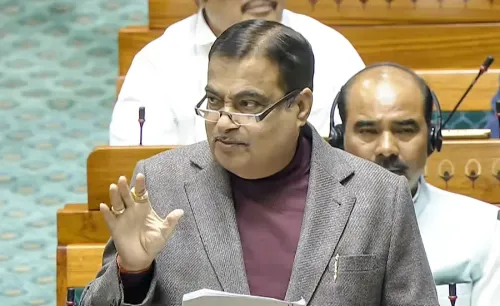
Earlier this month, Union Road Transport and Highways Minister Nitin Gadkari mounted a pointed defence of the E20 programme at the 'Viksit Bharat Conclave' in New Delhi on 7 July. He challenged critics to name a single vehicle that had suffered problems due to the use of 20 per cent ethanol-blended fuel, saying no such case existed.
'There is no case of any car facing issues due to E20 petrol. Has there been any car in the country that faced issues due to the use of E20 petrol? Just name one,' Gadkari said. He further described concerns circulating about the fuel as 'paid campaigns,' dismissing allegations of reduced mileage and engine damage as deliberate misinformation.
Why This Matters
India's E20 blending programme is a cornerstone of the government's strategy to reduce dependence on crude oil imports, lower carbon emissions, and boost domestic ethanol production — primarily from sugarcane and grain surplus. The programme has faced resistance from some vehicle owners and industry voices who have raised concerns about compatibility with older engines.
Notably, vehicles manufactured before E20 compatibility standards were mandated were designed around lower ethanol blends, making the 3-5 per cent efficiency dip a legitimate — if limited — concern for a segment of the fleet. The government's position is that this trade-off is outweighed by the programme's broader economic and environmental benefits.
What Happens Next
With the government standing firm on E20 rollout timelines, older vehicle owners are advised to monitor fuel economy and consult authorised service centres if they observe significant performance changes. Industry bodies and automakers have broadly aligned their new vehicle platforms with E20 standards, suggesting the compatibility concern will narrow over time as the fleet turns over.
Point of View
And no independent verification mechanism has been offered for the 'no engine damage' claim. Gadkari's 'name one car' challenge is rhetorically effective, but it sidesteps the structural issue — that millions of older vehicles were never designed for 20% ethanol blends, and their owners bear the efficiency cost of a national policy they had no say in. The 'paid campaigns' label, applied without evidence, also risks delegitimising genuine consumer feedback. India's ethanol blending ambition is sound; the communication and compensation framework for affected legacy-vehicle owners is not keeping pace.
NationPress
21 Oct 2026
Frequently Asked Questions
Does E20 petrol damage older vehicle engines?
According to the Central government, there is no verified evidence of widespread engine damage or vehicle breakdowns linked to E20 petrol. Minister of State Suresh Gopi confirmed this in a written reply to the Rajya Sabha on 22 July.
How much mileage loss can older vehicles expect from E20 petrol?
The government has stated that older vehicles originally designed for E10 fuel may see a marginal reduction in fuel efficiency of around 3-5%. This is the first official quantification of the efficiency trade-off for legacy vehicles.
What are the benefits of E20 petrol cited by the government?
The government says E20 petrol offers a higher octane rating, improved anti-knock performance, better combustion characteristics, and smoother acceleration compared to lower-blend fuels.
What did Nitin Gadkari say about E20 petrol concerns?
At the Viksit Bharat Conclave in New Delhi on 7 July, Road Transport Minister Nitin Gadkari challenged critics to identify a single vehicle damaged by E20 petrol. He dismissed concerns about mileage loss and engine damage as 'paid campaigns' aimed at undermining the ethanol blending programme.
Why is India pushing the E20 petrol programme?
India's E20 blending initiative aims to cut crude oil import dependence, reduce vehicular carbon emissions, and support domestic ethanol production from sugarcane and grain surplus. It is a key component of the government's energy transition strategy.