Parliament passes Taxation Bill: Sitharaman rules out UPI transaction fee
Synopsis
Parliament has cleared the Taxation and Other Laws (Amendment) Bill, but the real story is what it doesn't do: Finance Minister Sitharaman flatly ruled out any UPI transaction fee for consumers, while leaving the door open for a future, narrowly scoped MDR on high-value merchant payments — a decision now handed to NPCI's steering committee.
Key Takeaways
The Rajya Sabha passed the Taxation and Other Laws (Amendment) Bill on 10 August with a voice vote.
Finance Minister Nirmala Sitharaman confirmed the Bill does not impose any tax or transaction charge on UPI users.
The amendment to Section 10A of the Payment and Settlement Systems Act is an enabling provision only — no MDR framework has been finalised .
The NPCI UPI and Services Steering Committee will now decide whether any MDR should be introduced for merchants.
If MDR is introduced, it would apply only to high-value merchant transactions above a threshold; over 90% of everyday UPI transactions would remain free.
Person-to-person UPI transactions will continue to be free under all scenarios, the Finance Ministry confirmed.
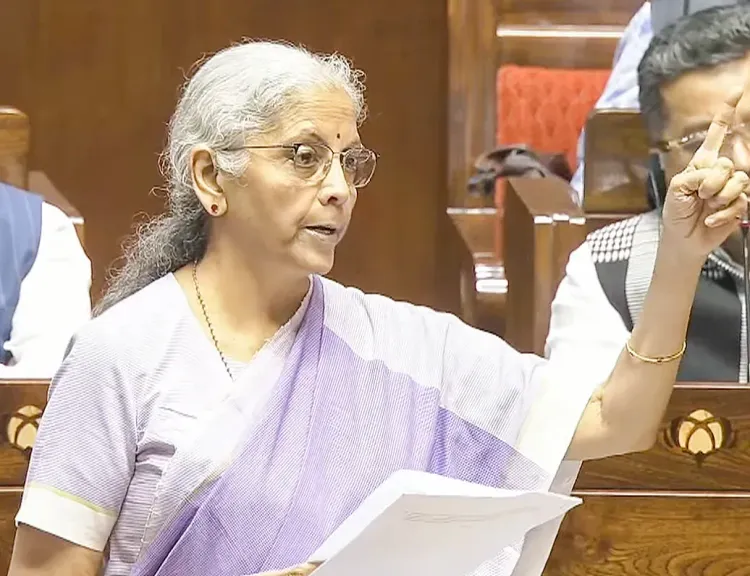
Finance Minister Nirmala Sitharaman on Monday, 10 August assured Parliament that the newly passed Taxation and Other Laws (Amendment) Bill does not impose any tax or transaction charge on users making payments through the Unified Payments Interface (UPI). The Rajya Sabha returned the Bill with a voice vote after a brief discussion, following its passage in the Lok Sabha last week.
What the Bill Actually Says
The legislation proposes an amendment to Section 10A of the Payment and Settlement Systems Act. Sitharaman was unambiguous on the floor of the Upper House: the amendment is purely an enabling provision and does not introduce a Merchant Discount Rate (MDR) charge on consumers at this stage.
'The enabling provision we are bringing in does not impose any tax or transaction charge on UPI users,' Sitharaman said. She added: 'So, no MDR framework has been finalised.'
What Happens Next on MDR
Following parliamentary approval, the UPI and Services Steering Committee of the National Payments Corporation of India (NPCI) will examine whether an MDR charge should be introduced at all. The government has made clear this is a consultative step, not a done deal.
If MDR is eventually introduced, officials said it would apply only to a limited set of merchant transactions above a specified threshold and at a rate significantly lower than the MDR applicable to debit or credit card transactions. Critically, over 90 per cent of everyday UPI transactions — covering daily purchases such as milk, vegetables, and groceries — would remain free of charge.
Why the Clarification Was Necessary
The government's assurances came amid widespread public speculation that the amendment would pave the way for blanket UPI transaction fees. The Finance Ministry had already issued a statement on Saturday clarifying that person-to-person UPI transactions will continue to remain free under the new proposal, regardless of what the NPCI committee decides on merchant MDR.
Notably, this is not the first time UPI charges have triggered public anxiety. A similar debate erupted in 2022 when the RBI floated a discussion paper on MDR for UPI, only for the government to reaffirm the zero-charge policy. The current amendment revisits that unresolved question — this time through a legislative route.
UPI's Scale and Significance
UPI was launched in 2016 and has been free of charge for both merchants and consumers since January 2020. India has built UPI into the world's largest real-time interoperable payment system, processing billions of transactions monthly. Any structural change to its fee model carries significant implications for small merchants, fintech platforms, and the broader digital payments ecosystem.
With the NPCI committee now tasked with examining the MDR question, the government's next move on UPI pricing will be closely watched by industry and consumers alike.
Point of View
Parliament has effectively deferred a consequential pricing decision to a body that is not directly accountable to voters. The 90% exemption figure sounds reassuring, but the 10% of high-value merchant transactions represent a disproportionate share of UPI's total transaction value — meaning the economic impact of any MDR could be larger than the headline exemption implies. India's zero-MDR policy has been central to UPI's mass adoption; any dilution, however narrow, risks signalling a shift that could chill merchant participation and hand ammunition to rival payment networks.
NationPress
10 Aug 2026
Frequently Asked Questions
Does the Taxation and Other Laws (Amendment) Bill impose a fee on UPI transactions?
No. Finance Minister Nirmala Sitharaman confirmed in Parliament on 10 August that the Bill does not impose any tax or transaction charge on UPI users. The amendment to Section 10A of the Payment and Settlement Systems Act is an enabling provision only, and no MDR framework has been finalised.
What is MDR and why does it matter for UPI?
MDR, or Merchant Discount Rate, is a fee charged to merchants for processing digital payments. UPI has been free of MDR since January 2020. The current Bill enables the government to potentially introduce a limited MDR in future, but only after the NPCI committee reviews the matter.
Who will decide if a UPI MDR is introduced?
The UPI and Services Steering Committee of the National Payments Corporation of India (NPCI) will examine whether an MDR charge should be introduced following Parliament's approval of the Bill. No timeline has been announced for this review.
Which UPI transactions could attract a charge if MDR is introduced?
If MDR is introduced, it would apply only to a limited set of high-value merchant transactions above a specified threshold, at a rate lower than debit or credit card MDR. Person-to-person transactions and over 90% of everyday merchant transactions — including purchases of milk, vegetables, and groceries — would remain free.
Has UPI ever had transaction charges before?
UPI has been free for both merchants and consumers since January 2020. It was launched in 2016 and has grown into the world's largest real-time interoperable payment system. A similar MDR debate arose in 2022 following an RBI discussion paper, but the zero-charge policy was reaffirmed at that time.