UPI charges on commercial transactions only, not common users: BJP

Synopsis
The Lok Sabha has passed an amendment enabling UPI charges — but the BJP insists ordinary users are safe, with levies targeting only commercial transactions. The real question is what happens when the RBI and NPCI sit down to write the rules, because the law itself draws no such line.
Key Takeaways
The Lok Sabha passed an amendment to the Payment and Settlement Systems Act, 2007 on 7 August , enabling charges on UPI and other notified digital payment modes.
BJP MP Ashok Mittal clarified that charges will apply only to commercial transactions , not ordinary citizens.
The bill removes the existing bar on levying Merchant Discount Rate (MDR) on notified electronic payment modes.
Final rules on the extent and manner of charges will be framed by the RBI or NPCI at a later date.
BSP MLA Satish Kumar Singh Yadav and other opposition members criticised the move; the bill was passed without discussion amid uproar.
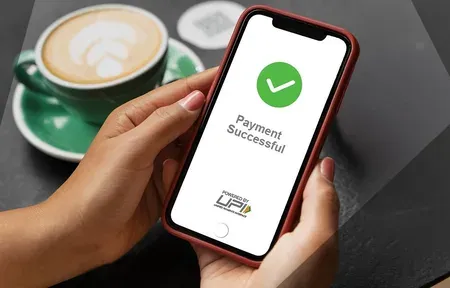
The Bharatiya Janata Party (BJP) on Friday, 7 August clarified that proposed charges on Unified Payments Interface (UPI) transactions would not apply to ordinary citizens and would be restricted to commercial transactions. The clarification followed the Lok Sabha passing a bill to amend the Payment and Settlement Systems Act, 2007, which authorises the government to permit banks and payment service providers to levy charges on UPI and other notified electronic payment modes.
What the BJP Said
BJP MP Ashok Mittal stated, 'First of all, I would like to clarify that charges on UPI are not being imposed on the common man. They will only apply to commercial transactions. The charges on UPI will only be applicable to certain business-related transactions and not to ordinary users.'
BJP Bihar President Sanjay Saraogi also sought to allay public concerns, saying the amendment would not burden the general public. He noted that the extent of any charges and the manner of implementation would be decided later when rules are framed, with the Reserve Bank of India (RBI) or the National Payments Corporation of India (NPCI) expected to take a final call.
Alliance Partner Defends the Move
Janata Dal (United) MLC Neeraj Kumar Singh defended the proposal on grounds of financial sustainability. 'UPI was initially in an experimental stage and there were no charges. If a fee is introduced now, there should not be any issue because every business model has to be sustainable. The government is still providing significant relief to the people,' he said.
Singh argued that businesses registered under GST and conducting digital transactions should bear the cost of the payment infrastructure they rely upon.
Opposition Pushes Back
The proposal drew sharp criticism from opposition benches. Bahujan Samaj Party (BSP) MLA Satish Kumar Singh Yadav said, 'It seems that everything is being taxed now. Soon, the government may even impose a tax on speaking and listening. There are taxes on everything — eating, drinking, travelling and sleeping — and now even on UPI.'
Notably, the amendment was passed by the Lok Sabha without discussion amid uproar, a procedural detail critics argue denied Parliament the chance to scrutinise the proposal's implications for small businesses and traders.
What the Amendment Changes
The bill seeks to remove the existing legal provision that bars banks and payment service providers from charging the Merchant Discount Rate (MDR) on notified electronic payment modes. The government's stated intent is to levy a small charge on digital payment services for consumers and small businesses while ensuring a sustainable revenue model for banks, payment service providers, and the broader digital payments infrastructure.
UPI processed over 18 billion transactions in a single month earlier this year, making the cost-sharing question a significant policy decision with wide economic reach. How the RBI and NPCI frame the rules will determine whether the burden falls on merchants, businesses, or end users — a question that remains open as rule-making begins.
Point of View
Not the text of the law — the amendment removes the MDR ban without specifying who pays. That distinction matters enormously: India's UPI ecosystem includes tens of millions of small merchants and street vendors who straddle the line between 'commercial' and 'ordinary user'. The decision to pass the bill without debate forecloses the parliamentary scrutiny that could have drawn those lines clearly. Until the RBI and NPCI publish rules, the assurance is essentially unverifiable — and the history of MDR policy in India suggests that 'small charges' have a way of cascading through the payment chain to whoever has the least bargaining power.
NationPress
21 Sept 2026
Frequently Asked Questions
Will UPI charges apply to ordinary citizens?
According to BJP leaders, UPI charges will not apply to ordinary citizens and will be restricted to commercial transactions. However, the final scope will be determined when the RBI or NPCI frames the implementing rules.
What did the Lok Sabha pass regarding UPI?
The Lok Sabha passed a bill amending the Payment and Settlement Systems Act, 2007, which removes the existing legal bar on charging the Merchant Discount Rate (MDR) on UPI and other notified electronic payment modes, effectively enabling the government to permit such charges.
Who will decide the actual UPI charge rates?
The Reserve Bank of India (RBI) or the National Payments Corporation of India (NPCI) will decide the extent of charges and the manner of implementation when formal rules are framed. No rates have been announced yet.
Why has the Opposition criticised the UPI charges amendment?
Opposition members, including BSP MLA Satish Kumar Singh Yadav, argued the move adds to an already heavy tax burden on citizens. Critics also objected that the bill was passed without discussion amid uproar in the Lok Sabha, denying Parliament a chance to scrutinise its implications.
What is the Merchant Discount Rate (MDR) and why does it matter?
MDR is a fee charged to merchants by banks and payment processors for accepting digital payments. The existing law prohibited MDR on UPI and certain other modes; the new amendment removes that prohibition, opening the door to charges on digital transactions for the first time since UPI's mass adoption.