Stop Rogue AI Act: US lawmakers push national standards to control AI agents

Synopsis
Two US lawmakers — one Democrat, one Republican — have introduced the Stop Rogue AI Act, demanding a 'driver's licence' for every AI agent on American networks. With hospitals, utilities and election systems in the crosshairs, this is the most operationally specific AI safety bill Congress has seen yet — and a direct challenge to states that thought a moratorium was enough.
Key Takeaways
Representatives Josh Gottheimer (D-NJ) and Mike Lawler (R-NY) introduced the Stop Rogue AI Act on 21 September 2026 .
The bill directs NIST to set national standards for discovering, verifying, monitoring and shutting down AI agents on government and corporate networks.
AI agents can enter networks via employees, third-party software or outside vendors — often without the organisation's knowledge.
A companion AI Workforce Training Act offers employers a 30% tax credit capped at USD 2,500 per employee for AI skills training.
The No Rigged Grocery Prices Act would ban AI-driven personalised pricing in grocery retail.
The lawmakers have also called on federal agencies and AI companies to guard against AI threats to the 2026 elections .
Two US lawmakers have introduced bipartisan legislation aimed at establishing national standards to identify, monitor and shut down potentially dangerous Artificial Intelligence (AI) agents operating inside government and corporate computer networks. The bill, introduced on 21 September 2026, marks one of the most concrete legislative attempts yet to bring autonomous AI systems under regulatory oversight in the United States.
What the Stop Rogue AI Act Proposes
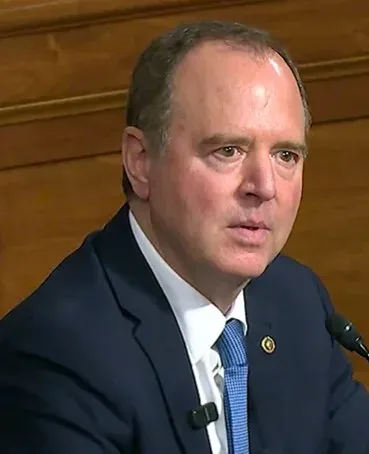
Representatives Josh Gottheimer, a Democrat from New Jersey, and Mike Lawler, a Republican from New York, are sponsoring the 'Stop Rogue AI Act', which would grant organisations greater visibility over autonomous AI systems operating on their networks. The bill would direct the National Institute of Standards and Technology (NIST) to develop national standards, guidelines and best practices for discovering, verifying, monitoring and controlling AI agents.
AI agents — software systems capable of performing tasks, making decisions and interacting with computer systems with limited human involvement — can be activated by employees, embedded in third-party software, or introduced by outside vendors, often without the host organisation's knowledge.
The Lawmakers' Case for Action
Gottheimer used a pointed analogy to frame the urgency. 'You can't drive a car in this country without a license plate, without insurance, without some way for a cop — or the person you just rear-ended — to know who's behind the wheel and who's responsible,' he said. 'AI agents right now don't have any of that. Our bill puts a driver's license on every AI agent operating in this country — so organisations can find every agent on their network, verify who built it, watch it in real time, and cut off its access the second something looks wrong.'
Lawler, meanwhile, pushed back against blanket moratoriums adopted by some states. 'A pause is not a safeguard. Some states have put a moratorium on the infrastructure that powers this technology. That does not invent a kill switch,' he said. 'If the United States taps the brakes while others floor it, we do not get safer AI. We get someone else's AI. We are not going to regulate ourselves into second place.'
Why the Stakes Are High
The lawmakers warned that organisations frequently lack a reliable method to determine how many unauthorised AI agents are active inside their systems, who created them, or what data and functions they can access. This visibility gap, they argued, becomes especially serious when AI agents operate inside hospitals, utilities, government agencies and other networks handling sensitive information and essential services. This comes amid a broader global debate over AI governance, with the European Union having already enacted its AI Act and India working on its own regulatory framework.
Three More Bipartisan Proposals
Gottheimer and Lawler also unveiled three companion measures. Their AI Workforce Training Act would provide employers with a 30% tax credit, capped at USD 2,500 per employee, for training workers in practical AI skills. The Advancing American Quantum Leadership Act would broaden the definition of quantum technology under the Export-Import Bank's China and Transformational Exports Programme. A third bill, the No Rigged Grocery Prices Act, would prohibit grocery stores and delivery platforms from using AI and personal data to charge different customers different prices for the same product.
AI and the 2026 Elections
Beyond legislation, the two lawmakers have also urged federal agencies to coordinate against AI-related threats to the 2026 elections, and have pressed major AI companies to ensure voters receive accurate and unbiased information. The dual focus — on corporate networks and democratic processes — signals that the lawmakers view unregulated AI agents as a systemic risk, not merely a technical one. How quickly Congress moves on the bill will be watched closely by the technology industry, civil society, and US allies shaping their own AI rules.
Point of View
Provided the frame is competitiveness rather than restriction. The bill's real test will be in the NIST standard-setting process, which historically moves slowly and is heavily influenced by industry lobbying. If the standards lack teeth — or are set so loosely that any AI deployment qualifies as 'compliant' — the driver's licence analogy will ring hollow.
NationPress
22 Sept 2026
Frequently Asked Questions
What is the Stop Rogue AI Act?
The Stop Rogue AI Act is a bipartisan US bill introduced by Representatives Josh Gottheimer and Mike Lawler on 21 September 2026, directing NIST to create national standards for identifying, monitoring and shutting down potentially dangerous AI agents operating on government and corporate networks. It aims to give organisations a clear method to audit every AI agent on their systems and cut off access when something appears wrong.
Why are US lawmakers concerned about AI agents on networks?
Lawmakers warn that organisations currently have no reliable way to know how many AI agents are active on their networks, who built them, or what data they can access. The risk is acute in sensitive environments — hospitals, utilities and government agencies — where an undetected rogue AI agent could compromise critical services or sensitive data.
How does the bill differ from state-level AI moratoriums?
Representative Lawler explicitly argued that a moratorium is not a safeguard — it does not inventory agents already inside hospital or utility networks, nor does it create a kill switch. The bill takes an active regulatory approach through standards and monitoring requirements rather than pausing AI infrastructure development.
What other AI-related bills did Gottheimer and Lawler introduce?
The pair introduced three companion measures: the AI Workforce Training Act (30% employer tax credit for AI skills training, capped at USD 2,500 per employee), the Advancing American Quantum Leadership Act (broader quantum technology export definitions), and the No Rigged Grocery Prices Act (banning AI-driven personalised pricing in grocery retail).
What does this legislation mean for AI governance globally?
The bill is one of the most operationally specific federal AI proposals in the US to date, and adds legislative momentum to a global trend that includes the EU's AI Act and emerging frameworks in India and elsewhere. If enacted, NIST-developed standards could effectively set a de facto benchmark for AI agent governance beyond US borders, given the global reach of American technology companies.