How is Rajasthan CM tackling illegal mining and boosting revenue?
Click to start listening
Synopsis
In a recent meeting, Rajasthan’s Chief Minister Bhajan Lal Sharma emphasized the importance of making the state a leader in the mining sector. With a focus on curbing illegal mining and enhancing revenue, the government aims to foster growth and local employment opportunities through innovative technologies and reforms.
Key Takeaways
- Rajasthan aims to be a leader in mining.
- Strict actions against illegal mining are in place.
- Advanced technology will assist in resource identification.
- Transparency in the auction process is prioritized.
- Encouragement for eco-friendly M-sand production.
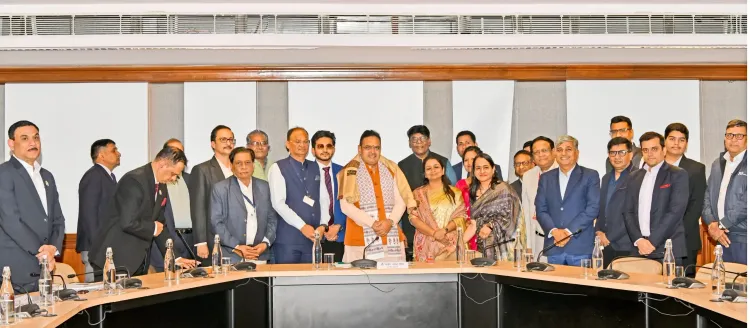
Jaipur, Dec 9 (NationPress) The Chief Minister of Rajasthan, Bhajan Lal Sharma, conducted a review of the Mines and Petroleum Department on Tuesday, emphasizing that positioning Rajasthan as a leading force in the national mining sector is of utmost importance to the state administration.
He urged officials to achieve revenue goals promptly and to implement strict measures against illegal mining. “The mining sector is crucial for Rajasthan’s growth and provides significant local employment opportunities. Anyone caught engaging in illegal mining will face consequences,” the Chief Minister stated during the meeting at the Chief Minister's Office.
Sharma instructed the department to leverage advanced technologies, including artificial intelligence, to discover new mineral blocks and to analyze successful practices from other mineral-rich regions.
Moreover, he advocated for enhanced transparency in the auction process and improved collaboration among the police, transport, and mines departments to combat illegal activities effectively.
Monitoring efforts will be intensified through the use of drone surveys and increased geo-fencing around mining lease areas.
Reaffirming the government's commitment to supporting legal mining, the Chief Minister noted that boosting the production of M-sand as a sustainable alternative to river sand is a significant policy focus. Under the M-Sand Policy 2024, incentives have been provided to encourage entrepreneurs to establish new production units.
Officials have been tasked with regularly tracking their advancements and investigating additional mineral resource opportunities.
During the meeting, officials updated the Chief Minister on major reforms, including the establishment of an Environment Protection and Illegal Mining Monitoring Committee, the deployment of Border Home Guards in sensitive areas, and the creation of a task force to prevent the misuse of e-challans and transit passes. To enhance revenue collection, the department is now requiring GPS- and RFID-enabled vehicles for mineral transportation and is standardizing software across authorized weighbridges.
Additionally, AI cameras and sensor-based surveillance systems are being implemented, they reported.
Previously, Principal Secretary (Mines) T. Ravikanth presented the department’s progress report. The meeting was also attended by Director General of Police Rajiv Kumar Sharma and senior officials from relevant departments.
Point of View
The actions taken by Rajasthan's government reflect a commitment to sustainable and responsible mining practices. By prioritizing the fight against illegal mining and leveraging technology, the state aims to balance economic growth with environmental protection, ensuring that local communities benefit from mineral wealth.
NationPress
10/12/2025
Frequently Asked Questions
What measures is the Rajasthan government taking against illegal mining?
The Rajasthan government is implementing strict actions against illegal mining, including increased monitoring through drone surveys and enhanced collaboration between police and mining departments.
How is Rajasthan promoting legal mining?
Rajasthan is promoting legal mining by focusing on the production of M-sand as an eco-friendly alternative to river sand, along with providing incentives under the M-Sand Policy 2024.
What technologies are being used to identify new mineral blocks?
The state is utilizing advanced technologies, including artificial intelligence, to identify new mineral blocks and study successful practices from other states.