What Health Campaign has the Ministry and WHO Launched for Women and Girls on Delhi Metro?
Click to start listening
Synopsis
In a significant move to promote the health of women and girls, the Union Ministry of Health and Family Welfare, in partnership with WHO, has launched a month-long campaign on the Delhi Metro. This initiative aims to spread awareness on vital health issues and reinforce the importance of women's health in the community and nation.
Key Takeaways
- Month-long campaign on Delhi Metro for women and girls' health.
- Focus on women's safety, mental health, and tuberculosis awareness.
- Campaign supports the PCPNDT Act to prevent gender determination.
- Utilizes Delhi Metro to reach millions of commuters.
- Collaboration between Union Ministry of Health and WHO.
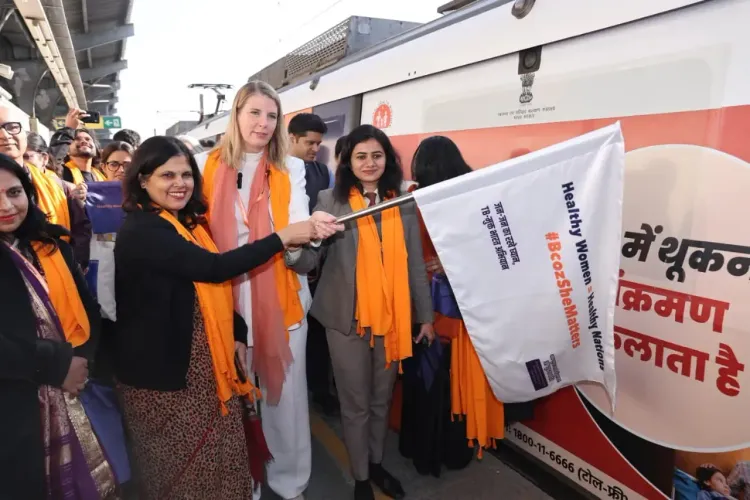
New Delhi, Dec 9 (NationPress) The Union Ministry of Health and Family Welfare, in collaboration with the World Health Organization (WHO), has initiated a month-long campaign on the Delhi Metro aimed at enhancing the health and welfare of women and girls.
This initiative commenced at the Sultanpur Metro Station and is set to run through December and January, focusing on critical topics such as women’s safety, mental health support, digital inclusion, Pre-natal Diagnostic Techniques (PCPNDT), and Tuberculosis (TB) awareness across metro trains and selected stations,” the Ministry stated.
Union Health Secretary Punya Salila Srivastava remarked, “In partnership with WHO, we have launched this campaign on the Delhi Metro to convey significant messages to the populace of Delhi. One vital message is: agar swasth naari hai, to sashakt parivaar hai, sashakt rashtra hai (which translates to, when a woman is healthy, the family and the nation can thrive).”
She further emphasized that the campaign seeks to ensure adherence to the PCPNDT Act and encourages individuals to refrain from gender determination practices.
The Health Secretary pointed out that advanced technologies are occasionally misused for determining the sex of unborn children.
The Act aims to combat female foeticide and address the diminishing sex ratio in the nation.
Additionally, the campaign will put a spotlight on Tuberculosis, supporting the TB Mukt Abhiyaan nationwide. Given the high incidence of TB in Delhi, the initiative aims to mobilize a Jan Andolan to combat this grave infectious disease.
As per the most recent data from the Ni-kshay portal, Delhi reported 9,8309 TB cases between January and October in 2025.
The state has also screened nearly 8.78 lakh individuals and conducted around 3.8 lakh chest X-rays to expedite the identification of new TB cases under the national TB Mukt Bharat Abhiyan.
“Utilizing the Delhi Metro ensures that these essential messages reach millions of daily commuters, thereby enhancing awareness and empowering women and girls throughout the city,” stated Srivastava.
Dr Catharina Boehme, Officer-in-Charge at WHO South-East Asia, mentioned, “Healthy women are the cornerstones of a healthy family, community, and nation.”
“Some journeys end, and others begin at this metro station. Today signifies the conclusion of the 16 Days of Activism against Gender-Based Violence. As one campaign concludes, another commences. We are excited to unveil the Delhi Metro campaign focused on the health and well-being of women and girls, based on two fundamental truths: Healthy Women=Healthy Nations, and #BecozSheMatters.
“The health of women and girls, including their mental health, is crucial not just for their individual well-being but for the society at large,” she concluded.
Point of View
I believe this campaign is a pivotal step towards addressing women's health issues in India. The collaboration between the Union Ministry and WHO highlights the urgency and importance of focusing on women's well-being, particularly in urban centers like Delhi. By utilizing the Delhi Metro, the initiative ensures that essential health messages reach a broad audience, fostering a healthier society.
NationPress
11/12/2025
Frequently Asked Questions
What is the goal of the health campaign?
The campaign aims to enhance the health and well-being of women and girls through awareness on women's safety, mental health, and tuberculosis.
Where did the campaign launch?
The campaign commenced at the Sultanpur Metro Station in Delhi.
How long will the campaign run?
The campaign is set to run for a month, through December and January.
What issues does the campaign address?
Key issues include women's safety, mental health, digital inclusion, and tuberculosis awareness.
Why is the PCPNDT Act important?
The PCPNDT Act is crucial for combating female foeticide and improving the declining sex ratio in India.