Rajnath Singh urges defence PSUs to join PM-SETU for Viksit Bharat push
Synopsis
Defence Minister Rajnath Singh used the PM-SETU Industry Conclave in Lucknow to push defence PSUs — HAL, BEL, BDL, BrahMos and others — to take operational ownership of skilling clusters, not just endorse them. With ₹1,500 crore already committed across seven clusters, the real test is whether industry participation moves beyond boardroom pledges into ITI transformation on the ground.
Key Takeaways
Defence Minister Rajnath Singh addressed the PM-SETU Industry Conclave in Lucknow on 30 August , urging defence PSUs to actively partner in the initiative.
Approved PM-SETU proposals represent more than ₹1,500 crore of committed industry-led investment across seven clusters in five states .
Attendees included senior leadership from HAL , BEL , BDL , BrahMos Aerospace , Ashok Leyland , and the World Bank .
Uttar Pradesh's Defence Corridor was highlighted as a model for integrating manufacturing growth with skilling infrastructure.
Minister Jayant Chaudhary called on industries to go beyond CSR and take direct ownership of ITI clusters under PM-SETU.
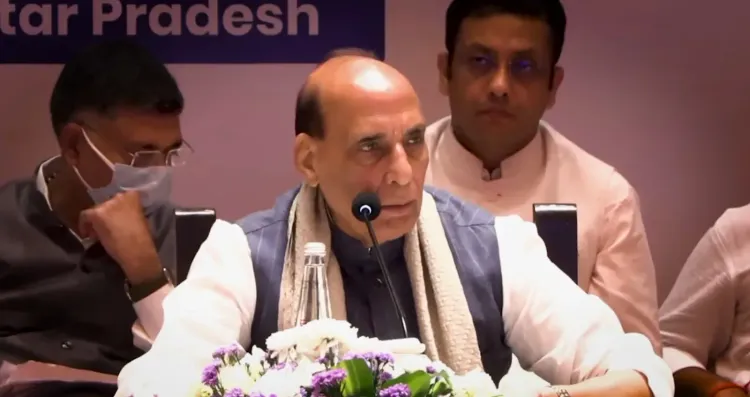
Defence Minister Rajnath Singh on Sunday, 30 August called on public sector defence companies to actively partner with the PM-SETU initiative, describing a skilled workforce as the cornerstone of India's march toward a Viksit Bharat. Addressing the PM-SETU Industry Conclave in Lucknow, he urged industries to treat the scheme as a collaborative national mission rather than a routine government programme.
Key Developments at the Conclave
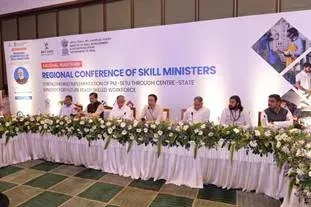
The conclave was organised by the Union Ministry of Skill Development and Entrepreneurship (MSDE) in collaboration with the Uttar Pradesh government. Senior leadership from major defence and manufacturing organisations attended, including representatives from Hindustan Aeronautics Limited (HAL), Bharat Electronics Limited (BEL), Bharat Dynamics Limited (BDL), BrahMos Aerospace, Ashok Leyland, NSDC, TCIL, and PTC, along with delegations from the World Bank and various industry associations.
The conclave was informed that approved Industry Partnership proposals under PM-SETU currently represent more than ₹1,500 crore of committed industry-led investment across seven clusters in five states, with several additional proposals under active consideration.
What Rajnath Singh Said
Singh underscored the need to align the skilling ecosystem with real industry requirements, asserting that skill certificates hold value only when they translate into meaningful employment. He called on defence public sector undertakings and related organisations to actively partner in PM-SETU, while also stressing the urgency of transforming Industrial Training Institutes (ITIs) and expanding apprenticeship opportunities.
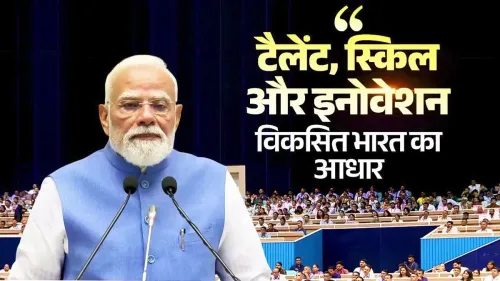
He stated that the success of PM-SETU should be measured not by the number of machines installed, but by the employment opportunities it generates and the lives it positively transforms. Singh reiterated Prime Minister Narendra Modi's vision of converting India's demographic dividend into a productive dividend, warning that sectors such as defence manufacturing, aerospace, electronics, drones, robotics, precision engineering, and automation require a workforce equipped with future-ready skills.
Uttar Pradesh as a Defence Manufacturing Hub
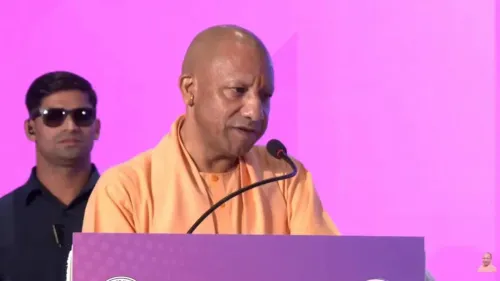
Singh highlighted Uttar Pradesh's emergence as a major manufacturing and defence production hub, driven by the rapid growth of its industrial ecosystem and the Defence Corridor. He emphasised stronger industry-academia linkages and expressed confidence that such partnerships would steer the state in the right direction. He further noted that under the leadership of Chief Minister Yogi Adityanath, Uttar Pradesh is witnessing transformative development across multiple sectors.
What the Skill Development Minister Said
Union Minister of State (Independent Charge) for Skill Development and Entrepreneurship Jayant Chaudhary described PM-SETU as a new partnership model linking government, industry, and training institutions. He stressed that the initiative is designed to bridge the gap between training and employment by enabling industries to play an active role in the development, governance, and operation of ITI clusters.
Chaudhary called upon industries to move beyond CSR initiatives and take active ownership of ITIs. He highlighted that the programme aims to create a future-ready workforce through industry-aligned training, modern infrastructure, apprenticeship pathways, and entrepreneurship opportunities.
What Comes Next
With additional PM-SETU proposals still under consideration and the Defence Corridor in Uttar Pradesh gaining momentum, the conclave signals a push to institutionalise industry participation in vocational education. The broader ambition — transforming ITIs into world-class centres of excellence — will hinge on whether defence majors move from endorsement to active operational ownership of skilling clusters.
Point of View
500 crore commitment figure is notable, but the structural challenge PM-SETU faces is familiar: getting industry to move from symbolic participation to genuine governance of skilling institutions. Defence PSUs have historically operated in a procurement-first culture, where workforce development is downstream of production targets. Singh's framing — that skilling and the defence industrial base must grow together — is strategically sound, but the conclave format itself, heavy on speeches and light on binding commitments, raises questions about follow-through. The real indicator will be how many ITI clusters see HAL or BEL on their governing boards, not just their letterheads.
NationPress
15 Oct 2026
Frequently Asked Questions
What is PM-SETU and what does it aim to do?
PM-SETU is a government initiative designed to bridge the gap between vocational training and employment by enabling industries to actively participate in the development, governance, and operation of ITI clusters. It aims to create a future-ready workforce through industry-aligned training, modern infrastructure, and expanded apprenticeship pathways.
How much investment has PM-SETU attracted so far?
Approved Industry Partnership proposals under PM-SETU currently represent more than ₹1,500 crore of committed industry-led investment across seven clusters in five states, with several additional proposals still under consideration.
Which organisations participated in the PM-SETU Industry Conclave in Lucknow?
The conclave saw participation from senior leadership of HAL, BEL, BDL, BrahMos Aerospace, Ashok Leyland, NSDC, TCIL, and PTC, along with representatives from the World Bank, sector skill councils, and various industry associations.
What role did Uttar Pradesh play in the conclave?
The conclave was co-organised by the UP government, and Defence Minister Rajnath Singh highlighted Uttar Pradesh's emergence as a major defence manufacturing hub, citing the growth of its Defence Corridor and the transformative development under Chief Minister Yogi Adityanath.
What did Jayant Chaudhary say about industry's role in PM-SETU?
Union Minister of State Jayant Chaudhary called on industries to go beyond CSR initiatives and take active ownership of ITIs under PM-SETU. He emphasised that the scheme requires industry to play a direct role in the governance and operation of ITI clusters, not merely fund peripheral activities.