RBI repo rate hike to 5.5% raises MSME borrowing costs, warns IMC chief
Synopsis
The RBI's 25-basis-point repo rate hike to 5.5% may be in line with expectations — but for India's MSMEs, it compounds a chronic funding gap already estimated at ₹30 lakh crore. The IMC Chamber's warning puts the central bank on notice: monetary tightening and small-business growth cannot remain on a collision course.
Key Takeaways
RBI raised the repo rate by 25 basis points to 5.5% , raising borrowing costs across the economy.
Mahendra Kumar Chouhan of the IMC Chamber of Commerce and Industry warned the hike will disproportionately hurt SMEs and MSMEs .
The SIDBI -estimated funding gap for the SME sector stands at approximately ₹30 lakh crore .
The government's ₹10,000 crore SME Growth Fund is seen as a partial offset but falls well short of the total gap.
India's nine recently signed FTAs could open access to markets worth around $60 trillion for Indian MSMEs.
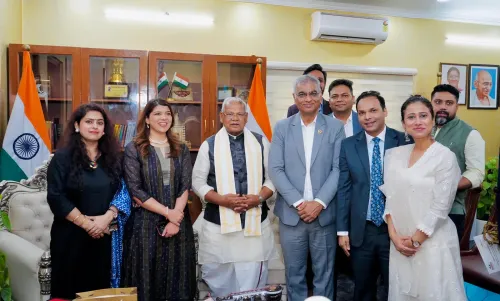
The Reserve Bank of India's decision to raise the repo rate by 25 basis points to 5.5% is set to push up borrowing costs for small businesses, with industry leaders warning that SMEs and MSMEs will bear the sharpest impact. Prof. Mahendra Kumar Chouhan, President of the IMC Chamber of Commerce and Industry, raised the concern on Wednesday, 7 October, urging the central bank to maintain a measured stance given the broader strengths visible in the Indian economy.
Industry Reaction to the Rate Decision
Prof. Chouhan acknowledged that the 25-basis-point hike was 'broadly along expected lines,' and that the chamber appreciated the underlying concerns that drove the RBI's decision. However, he flagged that the central bank's signal that rate cuts are off the table for now was a distinct worry for the business community.
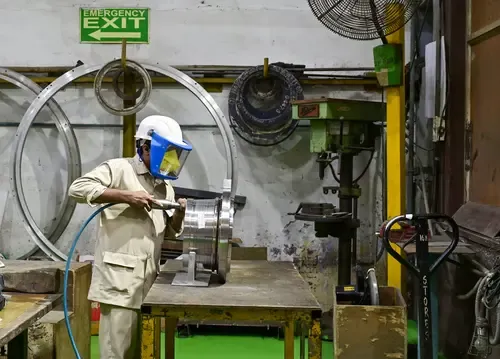
The IMC Chamber counts companies of varying sizes among its members, with a predominant share being SMEs and MSMEs. According to Chouhan, these businesses are structurally more sensitive to interest rate movements because they rely heavily on short-term credit and working capital loans priced against the benchmark rate.
The MSME Funding Gap and the ₹10,000 Crore Growth Fund
Chouhan pointed to the government's ₹10,000 crore SME Growth Fund as a meaningful step toward addressing a much larger structural problem. Citing estimates from the Small Industries Development Bank of India (SIDBI), he noted that the funding gap facing the SME sector stands at approximately ₹30 lakh crore.
He argued that the fund, if deployed effectively, could help MSMEs modernise operations, adopt better technology, improve productivity, and explore new markets — providing an overall boost to the sector's growth trajectory.
Free Trade Agreements as a Growth Lever
Chouhan also drew attention to the potential upside from India's recently concluded free trade agreements. He noted that the Commerce Ministry had signed nearly nine FTAs in recent times, which cumulatively open access to markets valued at approximately $60 trillion.
These agreements could enable Indian MSMEs to forge business alliances with counterparts in the United Kingdom, the European Union, the UAE, and other partner countries. Chouhan argued that a combination of FTA access and the SME Growth Fund could give smaller businesses the financial and market footing to compete internationally.
The Bigger Picture for Small Businesses
This comes amid a wider debate over whether monetary tightening risks crowding out the very segment — small and mid-sized enterprises — that drives the bulk of India's employment and export diversification. Critics argue that while inflation control remains a legitimate priority, blunt rate instruments disproportionately squeeze credit-dependent MSMEs that cannot access capital markets the way larger corporations can.
With the RBI signalling a prolonged pause on cuts, industry bodies are likely to press harder for targeted credit relief measures in the interim. How the government and the central bank calibrate that balance over the coming quarters will shape the operating environment for millions of small businesses across India.
Point of View
But the underlying message is pointed: the RBI's rate path is making credit more expensive for the segment of the economy that can least afford it. MSMEs employ the majority of India's non-farm workforce and account for a significant share of exports, yet they have minimal access to bond markets or equity capital — making them almost entirely bank-credit dependent. The ₹10,000 crore SME Growth Fund is welcome, but against a ₹30 lakh crore funding gap flagged by SIDBI, it is more signal than solution. The real question is whether the government will pair the FTA-and-fund narrative with structural credit reforms — or whether MSMEs will simply absorb higher costs while waiting for a rate pivot that may be quarters away.
NationPress
7 Oct 2026
Frequently Asked Questions
How does the RBI repo rate hike affect MSMEs?
A higher repo rate raises the benchmark against which banks price loans, directly increasing the cost of working capital and term credit for MSMEs. Since small businesses rely heavily on bank lending and lack access to capital markets, even a 25-basis-point move can meaningfully squeeze margins and expansion plans.
What is the current RBI repo rate after the latest hike?
The RBI raised the repo rate by 25 basis points to 5.5%. The central bank also indicated that rate cuts are not on the immediate horizon, signalling a prolonged period of tighter monetary conditions.
What is the ₹10,000 crore SME Growth Fund?
It is a government initiative designed to help address the funding gap faced by small and medium enterprises in India. According to SIDBI estimates, the total funding gap for the sector is around ₹30 lakh crore, making the fund a partial but significant step toward improving credit access.
How can India's free trade agreements benefit MSMEs?
India has signed nearly nine FTAs in recent times, collectively opening access to markets worth approximately $60 trillion. For MSMEs, these agreements could unlock business alliances and export opportunities in the UK, EU, UAE, and other partner countries, helping smaller firms compete internationally.
Who is Prof. Mahendra Kumar Chouhan?
Prof. Mahendra Kumar Chouhan is the President of the IMC Chamber of Commerce and Industry, a Mumbai-based industry body whose membership includes a large share of SMEs and MSMEs. He made these remarks on 7 October in response to the RBI's rate decision.