What Did Jitendra Singh Unveil During the First Open Call of the RDI Fund?
Synopsis
Union Minister Dr. Jitendra Singh has initiated the first open call under the RDI Fund, aiming to bolster India's innovation ecosystem by financing high-risk technology projects. This initiative signifies a pivotal shift towards private sector engagement in technology commercialization, providing critical financial support to elevate indigenous technologies.
Key Takeaways
Launch of the RDI Fund's first open call .
Over 191 proposals received, predominantly from the private sector .
Funding support available up to 50% of project costs .
Concessional interest rates between 2-4% .
Collateral-free financing options .
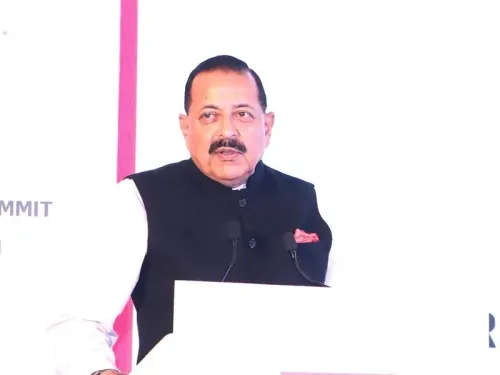
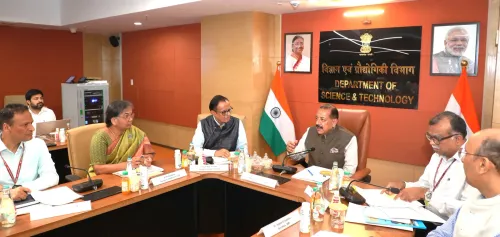
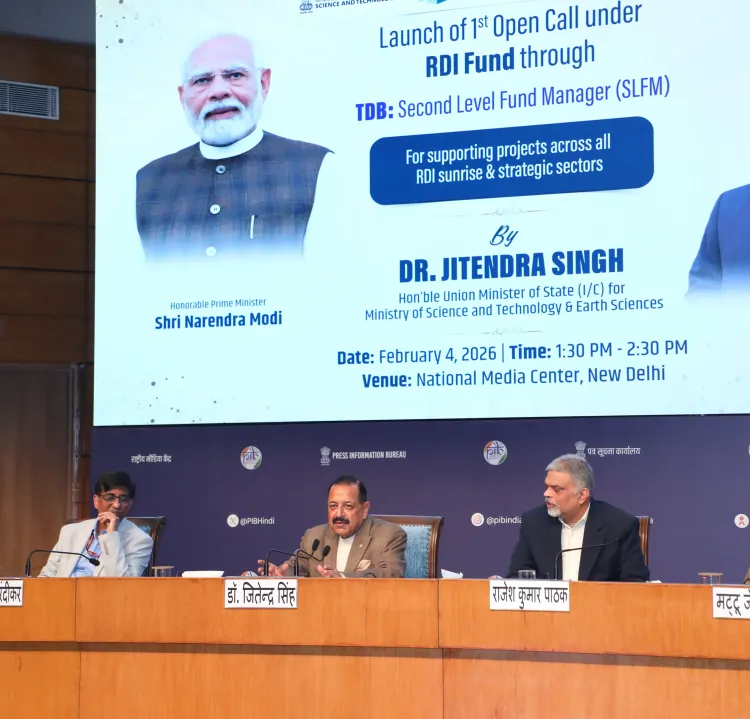
New Delhi, Feb 4 (NationPress) Union Minister of State (Independent Charge) for Science & Technology, Dr. Jitendra Singh, officially announced the inaugural open call of the Technology Development Board (TDB) under the Research, Development and Innovation (RDI) Fund on Wednesday. The Minister noted that approximately 191 proposals have been submitted, with a substantial portion originating from the private sector.
“This enthusiastic response indicates a growing trust among private companies in the government's dedication to fostering innovation-driven growth,” Singh remarked.
“It is crucial that applications resonate with the essence of the initiative and that funds are allocated for authentic technology development and scaling,” he emphasized.
The initial TDB Call under the RDI Fund is aimed at assisting projects at Technology Readiness Level (TRL) 4 and above. Financial support will be extended through Second Level Fund Managers (SLFMs) in the form of loans, equity, or hybrid instruments, tailored to meet the specific needs of the projects.
The upper limit for funding support will be up to 50 percent of the total project cost, necessitating matching contributions from companies or private investors.
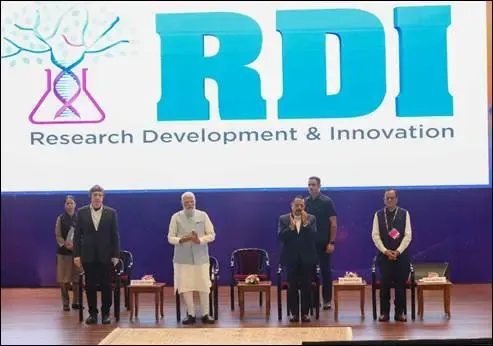
The RDI Fund, which is part of the Anusandhan National Research Foundation (ANRF) established by Prime Minister Narendra Modi in November 2025, seeks to enhance India's innovation landscape by promoting the commercialization of homegrown technologies through structured and long-term financial backing.
This fund empowers private businesses to develop technologies in sectors that were predominantly the realm of the public sector.
It boasts a total corpus of Rs 1 lakh crore and provides financing at concessional interest rates ranging from 2-4 percent, with extended tenures of up to 15 years, including provisions for moratoriums.
Singh pointed out that the framework is designed to facilitate easier access to capital for technology developers while ensuring financial prudence.
The funding structure allows for collateral-free financing, negating the need for personal or corporate guarantees. Proposal assessments will be based on scientific, technological, financial, and commercial merit, with established timelines for evaluation and fund disbursement, as reiterated by the Minister.
Point of View
The initiation of the first open call under the RDI Fund marks a transformative moment for India's technological landscape. It showcases the government's commitment to fostering an environment conducive to innovation, thereby aligning public and private interests in advancing the nation's technological prowess.
NationPress
30 Sept 2026
Frequently Asked Questions
What is the RDI Fund?
The RDI Fund is a financial initiative launched by the Indian government to support the commercialization of indigenous technologies, focusing on innovation-driven projects.
Who can apply for funding under the RDI Fund?
Private enterprises and organizations with projects at Technology Readiness Level (TRL) 4 and above are eligible to apply for funding.
What is the maximum funding support available?
The maximum funding support can be up to 50% of the total project cost, requiring matching contributions from applicants.
What are the interest rates for financing under the RDI Fund?
The fund offers financing at concessional interest rates ranging from 2-4%, with long tenures of up to 15 years.
Is collateral required for funding?
No, the funding framework allows for collateral-free financing, eliminating the need for personal or corporate guarantees.