Vizhinjam port Phase 2: ₹16,000 crore expansion to hit 5.7 mn TEUs, add 5,000 jobs
Synopsis
Vizhinjam is no longer just a transshipment hub — it is now an EXIM gateway, and a ₹16,000 crore Phase 2 expansion will push its capacity to 5.7 million TEUs by December 2028. With Adani Group's cumulative bet reaching ₹30,000 crore and the Kerala government committing ₹3,200 crore for a Ring Road, this is the most consequential port investment in Kerala's history — and a direct challenge to India's 75% dependence on foreign transshipment hubs.
Key Takeaways
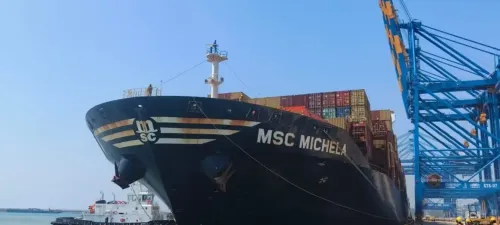
Vizhinjam International Seaport has commenced full-fledged EXIM operations , transitioning from a transshipment-only hub.
The ₹16,000 crore Phase 2 expansion will raise annual capacity to 5.7 million TEUs and add 1,200 metres of container berth.
Full-phase development is targeted for December 2028 , with more than 5,000 additional jobs expected.
Adani Group's cumulative investment in Vizhinjam will reach ₹30,000 crore — the largest by any business house in Kerala.
The Kerala government will allocate ₹3,200 crore for Ring Road land acquisition under Mission Samudra .
More than 75% of India's container transshipment cargo currently passes through foreign ports; Vizhinjam's EXIM status aims to reduce that dependence.
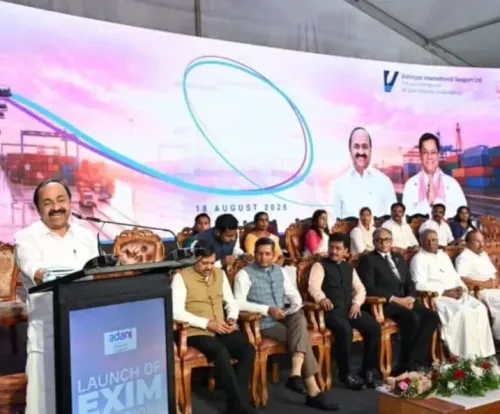
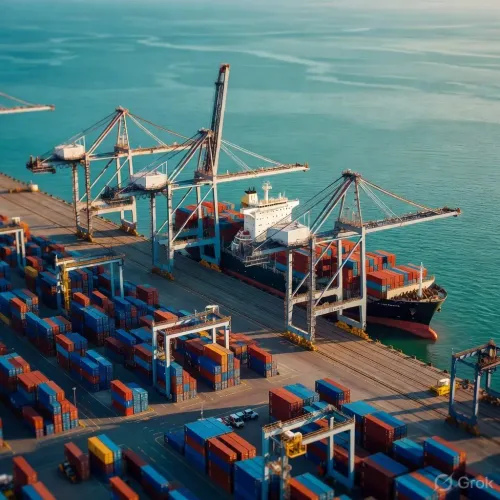
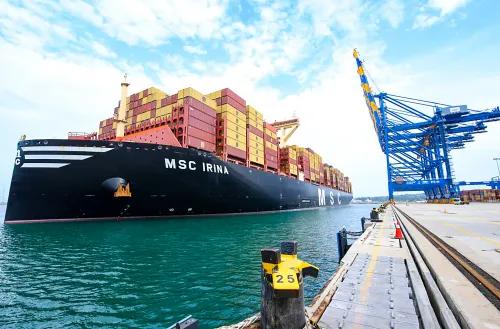
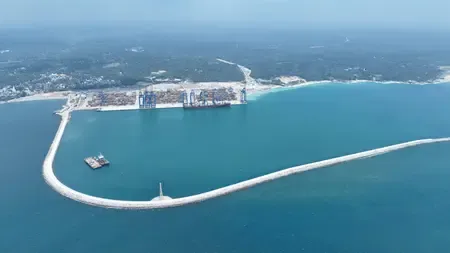
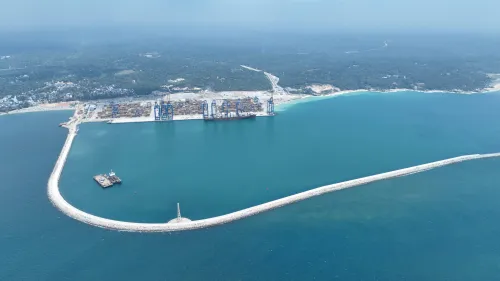
Vizhinjam International Seaport is set to undergo a ₹16,000 crore Phase 2 expansion that will raise its annual container handling capacity to 5.7 million TEUs (twenty-foot equivalent units), it was announced on Tuesday, 18 August. The expansion will add 1,200 metres of new container berth, permanent rail connectivity, upgraded road access, logistics parks, and warehousing infrastructure — with full-phase development targeted for completion by December 2028.
The announcement coincides with the port's transition from a transshipment hub to a full-fledged Export-Import (EXIM) gateway, enabling it to handle cargo being exported from or imported into India in addition to transshipment between international shipping services. The expansion is expected to generate more than 5,000 additional direct and indirect jobs across the maritime and logistics ecosystem.
Adani Group's Largest Kerala Bet
Adani Ports and Special Economic Zone Ltd (APSEZ) is the developer behind the project. With the Phase 2 commitment, the Adani Group's cumulative investment in Vizhinjam will reach ₹30,000 crore — making it the single largest investment pledged by any business house in Kerala.
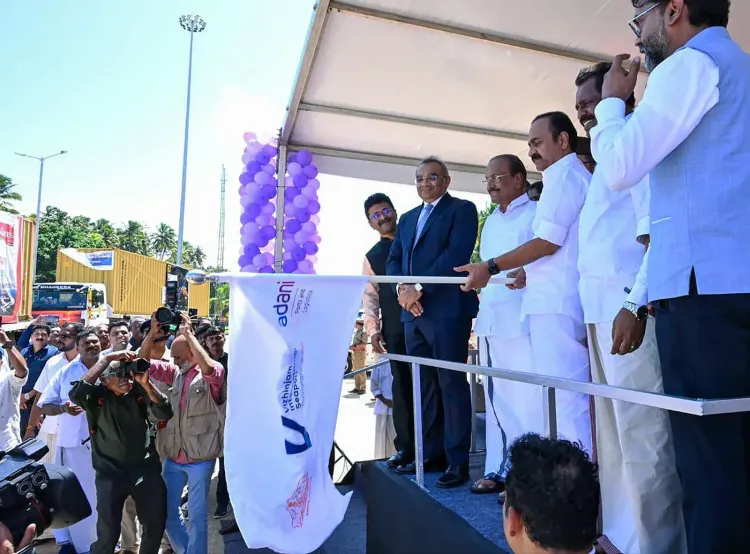
Ashwani Gupta, Chief Executive Officer and Whole-time Director of APSEZ, described the port's significance in broader terms. 'It is the opening of a new gateway connecting Kerala's talent, India's enterprise and the aspirations of millions to global markets,' he said. Gupta added that the port's purpose extends beyond cargo movement, serving India's aspirations for self-reliance, global competitiveness, and maritime leadership.
Kerala Government's Role and Mission Samudra
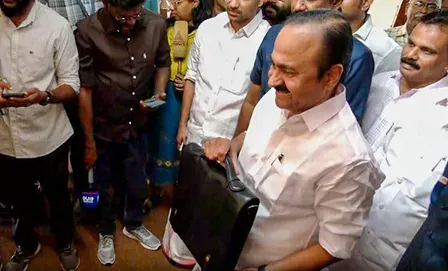
Kerala Chief Minister VD Satheesan underscored the state government's commitment to maximising the port's potential. 'It is a proud moment for us and Vizhinjam is now a gateway to the world. The challenge before us is to make the most of this opportunity through Mission Samudra, with Vizhinjam as its base, stronger road and rail connectivity and greater private investment,' he said.
Satheesan announced that the government will allocate ₹3,200 crore for land acquisition for the Ring Road, while discussions have already begun to attract private investment into the ecosystem. Mission Samudra is the state's broader maritime development programme anchored at Vizhinjam.
Why EXIM Operations Are a Structural Shift
The move to EXIM operations carries significant implications for India's maritime trade efficiency. According to the company, more than 75 per cent of India's container transshipment cargo is currently routed through foreign ports, adding to logistics costs and transit times. Vizhinjam's EXIM capability is designed to reduce this structural dependence and help India retain greater value from its own maritime trade.
This arrangement can shorten transit times and improve supply chain efficiency by eliminating the need to route Indian cargo through overseas transshipment hubs such as Colombo, Singapore, or Port Klang — a long-standing competitive disadvantage for Indian exporters.
What Comes Next
The Phase 2 infrastructure build-out — spanning the new berth, rail link, road upgrades, and logistics parks — is slated for completion by December 2028. Industry observers will watch whether the rail connectivity timeline holds, as inland connectivity has historically been the bottleneck limiting port throughput in southern India. With cumulative investment of ₹30,000 crore now committed, Vizhinjam is positioned to become a key node in India's maritime infrastructure map.
Point of View
But the 75% foreign transshipment dependency figure is a reminder of how much ground India needs to recover — and how quickly competing ports in Colombo and Singapore will respond. The ₹30,000 crore cumulative Adani commitment is substantial, but the real test is rail connectivity: southern India's port hinterland has historically been constrained by last-mile infrastructure, not berth capacity. The December 2028 deadline for full-phase development is aggressive; if the rail link slips, the new berths risk underperforming. Chief Minister Satheesan's Mission Samudra framing is politically useful, but private investment discussions that are merely 'begun' are not the same as signed commitments.
NationPress
18 Aug 2026
Frequently Asked Questions
What is the Vizhinjam International Seaport Phase 2 expansion?
It is a ₹16,000 crore infrastructure expansion that will raise the port's annual container handling capacity to 5.7 million TEUs, add 1,200 metres of container berth, and bring permanent rail and enhanced road connectivity. Full-phase development is targeted for December 2028.
What are EXIM operations at Vizhinjam port?
EXIM (Export-Import) operations mean the port now handles cargo being exported from or imported into India, in addition to transshipment between international shipping services. This marks Vizhinjam's transition from a transshipment-only hub to a full trade gateway.
How much has the Adani Group invested in Vizhinjam?
With the Phase 2 commitment, the Adani Group's cumulative investment in Vizhinjam will reach ₹30,000 crore, making it the largest investment pledged by any single business house in Kerala.
How many jobs will the Vizhinjam expansion create?
The Phase 2 expansion is expected to generate more than 5,000 additional direct and indirect jobs across the maritime and logistics ecosystem around the port.
Why does Vizhinjam's EXIM status matter for India?
More than 75% of India's container transshipment cargo is currently routed through foreign ports such as Colombo and Singapore, adding logistics costs and transit time. Vizhinjam's EXIM capability is designed to reduce this structural dependence and help India retain greater value from its maritime trade.