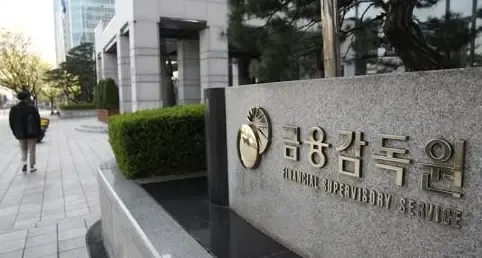
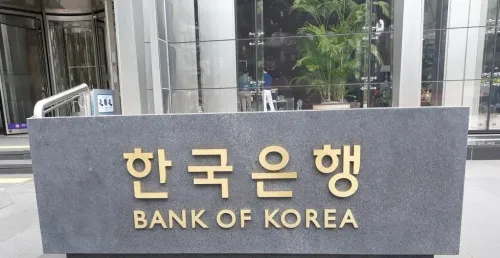
Did Regulator Impose a $183.7 Million Fine on South Korea's Major Banks?
Synopsis
In a landmark decision, South Korea's antitrust regulator has fined four major commercial banks a staggering $183.7 million for colluding on real estate lending limits. This unprecedented action highlights the ongoing battle against anti-competitive practices in the financial sector, significantly impacting consumers and small businesses alike.
Key Takeaways
The antitrust regulator fined four major banks $183.7 million for collusion.
Accusations include exchanging sensitive documents related to LTV ratios .
This practice has limited competition in the mortgage market.
Small and medium enterprises are particularly affected by these lending practices.
First application of a revised law aimed at preventing anti-competitive behavior.
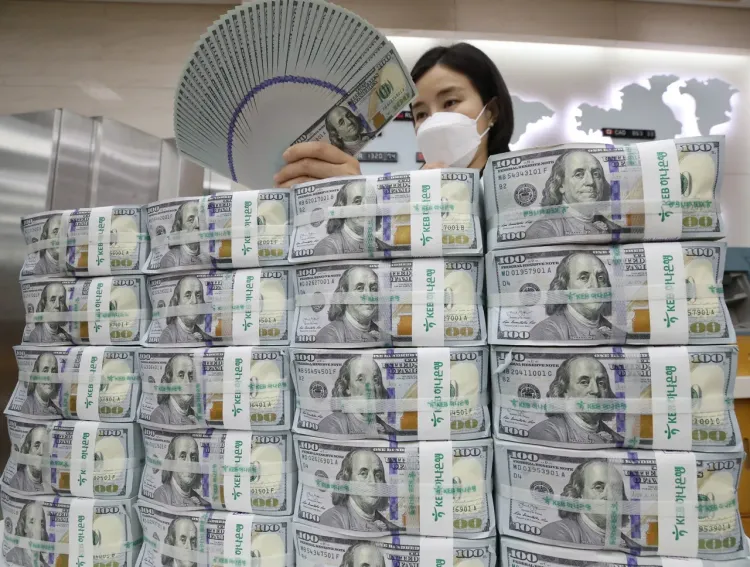
Seoul, January 21 (NationPress) – The country's antitrust regulator announced on Wednesday that it has levied a total fine of 272 billion won (approximately $183.7 million) against the four leading commercial banks in South Korea due to accusations of collusion regarding real estate lending limits linked to loan-to-value (LTV) ratios.
The institutions involved are Shinhan Bank, Woori Bank, Hana Bank, and KB Kookmin Bank. They are alleged to have exchanged sensitive documents concerning LTV ratios and coordinated their lending limits, a practice that has stifled competition within the mortgage loan sector, as stated by the Fair Trade Commission (FTC), according to reports from Yonhap news agency.
The LTV ratio serves as a crucial regulatory mechanism designed to manage household debt by restricting the amount borrowers can secure in loans relative to the value of their property used as collateral.
“The four major banks exchanged detailed information on their LTV ratios on at least 736 to 7,500 occasions over an extended period, thereby reducing uncertainty regarding competitors' strategies and sidestepping competition on LTV ratios,” explained Lee Sun-mi, a senior official at the FTC.
This information exchange enabled the banks to maintain stable operating profits while limiting consumer choice among lenders, as the four banks represent about 60 percent of the real estate mortgage loan market, the regulator added.
The FTC noted that the alleged collusion has especially detrimental effects on small and medium-sized enterprises and small business owners, who typically have lower credit ratings, making it challenging to secure funding through unsecured loans or additional collateral.
Consequently, these borrowers often depend on secured loans, rendering the banks' LTV decisions highly influential in determining their access to financing, according to the FTC.
This case marks the inaugural application of a revised fair trade law that became effective on December 30, 2021, which introduced a provision prohibiting anti-competitive collusion through the sharing of sensitive business information.
Point of View
This unprecedented fine against South Korea's major banks underscores a critical moment in the nation’s financial regulation landscape. It reflects the government's commitment to uphold fair competition and protect consumers, particularly vulnerable businesses that heavily rely on secured loans. This situation calls for scrutiny and vigilance to ensure that such practices do not compromise market integrity.
NationPress
20 Sept 2026
Frequently Asked Questions
What is the total fine imposed on the banks?
The total fine imposed on the four major banks is 272 billion won , which is approximately $183.7 million .
Which banks are involved in the collusion case?
The banks involved are Shinhan Bank , Woori Bank , Hana Bank , and KB Kookmin Bank .
What are LTV ratios?
Loan-to-value (LTV) ratios are a regulatory tool used to manage household debt by limiting the amount of loans borrowers can take out based on the value of their properties.
How does this affect consumers?
The collusion among these banks limits competition, thereby restricting consumer choices in the mortgage loan market and potentially leading to higher borrowing costs.
What was the purpose of the revised fair trade law?
The revised fair trade law, effective from December 30, 2021 , aims to prohibit anti-competitive practices, including collusion through the exchange of sensitive business information.