How Did South Korea's Biotech Industry Achieve a 9.8% Growth Amid Global Uncertainties?

Synopsis
South Korea's biotechnology sector has showcased remarkable resilience, achieving a growth of nearly 10% in 2024 despite global trade challenges. This exciting development signals a renewed momentum in the industry, with significant increases in production, exports, and investments. Discover how government support plays a crucial role in this growth story.
Key Takeaways
South Korea's biotech output increased by nearly 10% .
Total production reached 22.92 trillion won (US$15.7 billion).
Exports rose by 17.1% year-on-year .
R&D and facility investments surged by 46.1% .
Government support is crucial for ongoing growth .
Seoul, Nov 11 (NationPress) South Korea's biotechnology sector experienced an impressive growth of nearly 10 percent in 2024, despite ongoing global trade challenges, as per the latest industry statistics released on Tuesday.
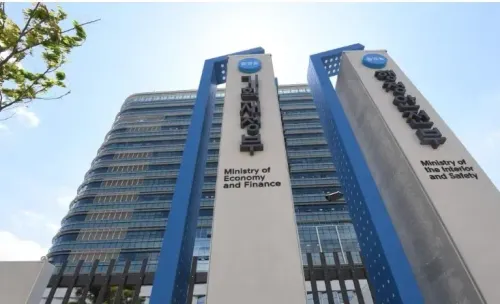
The total output of the nation's biotechnology industry reached 22.92 trillion won (approximately US$15.7 billion) in the previous year, a rise from 20.87 trillion won in 2023, according to data from the Ministry of Trade, Industry and Energy (MOTIE), which referenced a study conducted by the Korea Biotechnology Industry Organization (KoreaBIO).
This increase follows a 12 percent decline witnessed in 2023, indicating a revitalization in the sector's growth trajectory, as reported by Yonhap news agency.
When examining product categories, the production of therapeutic antibodies and cytokine products hit 4.86 trillion won, followed by biomanufacturing and contract services at 3.21 trillion won, with feed additives reaching 3.11 trillion won, according to the data.
Moreover, exports from this sector surged by 17.1 percent year-on-year in 2024, and investments in R&D and facilities skyrocketed by 46.1 percent, as stated by the ministry.
A ministry representative remarked, "The government intends to enhance support for companies involved in R&D, production, and exports to maximize the bio industry’s contribution to the nation’s economic growth and job creation."
In other news, Seoul's stock market opened positively on Tuesday, influenced by gains on Wall Street, fueled by optimism regarding the cessation of the U.S. government shutdown.
The Korea Composite Stock Price Index (KOSPI) increased by 89.06 points, or 2.19 percent, reaching 4,162.30 in the initial 15 minutes of trading.
Overnight, the Dow Jones Industrial Average rose by 0.81 percent, while the Nasdaq Composite experienced a 2.27 percent increase.
The U.S. Senate has progressed a plan to resolve the historic government shutdown, with President Donald Trump showing support for the bipartisan agreement.
In Seoul's market, most major stocks showed upward movement.
Market leader Samsung Electronics surged by 3.88 percent, while chip competitor SK hynix rose by 3.3 percent.
Leading automobile manufacturer Hyundai Motor increased by 0.74 percent, and its affiliate Kia gained 0.97 percent.
Point of View
It's evident that South Korea's biotechnology industry is not just bouncing back; it's thriving. The robust growth in output and investment reflects the sector's potential to significantly contribute to the nation's economy. The government's proactive stance in supporting R&D and exports will undoubtedly foster innovation and job creation, reinforcing our position in the global market.
NationPress
8 Sept 2026
Frequently Asked Questions
What was the growth rate of South Korea's biotechnology industry in 2024?
The biotechnology industry in South Korea grew by nearly 10 percent in 2024 compared to the previous year.
What factors contributed to this growth?
The growth was attributed to increased production, a rise in exports by 17.1 percent, and a significant investment rise in R&D and facilities.
How much did the biotechnology industry produce in 2024?
The biotechnology industry's production reached 22.92 trillion won (approximately US$15.7 billion) in 2024.
What support is the South Korean government providing to the biotech sector?
The government plans to expand support for companies involved in R&D, production, and exports to enhance the bio industry's contribution to economic growth.
What was the performance of major stocks in Seoul's market?
Most large-cap stocks in Seoul traded higher, with major gains by companies like Samsung Electronics and Hyundai Motor.