India car sales hit record 5.3 lakh units in October on festive surge
Synopsis
India's passenger vehicle market has never sold more in a single month — 5.25 to 5.3 lakh units in October, up 13–15% on an already-strong base. With GST cuts, lower borrowing costs and tax reforms all feeding through simultaneously, this isn't just a festive blip: it signals a structurally elevated demand floor for the world's third-largest auto market.
Key Takeaways
India's domestic passenger vehicle wholesales hit an all-time high of an estimated 5.25–5.3 lakh units in October 2026 , up 13–15 per cent year-on-year.
Maruti Suzuki led with 2.12 lakh units (+ 20% YoY); Tata Motors posted 73,894 units (+ 21% ); M&M recorded 73,338 units (+ 2% ); Hyundai sold 62,799 units (+ 16.7% ).
October wholesale surge is partly dealer stocking ahead of Dhanteras and Diwali in early November; retail registrations may dip against last year's festive base.
A GST rate cut in September 2025 , lower borrowing costs, and income-tax reforms have structurally lifted demand.
First-half FY2026 domestic passenger vehicle sales grew 28.3 per cent to 20.55 lakh units .
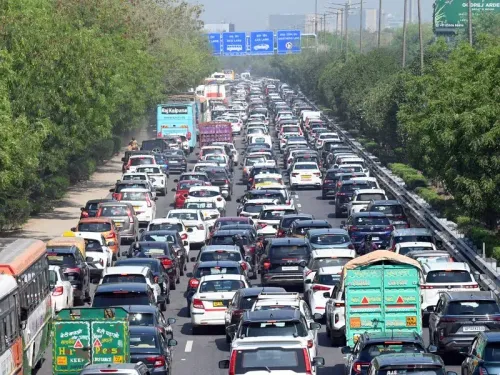
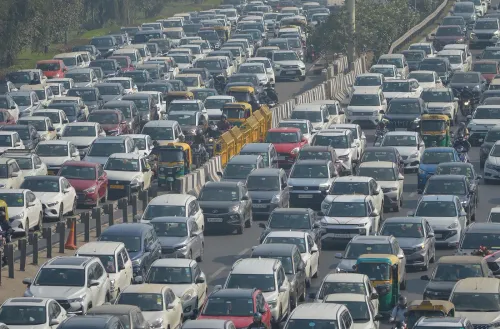
India's domestic passenger vehicle wholesales surged to an all-time high of an estimated 5.25–5.3 lakh units in October 2026, smashing the previous peak as festive-season stocking drove factory dispatches to dealers sharply higher. The record comes on top of an already elevated base — 4.6 lakh units were sold in October 2025 — implying year-on-year growth of roughly 13–15 per cent.
Record Numbers Across the Board
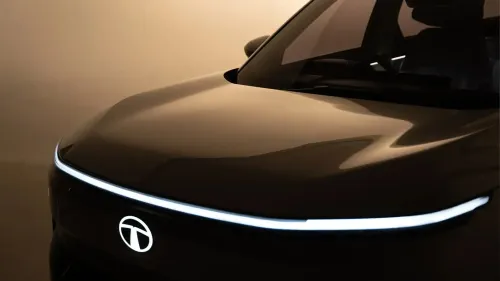
Market leader Maruti Suzuki posted domestic passenger vehicle dispatches of 2.12 lakh units in October, a 20 per cent year-on-year jump and its highest-ever monthly tally. Tata Motors reported a 21 per cent rise to 73,894 units, while Mahindra and Mahindra (M&M) edged up 2 per cent to a record 73,338 units. Hyundai Motor India registered a 16.7 per cent increase in domestic wholesales to 62,799 units.
What Is Driving the Surge
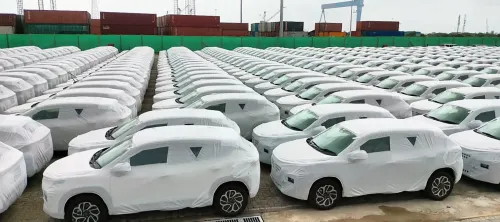
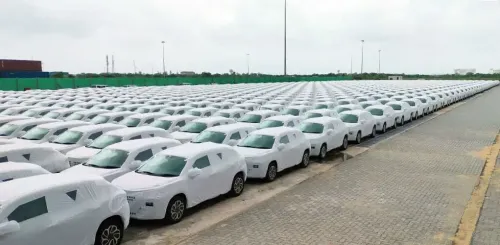
With Dhanteras and Diwali falling in the first half of November, October figures largely reflect dealers building up inventory ahead of peak festive deliveries. Gaurav Vangaal, Associate Director for Light Vehicle Production Forecasting at Mobility Global, noted that October registrations — actual consumer purchases — are expected to dip against last year's high festive base, as a meaningful share of deliveries shifts into November.
The demand backdrop has also been reshaped by structural tailwinds. A GST rate cut that took effect in the last week of September 2025 triggered a strong rebound after a brief pre-cut lull, sustaining elevated momentum through the festive season and into October. Lower borrowing costs and recent income-tax reforms have further improved consumer affordability and spending capacity.
What Automakers Said
Tarun Garg, Managing Director and Chief Executive Officer of Hyundai Motor India, attributed the record to the convergence of festive demand and healthy export momentum. 'Strong festive demand, coupled with healthy momentum in both domestic and export markets, helped us set this new sales record,' Garg said.
Velusamy R, President of Mahindra and Mahindra's Automotive business, described October as a landmark month, crediting the festival season and a refreshed model portfolio for sustaining demand.
The Broader Industry Picture
The passenger vehicle sector has maintained robust growth since the GST cut last year. In the first half of the current financial year, domestic passenger vehicle sales grew 28.3 per cent to 20.55 lakh units — a figure that underscores the sustained strength of the upcycle. The October record reinforces the view that India's auto market, now among the world's largest, is in a structurally stronger demand phase rather than a purely cyclical one.
Attention now turns to November retail registrations, which will reveal how much of the wholesale surge translates into actual consumer offtake during the core festive window.
Point of View
But the wholesale-versus-retail distinction matters: factory dispatches to dealers are not the same as cars in consumers' driveways. With Dhanteras and Diwali in early November, a chunk of this volume will only count as a 'real' sale when registrations are tallied next month. The more durable signal is the first-half FY2026 figure — 28.3 per cent growth to 20.55 lakh units — which cannot be explained away as festive front-loading. The GST cut, rate cycle and tax reforms have together created a demand floor that India's auto sector has not seen before. The risk is that this confluence of tailwinds is partly one-off; sustaining double-digit growth into FY2027 will require either another policy stimulus or a genuine income upcycle broad enough to pull in first-time buyers, not just upgrade-driven urban purchasers.
NationPress
1 Nov 2026
Frequently Asked Questions
What is the record set by India's car sales in October 2026?
Domestic passenger vehicle wholesales hit an all-time high of an estimated 5.25–5.3 lakh units in October 2026, up 13–15 per cent from 4.6 lakh units in October 2025. It is the highest single-month wholesale figure ever recorded for the Indian passenger vehicle market.
Which automakers posted their best-ever monthly sales in October 2026?
Maruti Suzuki (2.12 lakh units, +20%), Hyundai Motor India (62,799 units, +16.7%), and Mahindra and Mahindra (73,338 units) all reported record monthly sales. Tata Motors posted 73,894 units, up 21 per cent year-on-year.
Why are October wholesales higher than retail registrations?
October wholesale figures reflect dealers stocking up ahead of Dhanteras and Diwali, which fall in early November. Actual consumer registrations for October are expected to be lower than last year's festive-period base, as a significant share of deliveries will occur in November.
What policy factors have boosted India's auto sector demand?
A GST rate cut that took effect in the last week of September 2025 triggered a demand rebound after a brief pre-cut lull. Lower borrowing costs and recent income-tax reforms have also improved affordability, supporting sustained growth.
How has the passenger vehicle sector performed in the first half of FY2026?
Domestic passenger vehicle sales grew 28.3 per cent to 20.55 lakh units in the first half of FY2026, reflecting broad-based demand strength beyond the festive season alone.