What Measures is S. Korea Taking to Enhance Critical Mineral Recycling?
Synopsis
On October 31, the South Korean government revealed a strategic initiative to bolster the recycling of critical minerals. This plan aims to ease regulations and enhance financial incentives to stabilize supply chains amid global uncertainties, especially in light of China's recent export restrictions. Discover how this initiative could reshape the future of South Korea's advanced industries.
Key Takeaways
South Korea's government is easing regulations to promote critical mineral recycling.
The domestic recycling market is projected to grow significantly by 2040.
The government is aiming for a 20% recycling rate of 10 strategic minerals by 2030.
New measures include forming a joint council for recycling projects.
Relaxed regulations on material distribution are expected to boost recycling efforts.
Seoul, Oct 31 (NationPress) The South Korean government on Friday introduced a comprehensive strategy aimed at promoting the recycling of critical minerals by relaxing regulations and increasing financial and tax incentives. This initiative forms part of the larger objective to ensure supply chain stability, according to the industry ministry.
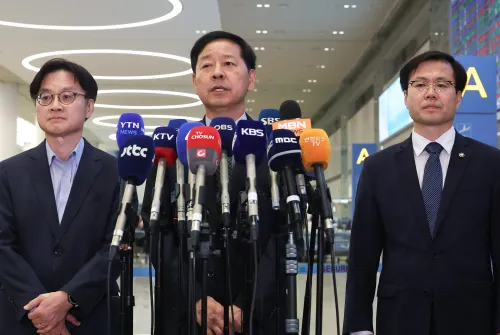
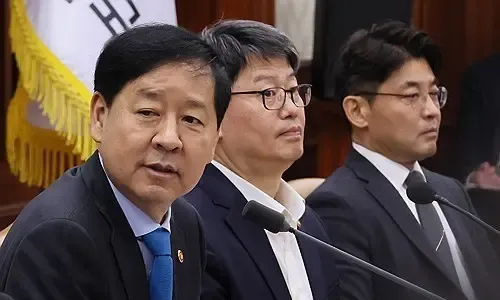
The announcement was made during a supply chain meeting led by Finance Minister Koo Yun-cheol, in light of growing global uncertainty in raw material supply chains prompted by intensifying tech competition and geopolitical tensions, as reported by Yonhap news agency.
"The Asia-Pacific Economic Cooperation (APEC) summit in Gyeongju represents a pivotal moment amidst ongoing global economic instability," Koo remarked, expressing optimism that the outcomes would substantially contribute to South Korea's supply chain security.
Recycling critical minerals involves reprocessing materials retrieved from waste to generate essential minerals for advanced industries.
The domestic market for critical mineral recycling is projected to grow from 6.7 trillion won (approximately $4.7 billion) in 2024 to 21.1 trillion won by 2040.
Despite this significant growth potential, high technological and capital barriers have impeded the expansion of the private sector, with many companies struggling to secure the necessary resources for new investments, officials noted.
The government aims to boost the recycling rate of 10 strategic critical minerals to 20 percent by 2030 through regulatory reforms and support for the industry.
Firstly, the government plans to lower tariffs in line with global standards, the ministry indicated. Presently, major economies such as Japan, the United States, and the European Union impose zero tariffs on crucial materials utilized in critical mineral recycling.
Additionally, a joint council comprising representatives from both public and private sectors will be established to identify promising recycling projects and facilitate direct investment through a supply chain stabilization fund.
Moreover, the government intends to relax regulations on the distribution of recycling materials by reclassifying certain materials as “recyclable resources” instead of waste, which will ease transport and storage restrictions.
In a separate initiative, a response team will be formed to enhance the supply of rare earth elements. This will include encouraging investment in overseas resource development, innovating technologies to minimize rare earth usage, and increasing public reserves.
This proactive plan follows China's recent announcement of stricter export restrictions on critical minerals, raising concerns regarding stable supplies for advanced industries such as semiconductors and electric vehicles, which are crucial to South Korea's exports.
In a positive development, during a summit in South Korea on Thursday, U.S. President Donald Trump and Chinese President Xi Jinping reached an agreement to lift restrictions on exports of Chinese rare earths.
Point of View
The recent measures announced by South Korea highlight the government's proactive approach to securing its industrial future amidst global uncertainties. By focusing on critical mineral recycling and reducing barriers to entry for the private sector, this initiative not only aims to stabilize supply chains but also fosters innovation and sustainability in the economy. It is essential for the nation to adapt and thrive in a rapidly changing global landscape.
NationPress
11 Oct 2026
Frequently Asked Questions
What is critical mineral recycling?
Critical mineral recycling refers to the process of reprocessing materials recovered from waste to produce essential minerals needed for advanced industries.
What are the expected benefits of South Korea's new recycling plan?
The plan aims to stabilize supply chains, boost the domestic recycling market, and increase the recycling rate of critical minerals, ultimately enhancing South Korea's industrial resilience.
How will the government support private sector expansion in recycling?
The government plans to ease regulations, reduce tariffs, and establish a joint council to identify promising recycling projects and provide investment support.
Why are tariffs being reduced for critical mineral recycling?
Tariffs are being reduced to align with global standards and encourage the growth of the domestic recycling market, making it more competitive internationally.
What challenges does the private sector face in expanding recycling efforts?
High technological and capital barriers have made it difficult for many companies to invest in new recycling technologies and processes.