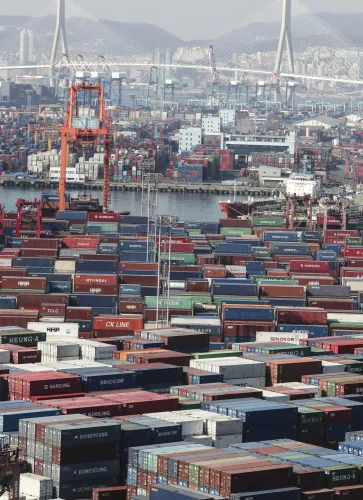
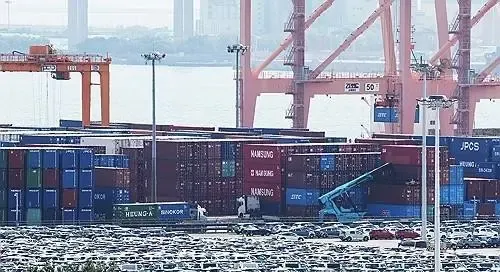
Will S. Korea Invest $3.06 Billion in Overseas Logistics Hubs?
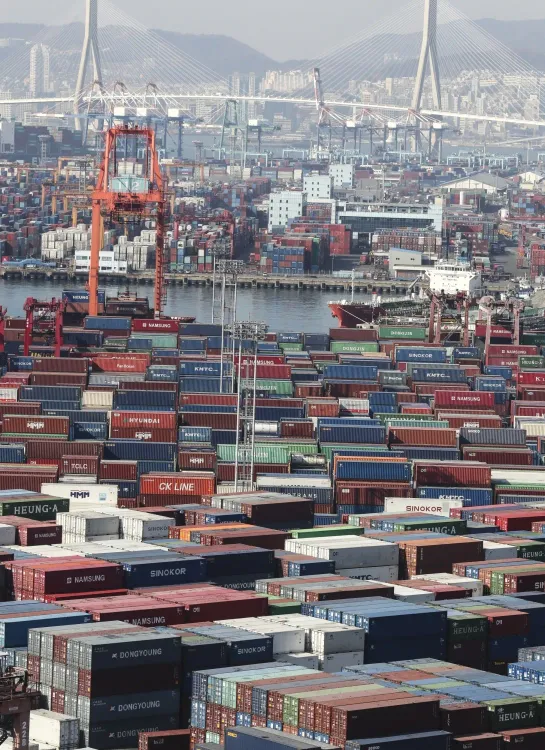
Synopsis
South Korea is gearing up to invest $3.06 billion in establishing logistics hubs worldwide to bolster its export capabilities. This strategic move aims to enhance the competitiveness of South Korean firms in international markets, ensuring better access to trade routes and resources. Stay tuned for how this investment could reshape the export landscape.
Key Takeaways
Investment of 4.5 trillion won ($3.06 billion) to enhance export logistics.
Current Korean ownership in overseas logistics is only 8.8% .
Plans to increase government-supported logistics bases to 40 by 2030 .
Collaboration with shipping firms for strategic cargo terminals.
Doubling logistics supply chain investment fund to 2 trillion won .
Seoul, Dec 16 (NationPress) The South Korean government is set to invest a minimum of 4.5 trillion won (approximately $3.06 billion) to establish logistics hubs abroad, aimed at enhancing the export capabilities of its companies, as officials announced on Tuesday.
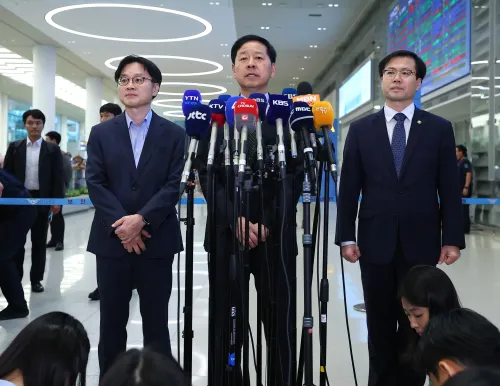
The Ministry of Oceans and Fisheries revealed this initiative during a meeting focused on industrial competitiveness, emphasizing the necessity for increased investment in international logistics centers to bolster exporters, as reported by Yonhap news agency.
Among the overseas logistics hubs managed by 15 leading domestic logistics firms, only 8.8 percent are owned by Korean entities. Currently, Korean firms have stakes in merely seven overseas container terminals, according to officials.
To enhance the nation’s logistics competitiveness, the ministry plans to increase the number of government-supported international logistics bases to 40 by 2030, up from the current nine.
These bases will be established in 11 countries with significant trade interactions with South Korea, including the United States, Canada, Mexico, Vietnam, Indonesia, and Germany.
The government also aims to collaborate with shipping companies and maritime authorities to acquire stakes in overseas container and bulk terminals for essential cargo, such as energy and grains, while also doubling the logistics supply chain investment fund to 2 trillion won.
In a related announcement, the finance ministry noted during Tuesday's meeting that it would create a 150 billion-won special fund to support Phase 3 clinical trials of Korean biopharmaceutical firms and train 110,000 professionals in the biohealth sector by 2027.
The ministry further plans to enhance support for cultural content development leveraging artificial intelligence (AI) through a 430 billion-won fund.
“Despite various challenges encountered since the new administration took office, including U.S. tariff discussions and weak domestic demand, our economy is on the path to recovery,” stated Finance Minister Koo Yun-cheol, who presided over the meeting.
“The government is now committed to propelling the Korean economy toward a significant advancement by aiming for a recovery in the country’s potential growth rate by 2026,” he concluded.
Point of View
It is essential to recognize the strategic importance of South Korea's decision to invest in overseas logistics hubs. This initiative reflects a proactive approach to strengthening the nation’s export capabilities and ensuring competitiveness in a rapidly evolving global market. The government's focus on expanding logistics infrastructure signals a commitment to supporting local businesses and enhancing international trade relationships.
NationPress
16 Oct 2026
Frequently Asked Questions
How much is South Korea investing in overseas logistics?
South Korea is investing at least 4.5 trillion won, equivalent to approximately $3.06 billion, in overseas logistics hubs.
What is the goal of this investment?
The primary goal of this investment is to support the export operations of South Korean companies by establishing logistics hubs abroad.
How many logistics bases does South Korea plan to establish by 2030?
South Korea plans to expand the number of government-supported overseas logistics bases from nine to 40 by the year 2030.
In which countries will the logistics bases be located?
The logistics bases will be established in 11 countries with significant trade volumes with Korea, including the United States, Canada, Mexico, Vietnam, Indonesia, and Germany.
What additional support will the government provide for the biohealth sector?
The government will create a 150 billion-won special fund to support Phase 3 clinical trials of Korean biopharmaceutical companies and aims to foster 110,000 talents for the biohealth sector by 2027.