Samsung Electronics Achieves Historic Q1 Operating Profit Thanks to AI Demand
Synopsis
Samsung Electronics has reported an unprecedented operating profit of over 50 trillion won in Q1, driven primarily by the AI industry's growing demand for advanced memory chips. This remarkable feat marks a significant turnaround from previous years, reflecting the tech giant's robust market performance.
Key Takeaways
Record operating profit of over 50 trillion won in Q1 2025.
Strong demand from the AI industry is a major growth driver.
Revenue reached a historic high of 133 trillion won .
Device Solutions unit expected to dominate earnings.
Positive growth momentum anticipated for the future.
Seoul, April 7 (NationPress) On Tuesday, Samsung Electronics announced its first-quarter operating profit has exceeded 50 trillion won (approximately $33.1 billion) for the first time, fueled by robust demand for premium memory chips within the artificial intelligence (AI) sector.
The South Korean technology leader forecasted an operating profit of 57.2 trillion won for the January-March period, a significant increase from 6.61 trillion won in the same quarter last year, as indicated in the earnings guidance released by Samsung Electronics.
This operating profit figure is 36.7 percent higher than the average estimate derived from a survey by Yonhap Infomax, the financial data division of Yonhap News Agency.
For the entire year of 2025, Samsung Electronics recorded an operating profit of 43.6 trillion won.
In the fourth quarter of 2025, the company achieved an operating profit of 20 trillion won, which then represented a record quarterly performance.
Revenue surged by 68.1 percent year-over-year to 133 trillion won in the first quarter, surpassing 100 trillion won for the first time and setting a new quarterly record. Data on net earnings was not available.
Although Samsung Electronics did not disclose a detailed earnings breakdown by business division, it is widely believed that the Device Solutions (DS) unit, which encompasses the semiconductor sector, has maintained a dominant market share.
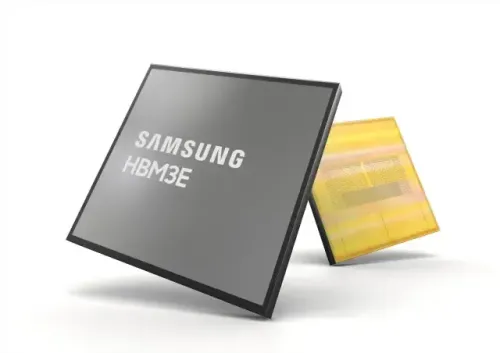
Samsung Electronics is actively seeking to enhance the supply of sixth-generation high bandwidth memory, known as HBM4, this year to meet the growing demand for AI infrastructure.
Analysts estimate that the DS division might have generated an operating profit of approximately 50 trillion won in the first quarter, reflecting more than a tripling from 16.4 trillion won in the preceding quarter.
Conversely, the Device Experience (DX) division, which includes mobile and television sectors, is anticipated to have encountered increased production costs, as noted by analysts.
More specifically, the company's mobile sector is projected to have achieved an operating profit of around 2 trillion won in the first quarter, down from 4.3 trillion won during the same period last year.
Looking ahead to 2026, analysts predict that Samsung Electronics will continue its growth trajectory, with projections from Korea Investment & Securities Co. suggesting an annual operating profit of 302 trillion won, marking a 50 percent increase from the previous forecast of 202 trillion won.
Chae Min-sook, an analyst at Korea Investment & Securities, indicated in a report, “With Samsung Electronics anticipating long-term contracts with major hyperscale clients, such strong earnings are expected to persist over the mid- to long-term.”
KB Securities Co. estimated an annual operating profit of 327 trillion won, up 49 percent from its prior projection, highlighting that Samsung Electronics' earnings are likely to accelerate amid the AI surge.
Kim Dong-won, an analyst at KB Securities, noted in his report, “With global data center operators consuming 60 percent of Samsung's shipments of DRAM and NAND products, the investment expansion in AI infrastructure is propelling memory demand.”
Samsung Electronics is scheduled to unveil its final earnings report later this month.
Point of View
Samsung Electronics' record operating profit is a significant indicator of the company's strategic alignment with emerging technologies like AI. It reflects the broader trend in the tech industry, where innovation drives financial success. This achievement is commendable and sets a promising outlook for Samsung's future growth.
NationPress
13 Oct 2026
Frequently Asked Questions
What was Samsung Electronics' operating profit in Q1?
Samsung Electronics' operating profit for the first quarter is estimated to have surpassed 50 trillion won, approximately $33.1 billion.
What factors contributed to this record profit?
The record profit was primarily driven by strong demand for premium memory chips from the artificial intelligence industry.
How much did Samsung's revenue increase in the first quarter?
Samsung's revenue rose by 68.1% year-over-year to 133 trillion won in the first quarter.
What is the forecast for Samsung's operating profit in 2026?
Analysts project Samsung Electronics will maintain growth momentum, with an annual operating profit estimated at 302 trillion won in 2026.
When will Samsung release its final earnings report?
Samsung Electronics is scheduled to release its final earnings report later this month.