Did Samsung Achieve Record Operating Profit in Q4 Due to AI Surge?

Synopsis
Samsung Electronics achieves record-breaking profits in Q4 2025, primarily driven by the soaring demand for premium semiconductor products influenced by the global AI boom. This performance sets the stage for future growth and competitive strategies in the mobile and home appliance sectors.
Key Takeaways
Samsung’s Q4 2025 operating profit reached 20.07 trillion won.
Strong demand for premium semiconductors was a major contributor.
Net profit increased by 153.3 percent year-on-year.
Samsung plans to leverage AI technology in future products.
Dividend payouts for Q4 totaled 3.7 trillion won.
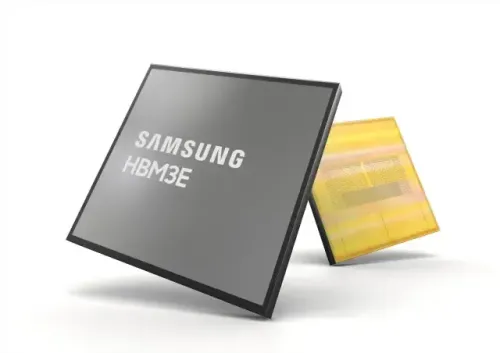
Seoul, Jan 29 (NationPress) On Thursday, Samsung Electronics announced it achieved a record operating profit and sales figures for the fourth quarter of 2025, driven by robust sales of premium semiconductor products, including high bandwidth memory (HBM), amid the ongoing global artificial intelligence (AI) boom.
According to a regulatory filing, the company reported an impressive 20.07 trillion won (approximately $13.9 billion) in operating profit for the quarter, a significant increase from 6.49 trillion won a year prior. Revenue climbed by 23.8 percent year-on-year to reach 93.83 trillion won.
The net profit soared to 19.64 trillion won, marking a remarkable 153.3 percent rise compared to the same period in 2024.
These earnings surpassed market predictions, with analysts estimating a net profit of 18.6 trillion won, as reported by Yonhap Infomax, a financial data firm.
The device solutions division (DS), which includes chips, also recorded an unprecedented operating profit of 16.4 trillion won during the October-December timeframe due to strong sales of general DRAM and HBM products, compared to just 2.9 trillion won the previous year.
Samsung Electronics attributed its record performance to a rise in global memory prices alongside strong demand for premium products such as corporate-targeted solid-state drives (SSDs).
The device experience (DX) division, encompassing mobile and TV sectors, posted a combined operating profit of 1.3 trillion won.
Within this, the mobile segment reported an operating profit of 1.9 trillion won, a drop from 2.1 trillion won a year prior.
Meanwhile, the home appliances division faced an operating loss of 600 billion won, contrasting with an operating profit of 200 billion won in Q4 of 2024, primarily due to global tariff challenges, the company disclosed.
In this quarter, Samsung Electronics invested 10.9 trillion won in research activities, resulting in an annual investment record of 37.7 trillion won, aimed at securing future growth.
Facility investments for the October–December period reached 20.4 trillion won, summing up to a total expenditure of 52.7 trillion won for 2025, with the DS division making up 47.5 trillion won.
For the full year of 2025, Samsung Electronics reported a net income of 45.2 trillion won, a 31.2 percent increase from the previous year.
Operating profit for the year stood at 43.6 trillion won, reflecting a 33.2 percent rise compared to the prior year, while annual sales surged by 10.9 percent to reach 333.6 trillion won.
However, Samsung Electronics' annual operating profit across its entire business portfolio fell short of rival SK hynix Inc., which reported 47.2 trillion won for the first time.
Looking forward, Samsung Electronics anticipates continued growth, predominantly fueled by the semiconductor sector, driven by escalating demand from the AI and server markets.
The South Korean tech giant plans to actively address the strong demand for premium memory chips tailored for AI solutions.
In the realm of mobile, Samsung Electronics aims to secure a leading position in the smartphone market by integrating AI-related features, alongside the upcoming Galaxy S26 models set to be unveiled next month.
The company also intends to enhance sales of home appliances by leveraging AI technology and prioritizing premium product lines.
Samsung Electronics disclosed it would distribute special dividends totaling 1.3 trillion won, raising total payouts for Q4 to 3.7 trillion won, with total dividends for fiscal 2025 reaching 11.1 trillion won.
Point of View
I observe that Samsung Electronics' remarkable financial performance is not just a number; it reflects the company's strategic positioning in the rapidly evolving tech landscape. With AI at the forefront, Samsung's future initiatives could redefine not only its market but also the broader industry standards.
NationPress
19 Oct 2026
Frequently Asked Questions
What drove Samsung's record profits in Q4 2025?
Samsung's record profits were significantly driven by strong sales of premium semiconductor products, particularly high bandwidth memory (HBM), amid the global AI boom.
How much was Samsung's operating profit in Q4 2025?
Samsung reported an operating profit of 20.07 trillion won (approximately $13.9 billion) for the fourth quarter of 2025.
What is Samsung's outlook for the future?
Samsung expects to maintain growth led by its semiconductor business, responding to increasing demand from the AI and server sectors.
Did Samsung Electronics pay dividends in Q4 2025?
Yes, Samsung announced special dividends worth 1.3 trillion won for Q4 2025, raising total payouts to 3.7 trillion won.
How did Samsung's annual profit compare to its competitors?
For the first time, Samsung's annual operating profit fell behind that of its competitor SK hynix Inc.