Supreme Court: Banks cannot blacklist advocates via Caution List for negligence
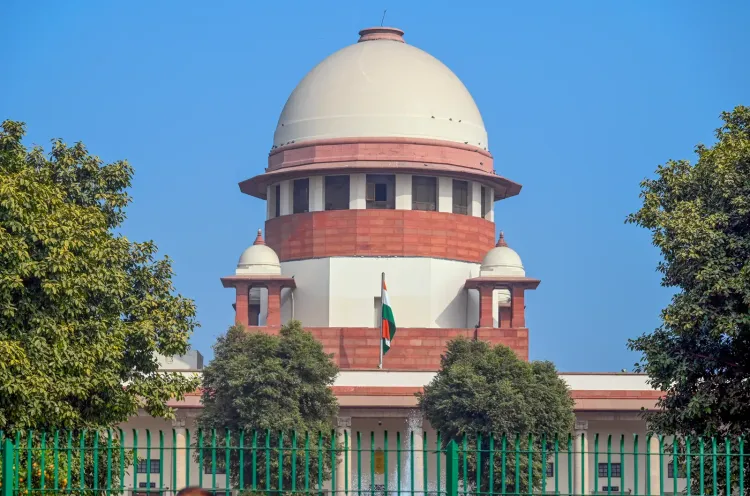
Synopsis
The Supreme Court has drawn a hard line: banks cannot use the IBA's Caution List as a backdoor to declare advocates professionally incompetent. Only Bar Councils hold that power under the Advocates Act, 1961. The ruling — which also orders a performance audit of Bar Council disciplinary systems and the creation of a National Legal Academy — has sweeping implications for how India's banking sector and legal profession interact.
Key Takeaways
The Supreme Court on 7 July ruled that banks and the IBA cannot include advocates in the Caution List solely for alleged professional negligence.
A bench of Justices PS Narasimha and Alok Aradhe ordered the immediate removal of advocate Ajay Vijh's name from the IBA Caution List.
Canara Bank had flagged Vijh over an allegedly erroneous legal opinion from 2015 ; his name was listed under 'Third Party Entities Involved in Fraud' .
The court held that disciplinary action against advocates falls exclusively under the Advocates Act, 1961 and the jurisdiction of Bar Councils .
The Bar Council of India (BCI) has been directed to conduct a performance audit of disciplinary mechanisms and explore a National Legal Academy (NLA) .
The matter is next listed on 31 August for compliance review on legal education reforms.
The Supreme Court of India on Tuesday, 7 July ruled that banks and the Indian Banks' Association (IBA) cannot include advocates in the banking sector's 'Caution List' solely on grounds of alleged professional negligence, holding that such action constitutes an impermissible assessment of a lawyer's professional competence — a power that rests exclusively with Bar Councils under the Advocates Act, 1961.
A bench of Justices PS Narasimha and Alok Aradhe allowed an appeal filed by advocate Ajay Vijh, set aside the Allahabad High Court's order dismissing his writ petition, and directed the immediate removal of his name from the IBA's Caution List.
What the Supreme Court Held
The apex court drew a clear line between a bank's contractual right to discontinue a panel advocate's services and the impermissible act of publicly branding that advocate as professionally incompetent. The bench observed: 'The Caution List may or may not be a public document, but its circulation to all the banking institutions operates as a declaration about (in)competence, as well as the negative character of the advocate, having serious implications on his right to practise his profession.'
The court further clarified that Reserve Bank of India (RBI) circulars authorising the Caution List mechanism were designed to flag fraud — not professional errors or erroneous legal opinions. Extending the list's scope to cover alleged negligence, the bench ruled, goes beyond the RBI's stated intent and is legally unsustainable.
The Ajay Vijh Case: Background
Canara Bank had removed Ajay Vijh from its panel of advocates and recommended his inclusion in the IBA's Caution List following an allegedly erroneous legal opinion he rendered in 2015 regarding title verification of a mortgaged property. His name was subsequently entered under the category 'Third Party Entities Involved in Fraud', with remarks citing 'wrong legal opinion' and negligence.
The court noted that categorising a negligence allegation under a fraud-related heading compounded the harm to the advocate's professional reputation. It held: 'In the present case, where the allegation against the appellant pertains solely to negligence, the inclusion of his name in the Caution List is unsustainable.'
Statutory Framework Cannot Be Bypassed
The Supreme Court was unequivocal that disciplinary proceedings against advocates belong exclusively to the statutory bodies established under the Advocates Act. It directed that if a bank believes an advocate is guilty of professional negligence or misconduct, the correct course is to place the relevant material before the competent State Bar Council for action under the Advocates Act, 1961 — not to circulate adverse remarks through the Caution List.
'Permitting banks or banking associations to bypass the disciplinary process under the Advocates Act and unilaterally portray an advocate as professionally incompetent by including his name in a Caution List is illegal, unsustainable and impermissible,' the bench stated.
The court also corrected the Allahabad High Court's reasoning, which had dismissed the writ petition on the ground that the IBA is not 'State' under Article 12 of the Constitution. The Supreme Court held that the challenge squarely involved infringement of the advocate's fundamental right to practise his profession under Article 19(1)(g), making the writ maintainable regardless of the IBA's constitutional status.
Wider Directions: Bar Council Reforms
Beyond granting relief to Vijh, the bench issued broader directions aimed at strengthening the legal profession's regulatory architecture. Stressing that independence of the Bar must be matched by accountability, it directed the Bar Council of India (BCI) to undertake a comprehensive performance audit of its disciplinary mechanisms and those of the State Bar Councils, assessing their efficiency, transparency, and effectiveness.
The court also directed the BCI to institutionalise Continuing Legal Education (CLE) for practising advocates and to consider establishing a National Legal Academy (NLA) — modelled on the National Judicial Academy for judges — to provide structured post-enrolment professional training. A team of senior and junior lawyers along with domain experts is to be constituted to examine the NLA proposal.
What Happens Next
The matter has been listed for further hearing on 31 August, when the Supreme Court will consider issues relating to Continuing Legal Education and the proposed National Legal Academy. The BCI has been asked to place on record the steps taken in compliance with the court's directions by that date.
Point of View
Bypassing the statutory framework the Advocates Act deliberately created. The IBA's Caution List, designed for fraud alerts, had quietly expanded into a reputational blacklist for professional disagreements — with no due process, no hearing, and no appeal mechanism for the advocate. The Supreme Court's intervention is overdue, but the broader question it raises is equally important: if Bar Council disciplinary systems were functioning efficiently and transparently, advocates would have had a credible forum to contest such listings long before reaching the apex court. The directions to audit Bar Council performance and establish a National Legal Academy suggest the bench is aware that accountability must run in both directions — and that the legal profession's own house needs putting in order.
NationPress
6 Oct 2026
Frequently Asked Questions
What did the Supreme Court rule about the IBA Caution List?
The Supreme Court ruled on 7 July that banks and the Indian Banks' Association cannot include advocates in the Caution List merely on allegations of professional negligence. The court held that assessing a lawyer's professional competence falls exclusively within the disciplinary jurisdiction of Bar Councils under the Advocates Act, 1961.
Who is Ajay Vijh and why was he on the Caution List?
Ajay Vijh is an advocate who was removed from Canara Bank's panel and added to the IBA's Caution List following an allegedly erroneous legal opinion he gave in 2015 on the title verification of a mortgaged property. His name was entered under the category 'Third Party Entities Involved in Fraud', a classification the Supreme Court found unsustainable given that the allegation was one of negligence, not fraud.
Can banks still remove advocates from their panels?
Yes. The Supreme Court clarified that banks retain the contractual right to discontinue the services of panel advocates if dissatisfied with their work. What banks cannot do is circulate adverse remarks about an advocate's professional competence through the Caution List mechanism — that power belongs solely to Bar Councils.
What are the wider directions issued by the Supreme Court?
Beyond the immediate relief to Ajay Vijh, the court directed the Bar Council of India to conduct a performance audit of its disciplinary systems and those of State Bar Councils, institutionalise Continuing Legal Education for advocates, and explore establishing a National Legal Academy modelled on the National Judicial Academy for judges.
When is the next hearing in this case?
The Supreme Court has listed the matter for 31 August, when it will review compliance with its directions on Continuing Legal Education and the proposed National Legal Academy. The Bar Council of India has been asked to submit a status report by that date.