Is Scientific Evidence Necessary for Shifting Policies in Pokkali Farming?
Click to start listening
Synopsis
In a significant move for Kerala's Pokkali farming, Union Minister Ramnath Thakur calls for a comprehensive scientific and socio-economic assessment before shifting policies on year-round paddy-fish farming, emphasizing the need to balance productivity with ecological preservation.
Key Takeaways
- Scientific assessments are essential for policy changes in Pokkali farming.
- Current farming practices follow a traditional cycle of paddy and fish.
- Year-round fish farming could increase farmers' profitability.
- Environmental impacts must be thoroughly evaluated before any policy shifts.
- Cadalmin represents innovation in organic farming technology.
Kochi, Jan 6 (NationPress) The Indian government has emphasized the necessity of a thorough scientific and socio-economic assessment before contemplating the implementation of year-round integrated paddy-fish farming in the ecologically delicate Pokkali fields of Kerala. This stance reflects a cautious approach towards potential policy alterations that could have extensive economic and environmental consequences.
Union Minister of State for Agriculture and Farmers' Welfare, Ramnath Thakur, stated on Tuesday that a comprehensive study is vital to determine if continuous fish farming could sustainably boost farm incomes without jeopardizing the delicate Pokkali ecosystem and the livelihoods that depend on it.
The minister addressed farmers' requests for permission to expand fish farming beyond the current seasonal limits during his visit to the Pokkali fields.
Currently, the Pokkali farming system follows a traditional cycle: paddy is cultivated from June to October during the low-salinity monsoon phase, followed by fish farming from November to April as salinity levels increase.
Farmers contend that permitting fish farming year-round could greatly enhance profitability, particularly in light of rising input costs and climate-related challenges impacting rice production.
However, the minister stressed that any changes to policy must be preceded by a meticulous examination of current regulations, environmental impacts, and long-term socio-economic effects.
“Assessments grounded in science are essential to harmonize productivity, farmers' income, the interests of traditional fishing communities, and ecosystem preservation,” he noted, warning that extending fish farming without sufficient evidence could lead to unforeseen consequences.
The visit was organized by the Ernakulam Krishi Vigyan Kendra (KVK) under the ICAR–Central Marine Fisheries Research Institute (CMFRI).
CMFRI Director Dr. Grinson George mentioned that the institute is prepared to carry out an in-depth scientific and socio-economic study if the state government grants the necessary approval.
He suggested a pilot initiative covering 50 acres of Pokkali fields to generate evidence-based data that could guide future policy decisions.
During his subsequent visit to CMFRI, Thakur urged scientists to ensure that research findings translate into real benefits for farmers and rural communities.
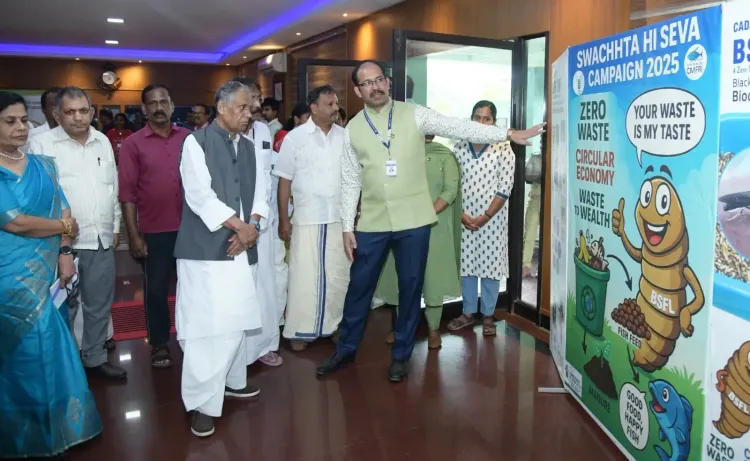
He also introduced CMFRI's new product, Cadalmin, BSF Green Organic Compost, created using zero-waste bioconversion technology derived from black soldier fly larvae, alongside other advancements in fisheries technology.
Furthermore, the minister reviewed the operations of CMFRI and the Coconut Development Board, highlighting the Centre’s commitment to innovation-driven, sustainable growth in the agri-fisheries sector.
Point of View
It is crucial to recognize the importance of scientific evaluation in agricultural policy changes. The call for comprehensive assessments ensures that the economic benefits do not come at the cost of environmental degradation, aligning with our commitment to sustainable development.
NationPress
08/01/2026
Frequently Asked Questions
Why is scientific assessment important for Pokkali farming?
Scientific assessment is vital to ensure that any policy changes enhance farmer incomes while protecting the fragile Pokkali ecosystem.
What is the current farming cycle in Pokkali?
The current cycle involves paddy cultivation from June to October, followed by fish farming from November to April.
What are the potential benefits of year-round fish farming?
Year-round fish farming could significantly increase returns for farmers, especially in the face of rising costs and climate uncertainties.
Who is leading the initiative for scientific studies?
The initiative is being led by the ICAR–Central Marine Fisheries Research Institute under the guidance of Dr. Grinson George.
What is Cadalmin?
Cadalmin is a new organic compost product developed by CMFRI, utilizing zero-waste bioconversion technology.