SEBI, ESMA sign new MoU on central counterparty cooperation
Synopsis
SEBI and ESMA have upgraded their regulatory partnership with a new MoU on central counterparty oversight, replacing a seven-year-old agreement. The deal lets Europe's markets authority lean on SEBI's own supervisory work — a significant vote of confidence in India's regulatory credibility on the global stage.
Key Takeaways
SEBI and ESMA signed a new MoU on 4 September covering cooperation and information exchange on central counterparties (CCPs) .
The agreement replaces an earlier MoU signed on 21 June 2017 .
It enables ESMA to place reliance on SEBI's regulatory and supervisory activities while safeguarding EU financial stability.
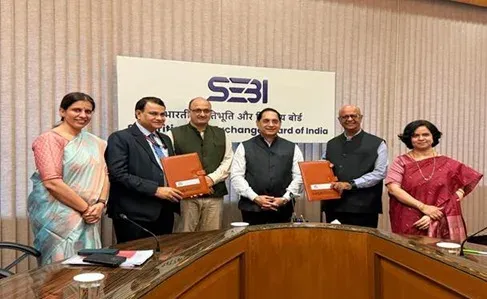
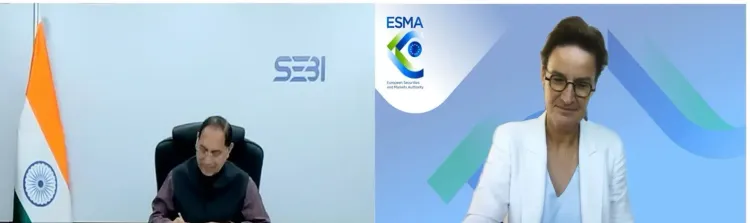
The MoU was signed by SEBI Chairman Tuhin Kanta Pandey and ESMA Chair Verena Ross .
Separately, SEBI has proposed allowing mutual fund schemes to net cash-market obligations, with public comments due by 24 September .
The Securities and Exchange Board of India (SEBI) on Friday, 4 September announced it had signed a fresh memorandum of understanding with the European Securities and Markets Authority (ESMA) on cooperation and information exchange relating to central counterparties (CCPs). The pact replaces an earlier agreement between the two regulators dated 21 June 2017.
What the MoU Establishes
The new agreement sets out a formal framework for regulatory cooperation between SEBI and ESMA concerning CCPs that fall under SEBI's regulatory and supervisory purview, in accordance with the respective laws of both jurisdictions. Crucially, it also enables ESMA to place reliance on SEBI's oversight activities while continuing to safeguard the financial stability of the European Union.
CCPs are financial market infrastructures that interpose themselves between buyers and sellers in financial transactions, managing counterparty risk and facilitating the clearing of trades. Their cross-border relevance has grown substantially as Indian capital markets have deepened their integration with global financial systems.
Who Signed the Agreement
The MoU was signed by SEBI Chairman Tuhin Kanta Pandey and ESMA Chair Verena Ross. SEBI described the agreement as a demonstration of the importance of cross-border cooperation in facilitating international clearing activities.
Broader Context: SEBI's Regulatory Push
The MoU signing comes alongside a separate SEBI initiative from earlier in September, in which the regulator proposed allowing mutual fund schemes to net certain cash-market fund obligations. Under the proposed framework, a mutual fund scheme would be permitted to offset eligible outright purchases against eligible outright sales within the same settlement cycle. Underlying securities would, however, continue to be settled on a gross basis — preserving the delivery-backed nature of institutional trades.
SEBI has noted that mutual fund schemes currently face temporary liquidity requirements and operational inefficiencies because cash obligations in the cash market are settled on a gross basis at the scheme level. The regulator invited public comments on this proposal by 24 September.
Why Cross-Border CCP Cooperation Matters
This is the second such bilateral regulatory framework between SEBI and ESMA, reflecting the growing importance of harmonised oversight as Indian CCPs handle an increasing volume of trades with European counterparties. The updated MoU is expected to streamline supervisory reliance arrangements and reduce duplicative compliance burdens for market participants operating across both jurisdictions. Analysts note that such agreements are increasingly standard as regulators globally tighten their grip on systemically important financial market infrastructures.
Point of View
A recognition that carries real weight. The previous 2017 agreement predated India's significant expansion of its clearing ecosystem; the new framework is better calibrated to current market realities. What bears watching is whether this reliance arrangement translates into tangible benefits for Indian CCPs seeking equivalence or recognition in EU markets — something the MoU enables in principle but does not guarantee in practice. The parallel mutual fund netting proposal, if finalised, would compound the efficiency gains, making SEBI's September a notably active month for market structure reform.
NationPress
20 Oct 2026
Frequently Asked Questions
What is the SEBI-ESMA MoU on central counterparties?
It is a bilateral agreement signed on 4 September between SEBI and ESMA establishing a framework for regulatory cooperation and information exchange on central counterparties (CCPs) supervised by SEBI. The MoU replaces an earlier agreement from 21 June 2017 and enables ESMA to rely on SEBI's supervisory activities while protecting EU financial stability.
What are central counterparties (CCPs) and why do they matter?
CCPs are financial market infrastructures that stand between buyers and sellers in financial transactions, managing counterparty risk and supporting trade clearing. They are considered systemically important, which is why cross-border regulatory cooperation between jurisdictions like India and the EU is critical.
Who signed the SEBI-ESMA MoU?
The MoU was signed by SEBI Chairman Tuhin Kanta Pandey on the Indian side and ESMA Chair Verena Ross on the European side.
What is SEBI's mutual fund netting proposal announced in September?
SEBI has proposed allowing mutual fund schemes to offset eligible outright purchases against eligible outright sales within the same settlement cycle to reduce temporary liquidity requirements. Underlying securities would still settle on a gross basis. Public comments on the proposal are due by 24 September.
How does the new MoU differ from the 2017 agreement?
The new MoU updates the cooperation framework to reflect the current regulatory landscape and, notably, explicitly enables ESMA to place reliance on SEBI's supervisory activities — a provision aligned with how global regulators now approach cross-border CCP oversight. The 2017 agreement was a more basic information-sharing arrangement.