China's PhosCage pulls seawater uranium at 8x US DOE target rate
Synopsis
China's CAS has developed PhosCage, a phosphate-based adsorbent that pulls 50.4 mg of uranium per gram from natural seawater — more than eight times the US Department of Energy's own target — potentially reshaping global nuclear fuel supply chains.
Key Takeaways
Chinese Academy of Sciences researchers at the Qingdao Institute of Bioenergy and Bioprocess Technology announced the PhosCage adsorbent on 4 September 2026 .
PhosCage recovered 50.4 mg of uranium per gram of adsorbent from natural seawater — more than eight times the US Department of Energy's target of 6 mg per gram .
Engineered into millimetre-sized beads for ocean deployment, PhosCage captured 22.55 mg per gram and remained functional through seven reuse cycles .
China consumes significantly more uranium than it domestically produces, making seawater extraction a strategic energy-security priority.
US national laboratories including Oak Ridge National Laboratory and Pacific Northwest National Laboratory have been the primary competitors in this research space.
A Chinese Academy of Sciences (CAS) team has extracted uranium from seawater at a rate more than eight times the benchmark set by the US Department of Energy, marking a significant leap in the global race to unlock the ocean's vast reserves of nuclear fuel. Researchers at the Qingdao Institute of Bioenergy and Bioprocess Technology, based in Qingdao, China, published the findings on 4 September 2026, detailing a novel adsorbent material called PhosCage.
What PhosCage is and how it works
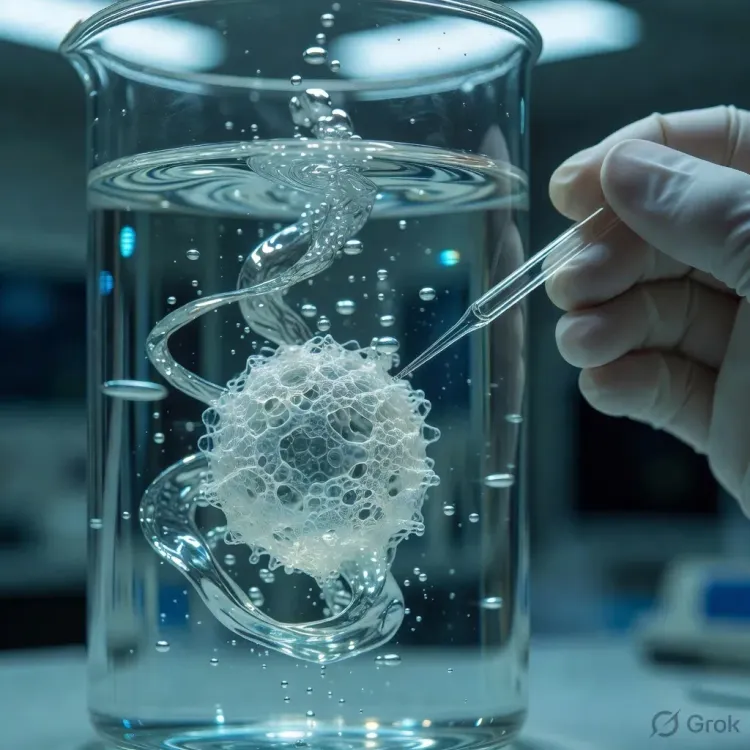
PhosCage is a sponge-like molecular structure embedded with phosphate groups that function as chemical traps for dissolved uranium ions. In laboratory tests using natural seawater samples, the material recovered 50.4 mg of uranium per gram of adsorbent — far exceeding the US DOE's target of 6 mg per gram. The researchers then engineered PhosCage into millimetre-sized beads designed for practical ocean deployment.
Real-world performance and reusability
The bead form of PhosCage captured 22.55 mg of uranium per gram from open-water conditions and remained effective across seven reuse cycles, a critical metric for any technology intended for large-scale marine extraction. Reusability directly affects the economics of seawater uranium recovery, which has historically been too costly to compete with conventional mining.
Why it matters for China's nuclear ambitions
China holds sizeable domestic uranium reserves but consumes substantially more than it produces as it aggressively expands its nuclear power capacity. According to the World Nuclear Association, China operates one of the world's fastest-growing reactor fleets, making secure, diversified uranium supply a strategic priority. Seawater extraction, if scaled, could reduce dependence on imports and insulate the country from supply-chain disruptions.
'This work opens up a novel approach to extracting uranium from seawater and lays the groundwork for adsorbents that can capture more uranium and eventually be used on a large scale,' the CAS team said in a statement.
The competitive backdrop
The US Department of Energy, through institutions including Oak Ridge National Laboratory and Pacific Northwest National Laboratory, has invested heavily in amidoxime-based adsorbents for seawater uranium recovery over the past decade. The 6 mg per gram DOE target was itself considered ambitious; PhosCage's laboratory result of 50.4 mg per gram — and its real-world bead performance of 22.55 mg per gram — positions China well ahead of that benchmark, at least at the research stage.
What's next
The CAS Qingdao team's immediate challenge is scaling PhosCage from controlled seawater samples to sustained open-ocean pilots, where currents, biofouling, and salt interference pose engineering hurdles. If those trials succeed, the technology could reshape uranium supply chains for nuclear-power-dependent nations well beyond China. Analysts and rival research programmes at US national laboratories will be watching pilot-scale data closely.
Point of View
But China's reactor build-out pace means the economics of unconventional extraction become viable far sooner for Beijing than for any other actor. What most reports miss is the reusability figure: seven cycles from the bead form is the metric that determines industrial cost, and 22.55 mg per gram at that durability is a genuine commercial signal, not merely a laboratory record. If open-ocean pilot data holds up, this could accelerate a quiet but consequential shift in how nuclear-dependent nations think about fuel-supply sovereignty.
NationPress
21 Oct 2026
Frequently Asked Questions
What is PhosCage and how does it extract uranium from seawater?
PhosCage is a sponge-like molecular adsorbent developed by the Chinese Academy of Sciences , filled with phosphate groups that chemically trap dissolved uranium ions from seawater. Researchers shaped it into millimetre-sized beads for practical ocean deployment, where it captured 22.55 mg of uranium per gram across seven reuse cycles.
How does China's result compare to the US Department of Energy's uranium extraction target?
The CAS team recovered 50.4 mg of uranium per gram of adsorbent in laboratory tests — more than eight times the US Department of Energy's benchmark of 6 mg per gram . Even the real-world bead performance of 22.55 mg per gram exceeds that US target by nearly four times.
Why is seawater uranium extraction strategically important for China?
China has domestic uranium reserves but consumes far more than it produces as it rapidly expands its nuclear power fleet. Seawater extraction could reduce import dependence and provide a buffer against supply disruptions, giving China greater energy-security autonomy.
Which US institutions are working on competing seawater uranium technology?
Oak Ridge National Laboratory and Pacific Northwest National Laboratory , both funded by the US Department of Energy , have led American research into seawater uranium recovery, primarily using amidoxime-based adsorbents. The CAS PhosCage result significantly outperforms the targets those programmes set.
When could seawater uranium extraction become commercially viable?
The CAS team has not specified a commercial timeline, but the seven-cycle reusability of the PhosCage beads is a key step toward economic feasibility. The next critical phase is open-ocean pilot testing, where biofouling, currents, and salinity variations will determine whether laboratory performance translates to industrial scale.