China's CAS runs world-first 500-tonne rubidium-caesium extraction line
Synopsis
China has activated the world's first 500-tonne-per-year line to extract rubidium and caesium from lithium mining waste in Jiangxi province — potentially reshaping global supply of two metals critical to quantum computing and aerospace.
Key Takeaways
China has launched the world's first 500-tonne annual capacity continuous tower extraction line for rubidium and caesium from lithium waste, achieving stable production as of 15 September 2026 .
The facility is located in Jiangxi province and was developed by the Institute of Process Engineering under the Chinese Academy of Sciences (CAS) .
Rubidium and caesium are critical to aerospace , quantum computing , biomedicine , and perovskite solar cells , among other frontier fields.
Global primary supply of both metals has historically come from Canada , Zimbabwe , and Australia ; recovery from lithium tailings could significantly shift supply dynamics.
Major Chinese lithium processors including Jiangxi Ganfeng Lithium and Sinomine Resource Group generate large volumes of ore tailings, providing a ready feedstock base for scaled-up production.
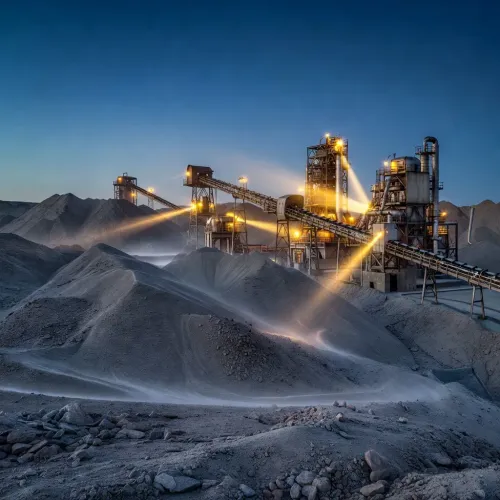
China has commissioned the world's first 500-tonne-per-year continuous tower extraction and separation line for low-grade rubidium and caesium recovered from lithium mining waste, marking a significant leap in critical-mineral recovery technology. The facility, located in Jiangxi province, has achieved stable production, according to the Institute of Process Engineering under the Chinese Academy of Sciences (CAS). The breakthrough was announced on 15 September 2026.
What the facility does
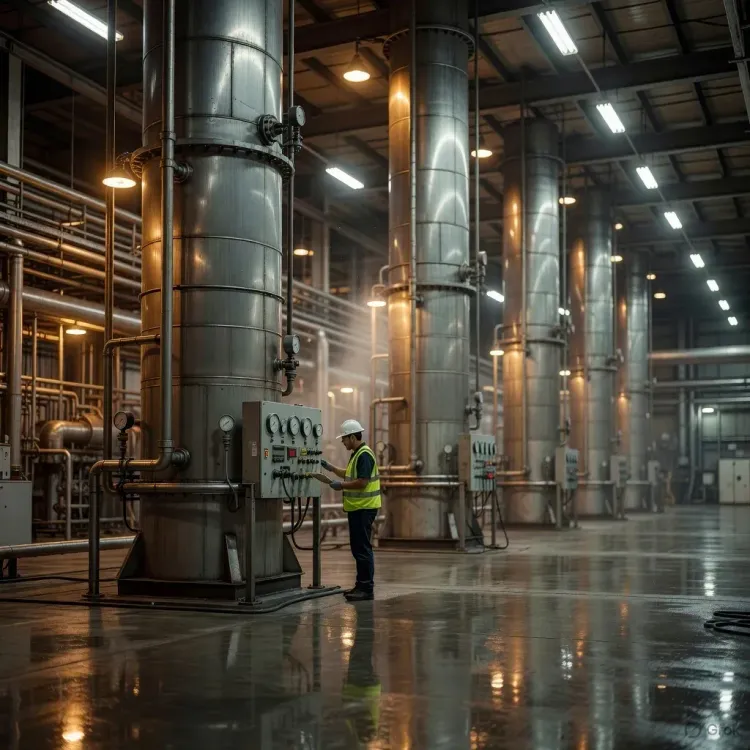
The demonstration production line uses plant-extract-based processes to recover rubidium and caesium — two alkali metals that occur in trace concentrations in lithium ore tailings — materials that would otherwise be discarded as waste. The CAS Institute of Process Engineering developed the continuous tower extraction method, which enables industrial-scale separation of these low-grade feedstocks at an annual throughput of 500 tonnes. Achieving stable output at this scale is described as a world first by the institute.Why it matters
Rubidium and caesium are classified as critical minerals essential to several frontier industries. According to the CAS, their applications span aerospace, quantum computing, biomedicine, new energy — including perovskite solar cells — and other advanced technology sectors. Global supply of both metals is extremely limited, with primary production historically concentrated in a handful of deposits across Canada, Zimbabwe, and Australia. Recovering them from lithium waste streams could meaningfully diversify supply.The competitive backdrop
China already dominates lithium processing, with major producers such as Jiangxi Ganfeng Lithium and Sinomine Resource Group operating assets across Africa, Australia, and South America. The country's lithium refining infrastructure generates substantial volumes of ore tailings, creating a large captive feedstock base for rubidium and caesium recovery. By converting waste streams into strategic-mineral output, China could reduce its reliance on primary mining of these metals while simultaneously tightening its grip on global supply chains for quantum and aerospace materials.What's next
The transition from demonstration line to full commercial deployment will be the critical next step. Industry analysts have noted that scaling continuous tower extraction beyond the current 500-tonne capacity without compromising separation efficiency remains a key engineering challenge. Broader adoption would depend on whether the economics of waste-stream recovery can compete with — or undercut — conventional primary production from dedicated rubidium and caesium mines. Governments and technology companies in Europe, Japan, and the United States that rely on these metals for quantum computing hardware and aerospace navigation systems will be watching the scale-up closely.Point of View
China is effectively monetising a waste stream that Western lithium refiners largely ignore, converting an environmental liability into geopolitical leverage. Mainstream coverage tends to frame this as an environmental win; the more consequential angle is that it gives Beijing a low-cost, domestically sourced supply of minerals that Western quantum and defence programmes currently import from a very small number of mines — most of which China already has commercial stakes in.
NationPress
16 Sept 2026
Frequently Asked Questions
What has China achieved with its new rubidium and caesium extraction facility?
China has commissioned the world's first production line capable of extracting and separating rubidium and caesium from lithium mining waste at an annual capacity of 500 tonnes , using a continuous tower extraction process. The facility in Jiangxi province has achieved stable production, according to the Chinese Academy of Sciences .
Why are rubidium and caesium considered critical minerals?
Rubidium and caesium are essential to several high-technology sectors, including quantum computing , aerospace , biomedicine , and new energy technologies such as perovskite solar cells. Their scarcity and concentrated global supply make them strategically sensitive materials for governments and advanced industries worldwide.
Where does most of the world's rubidium and caesium come from?
Primary rubidium and caesium production has historically been concentrated in a small number of deposits in Canada , Zimbabwe , and Australia . China's new approach recovers both metals from lithium ore tailings — waste material generated during lithium processing — which could significantly diversify the supply base.
Which Chinese organisations are behind this breakthrough?
The technology was developed by the Institute of Process Engineering under the Chinese Academy of Sciences (CAS) . China's broader lithium processing ecosystem, which includes major producers such as Jiangxi Ganfeng Lithium and Sinomine Resource Group , provides the ore tailings feedstock that makes the process viable at scale.
What are the implications for global quantum computing and aerospace supply chains?
If China scales this extraction technology commercially, it could gain dominant influence over the supply of rubidium and caesium — metals that are non-negotiable inputs for quantum computing atomic clocks and aerospace navigation systems. Countries in Europe , Japan , and the United States that depend on these minerals for advanced technology programmes face heightened supply-chain exposure.