Is China's Lithium Mining in Tibet Undermining the Region's Autonomy?
Synopsis
The recent report signals a troubling trend in Tibet as China's lithium mining operations begin to unfold, raising urgent questions about the impacts on autonomy, ecology, and culture. What does this mean for Tibet's future?
Key Takeaways
China's lithium extraction is set to begin in 2025.
Economic benefits are predominantly flowing to Mainland China .
Tibetans are facing ecological and cultural repercussions.
The development raises concerns about increased surveillance .
Mining operations are characterized by extractive colonialism .
New Delhi, Nov 10 (NationPress) The commencement of China's extensive lithium extraction in Tibet, projected to start in 2025, signifies a subtle erosion of Tibetan autonomy, as the report highlights that the benefits predominantly depart the area, moving eastward into Mainland China.
According to the findings published in the European Times, the costs associated with this operation—such as ecological damage, cultural dilution, and increased surveillance—are primarily shouldered by the Tibetan populace.
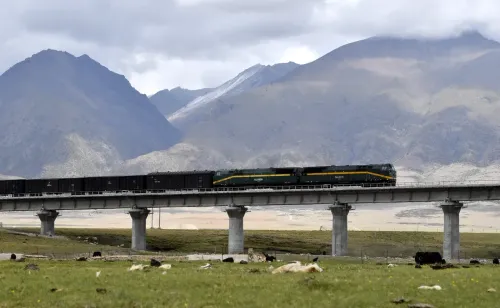
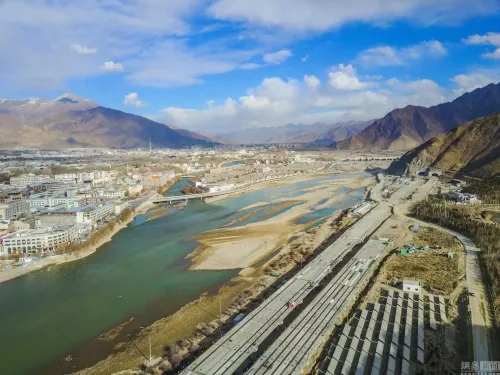
The significant lithium reserves located in Gerze County and Golmud, Qinghai Province, have resulted in remarkable infrastructural advancements, including the establishment of high-speed railways.
This new transportation system has facilitated tourism and commercial activities in areas that were once isolated, as noted in the report.
However, the report also points out that this development serves as an apparatus for surveillance, creating a framework for control. It raises alarm over the potential for ecological harm, cultural disintegration, and the escalation of security protocols surrounding mining operations.
“Facial recognition technology welcomes visitors at hotel check-ins, and police checkpoints are prevalent on the roads. The same trains that transport tourists can also move military personnel. The lithium mines embody a form of extractive colonialism,” the report asserts.
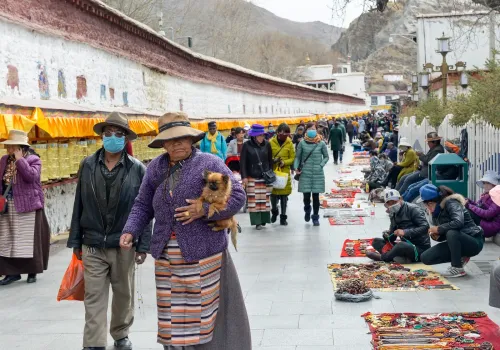
The report categorizes the surge in tourism in Tibet as ideologically manipulated, as it repositions Tibet as a scenic extension of the Chinese nation, overshadowing its contentious history and spiritual significance.
Cautioning that economic initiatives are reshaping social and cultural dynamics, it highlights how boutique hotels and tourism facilities are redefining Tibet into a captivating frontier.
“In Gerze County, what was once free land for nomadic herders is now home to a 115 km² lithium-boron project operated by Zangge Mining, approved for 33 years of extraction... In reality, Tibet is being exploited twice: first for its minerals, and then for its identity,” the report elaborates.
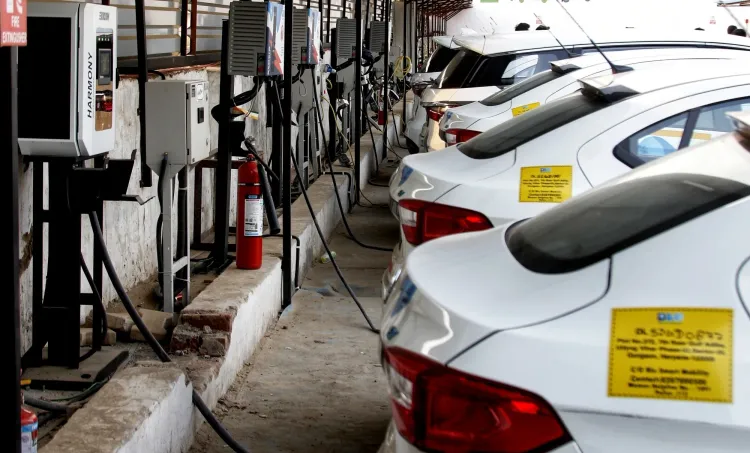
It also poses a critical inquiry for electric vehicle (EV) consumers: “At what cost is this lithium extracted, and who determines Tibet's future?”
Point of View
It is imperative to view this situation through an unbiased lens. While the promise of economic development exists, we must critically assess the implications on Tibetan autonomy and the potential cultural and ecological costs involved in these projects.
NationPress
8 Oct 2026
Frequently Asked Questions
What are the main concerns regarding China's lithium mining in Tibet?
The primary concerns include ecological degradation, cultural dilution, increased surveillance, and the economic benefits primarily favoring Mainland China over the local Tibetan population.
How does this mining impact Tibetan autonomy?
The lithium mining operations are seen as a subtle erosion of Tibetan autonomy, as benefits are extracted from the region, while local communities face the repercussions of ecological and cultural changes.
What is the significance of high-speed rail development in Tibet?
The development of high-speed rail has facilitated tourism and commerce in previously isolated areas, but also raises concerns about surveillance and military presence.
What does the report mean by 'extractive colonialism'?
The term refers to the exploitation of resources in a way that prioritizes external benefits over local needs, often leading to cultural and ecological harm.
What critical question does the report pose for consumers of electric vehicles?
The report questions the ethical considerations surrounding the extraction of lithium, asking at what cost it comes and who gets to determine the future of Tibet.