Pradhan hails ISRO's GSLV-F18 launch, NavIC boost
Synopsis
Union Education Minister Dharmendra Pradhan praised ISRO on October 31, 2026 for launching GSLV-F18 with the NVS-03 satellite, a second-generation addition to India's indigenous NavIC navigation constellation, reinforcing India's self-reliance in critical space technology.
Key Takeaways
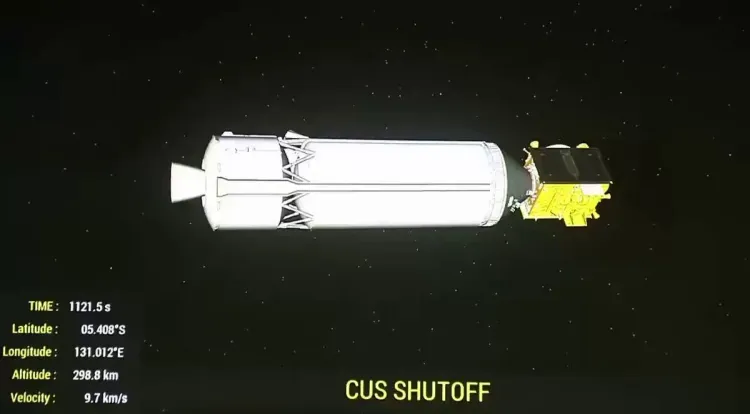
GSLV-F18 successfully placed the NVS-03 navigation satellite into orbit on October 31, 2026 .
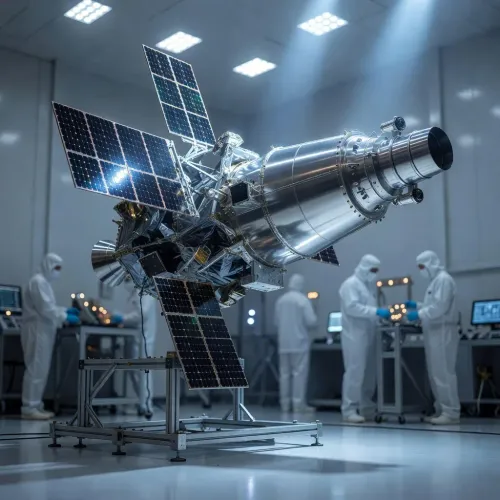
NVS-03 is a second-generation satellite augmenting the NavIC constellation with improved signals and longer operational life.
NavIC was approved in 2006 and declared operational between 2016 and 2018 , giving India an independent alternative to GPS.
Using an indigenous GSLV launch vehicle underlines India's full-stack self-reliance in space-based navigation.
Union Education Minister Dharmendra Pradhan framed the achievement within India's broader capacity to 'develop and deploy critical space technologies'.
Further NVS-series satellites and government mandates on NavIC adoption in civilian and defence sectors are expected next.
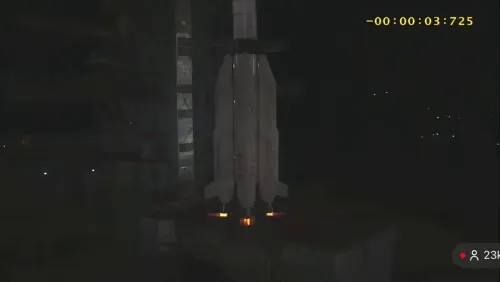
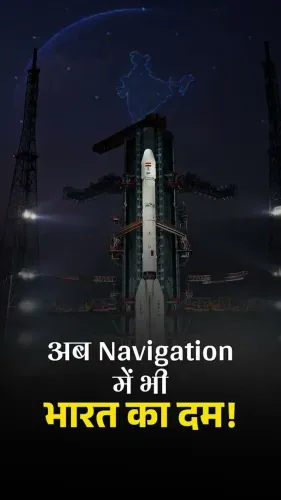
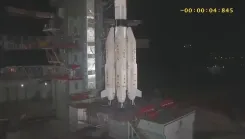
India's drive toward navigation self-reliance cleared another milestone on Saturday, October 31, 2026, as Union Education Minister Dharmendra Pradhan congratulated ISRO on the successful launch of GSLV-F18 carrying the NVS-03 satellite — the latest addition to India's homegrown NavIC navigation constellation.
Posting on X, Pradhan wrote: 'Congratulations to the team at ISRO on the successful launch of GSLV-F18 carrying NVS-03, strengthening India's indigenous NavIC navigation system. With advanced capabilities, NVS-03 will enhance our navigation infrastructure and reinforce India's capacity to develop and deploy critical space technologies.'
What NavIC is and why NVS-03 matters
NavIC — Navigation with Indian Constellation — is India's answer to America's GPS, Europe's Galileo, and China's BeiDou. Originally approved in 2006 under the name IRNSS (Indian Regional Navigation Satellite System), the project cut India's reliance on foreign positioning infrastructure for both civilian and strategic applications. The first satellite lifted off in 2013, and the constellation was declared broadly operational between 2016 and 2018. NVS-03 belongs to the second-generation NVS series, designed to carry improved signals, longer operational life, and enhanced accuracy — building on the foundation of the original IRNSS satellites that are now ageing. Each new-generation satellite added to the constellation expands coverage reliability and redundancy, critical for defence, disaster management, and precision agriculture.GSLV-F18: the rocket that got it there
GSLV-F18 is a mission of ISRO's Geosynchronous Satellite Launch Vehicle, the workhorse designed to haul heavier payloads into geostationary transfer orbit. India's navigation satellites orbit in geostationary and geosynchronous orbits, requiring the kind of lift that GSLV provides — making indigenous launch capability as strategically vital as the satellite itself. The fact that India launched its own navigation satellite on its own rocket, tracking its own positioning signals, underlines a full-stack self-reliance few nations have achieved.Political endorsement from the education ministry
Pradhan's congratulatory post is notable beyond routine ceremony. As a senior BJP leader and former Union Petroleum Minister, he has consistently linked India's technological advances to the broader 'Atmanirbhar Bharat' (self-reliant India) policy framework. Space and critical technology have become a recurring political touchstone for the ruling coalition, with ISRO milestones used to illustrate India's rise as a science and innovation power. Pradhan's note that the achievements 'reflect the spirit of innovation and excellence driving forward India's space programme' reinforces that narrative. The next frontier: watch for further NVS-series launches to complete the upgraded constellation, and government notifications on mandatory NavIC adoption in smartphones, vehicles, and defence platforms — the moment the satellite overhead translates into a signal in every Indian's pocket.Point of View
Multi-decade arc of building navigation sovereignty — a strategic priority that predates the current government but has been amplified under the 'Atmanirbhar Bharat' framework. Pradhan's endorsement, coming from the education portfolio rather than space or science ministries, signals how ISRO achievements have become whole-of-government political currency. The real policy test lies ahead: whether NavIC adoption mandates — in smartphones, vehicles, and defence systems — translate orbital success into ground-level utility. Until that happens, the constellation is an engineering triumph still awaiting its full economic and strategic dividend.
NationPress
31 Oct 2026
Frequently Asked Questions
What is NVS-03 and what does it do?
NVS-03 is a second-generation NavIC navigation satellite launched by ISRO aboard GSLV-F18. It is designed to strengthen India's indigenous navigation constellation with improved signal capabilities and a longer operational lifespan compared to the original IRNSS satellites.
What is NavIC and how is it different from GPS?
NavIC (Navigation with Indian Constellation) is India's own regional satellite navigation system, approved in 2006 and declared operational between 2016 and 2018. Unlike GPS, which is operated by the United States, NavIC is fully indigenous, giving India independent positioning and timing services for civilian and defence use.
Why did ISRO use GSLV-F18 for this launch?
The GSLV (Geosynchronous Satellite Launch Vehicle) is capable of lifting heavier payloads into geostationary and geosynchronous orbits, which is where NavIC satellites operate. Using an indigenous launch vehicle alongside an indigenous satellite demonstrates India's full-stack self-reliance in space-based navigation.
Why did Education Minister Dharmendra Pradhan comment on an ISRO launch?
As a senior BJP leader and cabinet minister, Pradhan routinely acknowledges major national achievements. His post aligns with the government's 'Atmanirbhar Bharat' narrative, framing ISRO milestones as evidence of India's growing capacity in critical and strategic technologies.
What comes next for India's NavIC system?
Further NVS-series satellite launches are expected to complete the upgraded constellation. Analysts and policymakers are also watching for government notifications mandating NavIC integration in smartphones, commercial vehicles, and defence platforms.