Kishan Reddy Hails GSLV-F18/NVS-03 Launch, Cites NavIC Push
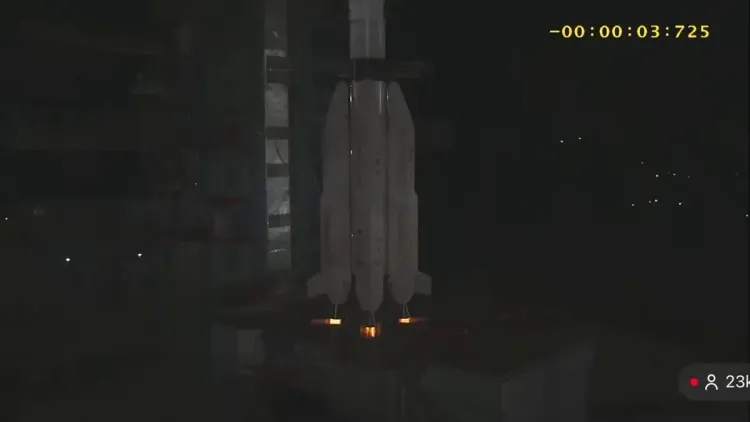
Synopsis
Union Minister G. Kishan Reddy hailed ISRO's successful GSLV-F18/NVS-03 launch on 31 October 2026, spotlighting India's push to complete the NavIC satellite navigation constellation and crediting Modi-era space sector reforms for enabling the achievement.
Key Takeaways
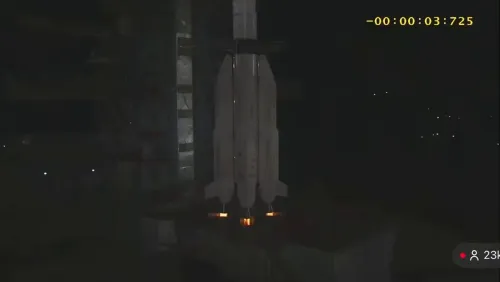
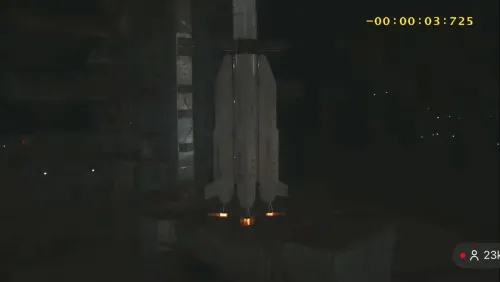
ISRO successfully launched the GSLV-F18/NVS-03 mission on 31 October 2026 , adding to India's NavIC navigation constellation.
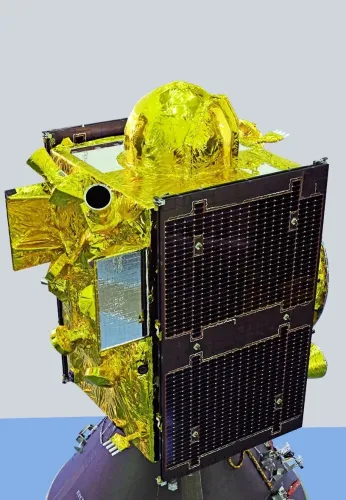
NVS-03 is a second-generation NavIC satellite; the series began with NVS-01 in May 2023 .
NavIC is India's indigenous regional satellite navigation system, designed to reduce dependence on foreign constellations like GPS for defence and civilian use.
The 2020 space sector reforms established IN-SPACe as regulator and opened the sector to private participation alongside ISRO.
Kishan Reddy credited PM Narendra Modi's reforms for enabling India's growing space launch cadence.
Completing the full NavIC constellation and upcoming GSLV and LVM3 missions remain the key milestones to watch.
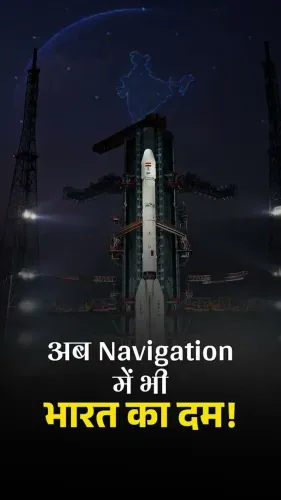
India's satellite navigation ambitions just got a significant boost: ISRO has successfully launched the GSLV-F18/NVS-03 mission, adding another second-generation satellite to the NavIC constellation that aims to give India its own GPS-level positioning capability — completely home-grown, completely sovereign.
Union Coal and Mines Minister G. Kishan Reddy, also the BJP Telangana state president, took to X on Saturday, 31 October 2026, to congratulate Team ISRO, calling it 'yet another significant milestone in India's space journey' and pointing to the country's 'determination to build robust, self-reliant navigation capabilities.'
What NVS-03 adds to India's NavIC constellation
NavIC — Navigation with Indian Constellation — is India's answer to the American GPS, the Russian GLONASS, and Europe's Galileo. Designed to provide precise positioning and timing services across the Indian subcontinent and surrounding maritime zones, it matters not just for civilian apps but critically for defence operations where reliance on foreign constellations is a strategic vulnerability.
The second-generation NVS series began with the NVS-01 launch in May 2023, upgrading the constellation's signal quality and longevity. NVS-03 continues that arc — each satellite added sharpens coverage and redundancy. A complete, resilient NavIC constellation is the end goal, and this mission moves that target measurably closer.
The 2020 reforms that made the wider space push possible
The current launch cadence doesn't exist in a vacuum. In 2020, the government approved sweeping space sector reforms — opening the door to private-sector participation and establishing IN-SPACe (Indian National Space Promotion and Authorisation Centre) as the dedicated regulator. That structural shift allowed startups and industry players to enter a domain previously held exclusively by the state, even as ISRO retained primacy on strategic missions like GSLV-F18.
Kishan Reddy's post explicitly credited those reforms: 'Under the visionary leadership of Hon'ble PM Shri Narendra Modi ji, far-reaching reforms have opened new avenues for India's space sector, enabling it to scale greater heights.' The political framing is deliberate — the BJP has consistently positioned space-sector liberalisation as a flagship of its 'Atmanirbhar Bharat' self-reliance agenda.
Why navigation sovereignty is the quiet big deal
Most people notice space launches through the spectacle. The strategic community notices them through the lens of dependency. Every NVS satellite that slots into orbit is one more argument against having to negotiate access with Washington, Moscow, or Brussels in a crisis. India's defence planners have long flagged GPS dependence as a risk; NavIC is the structural answer.
With NVS-03 now up, the watch shifts to completing the full constellation — and to the follow-on GSLV and LVM3 missions queued for the coming year that will determine how quickly India closes the gap with more mature global navigation networks.
ISRO keeps launching. India keeps watching. And the stars, as Kishan Reddy put it, keep getting closer.
Point of View
In theory, exercise. Kishan Reddy's congratulatory post is also a political signal: by invoking Modi-era reforms and 'Atmanirbhar' self-reliance framing, the BJP is actively weaving space success into its governance narrative ahead of what remains a competitive electoral environment in Telangana. The 2020 IN-SPACe reforms are the structural hinge here — without private-sector entry, India's launch cadence could not sustain the pace required to complete NavIC and pursue lunar or deep-space ambitions simultaneously. The real test of that reform architecture comes as the constellation nears completion and commercial applications begin scaling.
NationPress
31 Oct 2026
Frequently Asked Questions
What is the GSLV-F18/NVS-03 mission?
GSLV-F18/NVS-03 is an ISRO mission that launched the NVS-03 satellite, a second-generation NavIC navigation satellite designed to strengthen India's indigenous satellite navigation constellation.
What is NavIC and how does it work?
NavIC (Navigation with Indian Constellation) is India's regional satellite navigation system, providing positioning and timing services across the Indian subcontinent and surrounding maritime zones — functioning similarly to GPS but operated entirely by India.
Why did G. Kishan Reddy congratulate ISRO on the GSLV-F18 launch?
As a Union Minister and senior BJP leader, Kishan Reddy posted congratulations to ISRO on X, highlighting the launch as a milestone in India's self-reliant space journey and crediting Modi-era space reforms.
What are India's 2020 space sector reforms?
In 2020, the Indian government approved reforms allowing private-sector participation in space activities and established IN-SPACe (Indian National Space Promotion and Authorisation Centre) as the regulatory body, while ISRO retained its lead role in strategic missions.
When was the first second-generation NavIC satellite launched?
NVS-01, the first satellite in the second-generation NavIC series, was launched by ISRO in May 2023. NVS-03 is a subsequent satellite continuing the build-out of that upgraded constellation.