Goyal hails NVS-03 launch as big leap for India's NavIC
Synopsis
Union Commerce Minister Piyush Goyal hailed the successful launch of NVS-03 aboard GSLV-F18 as a 'BIG LEAP', praising ISRO and industrial partners for strengthening India's indigenous NavIC regional satellite navigation system.
Key Takeaways
NVS-03 was successfully launched aboard GSLV-F18 , bolstering India's NavIC regional satellite navigation constellation.
NavIC has been under development since 2006 , with the first satellite launched in July 2013 ; NVS-03 is part of the second-generation upgrade cycle that began with NVS-01 in May 2023.
The system serves civilian, commercial, and strategic applications, reducing India's dependence on foreign navigation systems such as GPS.
Minister Piyush Goyal highlighted the role of indigenous technology and ISRO's industrial partners in the mission's success.
Further NVS-series launches and potential mandates for NavIC chip integration in devices are on the horizon for completing and expanding the constellation.
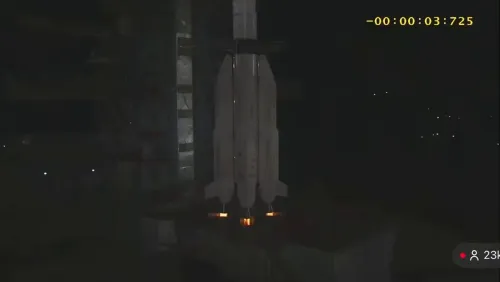
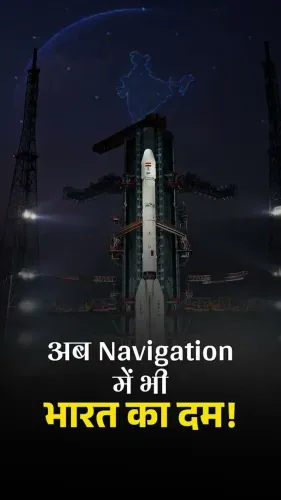
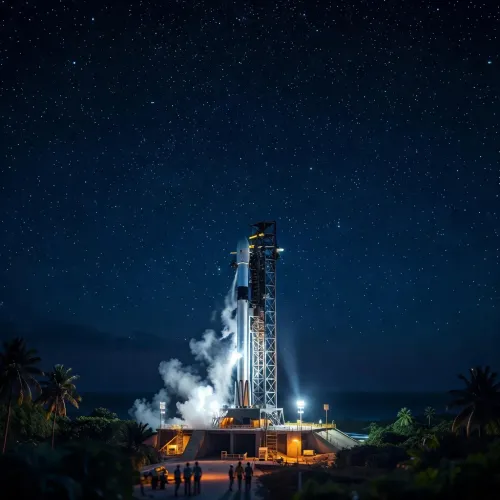
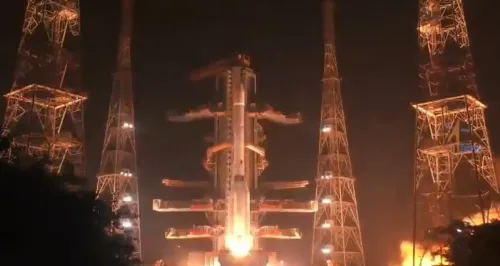
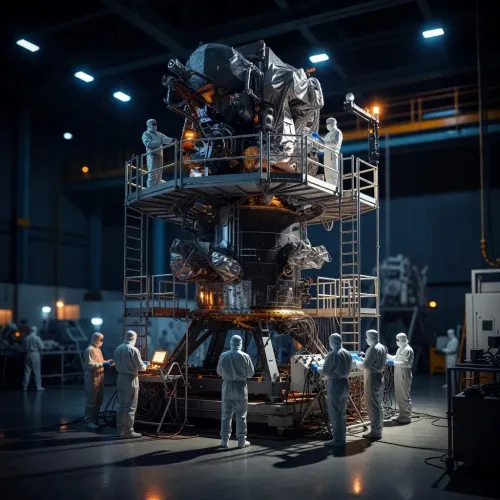
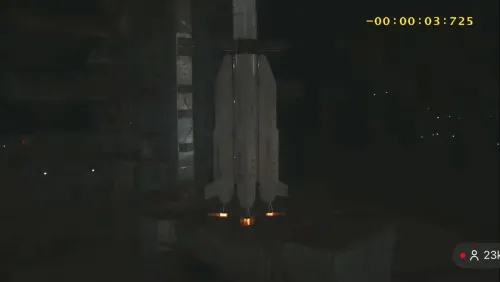
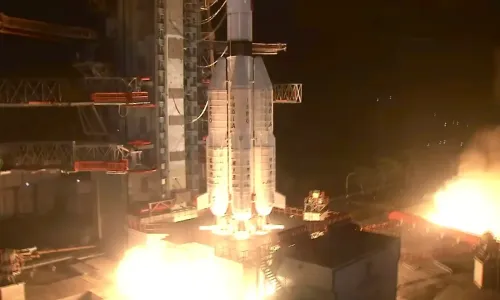
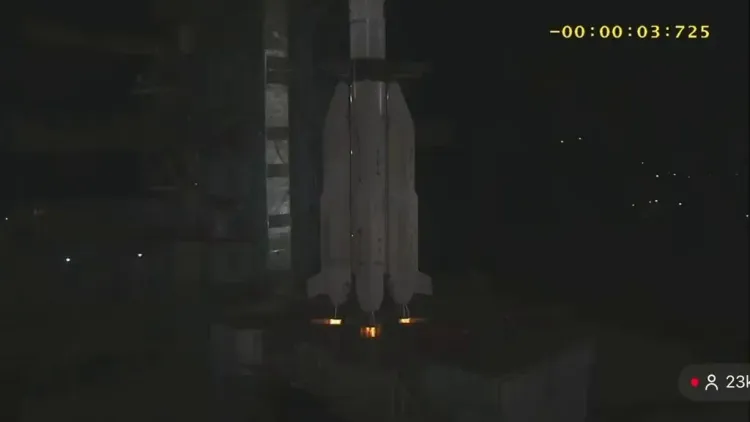
India's navigation sovereignty got a sharper edge on Saturday, 31 October 2026, as Union Commerce and Industry Minister Piyush Goyal congratulated ISRO and its industrial partners on the successful launch of NVS-03 — the country's next-generation navigation satellite — aboard the GSLV-F18 rocket, calling it a 'BIG LEAP' for the nation.
NVS-03's place in the NavIC constellation
NavIC — Navigation with Indian Constellation — is India's answer to GPS: a home-grown regional satellite navigation system designed to deliver precise positioning and timing services over the Indian subcontinent and a surrounding region extending roughly 1,500 km beyond its borders. The programme traces its lineage to a government approval in 2006, with the first satellite, IRNSS-1A, lifting off in July 2013. What began as a strategic insurance policy has grown into a multi-domain infrastructure asset serving defence forces, civilian users, and a fast-expanding commercial sector.
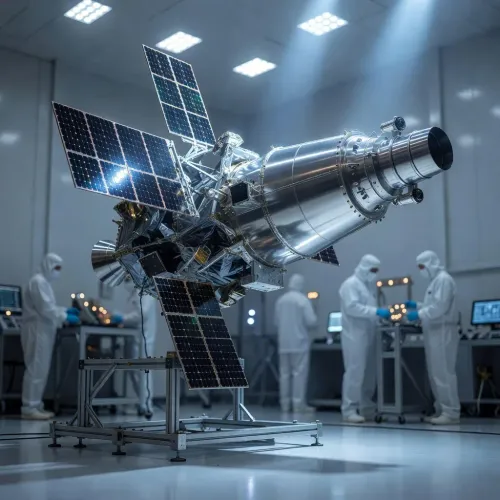
NVS-03 belongs to the second generation of NavIC satellites — a series engineered for improved signal quality, greater longevity, and modernised onboard technology. The first of that new generation, NVS-01, rode a GSLV into orbit in May 2023, beginning the gradual replenishment and upgrade of the original seven-satellite constellation. NVS-03 advances that process further, bringing the system closer to a fully refreshed, more resilient architecture.
Why a navigation satellite carries strategic weight
Navigation data is infrastructure — invisible until it is unavailable. India's sustained investment in NavIC is explicitly designed to end dependence on the US-operated GPS and other foreign systems for critical applications ranging from precision agriculture and disaster management to guided munitions and border surveillance. Each successful NVS-series launch tightens that self-reliance story, and it does so on hardware largely conceived, built, and launched within India — a point Minister Goyal underscored by saluting 'indigenous technology' that has 'boosted India's standing in the global navigation ecosystem.'
The GSLV-F18 mission also reinforces the growing role of ISRO's industrial partners — private-sector firms that co-manufacture components and subsystems — signalling the deepening commercialisation of India's space economy that the government has actively encouraged since opening the sector to private players.
What comes next for NavIC
The constellation still requires additional NVS-series launches to fully replace ageing first-generation satellites and provide redundancy. Separately, the government has been moving — gradually — toward mandating NavIC chip integration in mobile handsets sold in India, a move that would dramatically expand the system's civilian user base and create pull demand for the domestic space-tech supply chain.
For now, the successful GSLV-F18 mission is a proof point: India's 'Eye in the Sky' is watching — and it is growing sharper.
Point of View
Each NavIC success doubles as a 'Make in India' proof point, showcasing domestic industrial capacity at a time when space commercialisation is a stated policy priority. Goyal's congratulatory post, notably framing the satellite as India's 'Eye in the Sky,' signals the government's intent to communicate NavIC not just as a technical achievement but as a symbol of national capability. The real test of policy ambition, however, lies ahead — in whether mandatory device integration and robust commercial uptake can turn constellation hardware into mass-market infrastructure.
NationPress
31 Oct 2026
Frequently Asked Questions
What is NVS-03 and why was it launched?
NVS-03 is a second-generation Indian navigation satellite launched to modernise and replenish the NavIC constellation, improving signal quality, coverage, and system longevity over India and the surrounding region.
What is NavIC and how is it different from GPS?
NavIC (Navigation with Indian Constellation) is India's indigenous regional satellite navigation system, providing positioning and timing services over India and roughly 1,500 km beyond its borders. Unlike GPS, which is operated by the United States, NavIC is fully designed, built, and operated by India, giving the country independent navigation capability.
What rocket was used to launch NVS-03?
NVS-03 was launched aboard the GSLV-F18, a variant of ISRO's Geosynchronous Satellite Launch Vehicle used for placing satellites into geostationary transfer orbits.
What was the first second-generation NavIC satellite?
NVS-01 was the first second-generation NavIC satellite, successfully launched by ISRO in May 2023 to begin the upgrade and replacement of the original constellation.
What are the uses of the NavIC navigation system?
NavIC supports a wide range of applications including civilian uses such as navigation, disaster management, and precision agriculture; commercial services in transport and logistics; and strategic defence applications such as guided munitions and border surveillance.