Nadda leads National Unity Day pledge across two ministries
Synopsis
Union Health Minister J. P. Nadda led the Rashtriya Ekta Diwas pledge for officials of the Health and Chemicals ministries on 31 October 2026, honouring Sardar Patel's integration legacy and reaffirming the Ek Bharat, Shreshtha Bharat and Viksit Bharat vision.
Key Takeaways
Nadda administered the National Unity Day pledge to officials of both the Ministry of Health and Family Welfare and the Ministry of Chemicals and Fertilizers on 31 October 2026 .
Rashtriya Ekta Diwas is observed annually on 31 October , the birth anniversary of Sardar Vallabhbhai Patel , and was instituted by the Government of India in 2014 .
Patel is credited with integrating over 560 princely states into the Indian Union after independence as the country's first Deputy Prime Minister and Home Minister.
Nadda's address invoked Ek Bharat, Shreshtha Bharat — a cultural-exchange initiative launched in 2015 — and the Viksit Bharat vision of a developed India by 2047 .
The ministry-level pledge is part of a synchronised annual observance held across central and state government institutions nationwide.
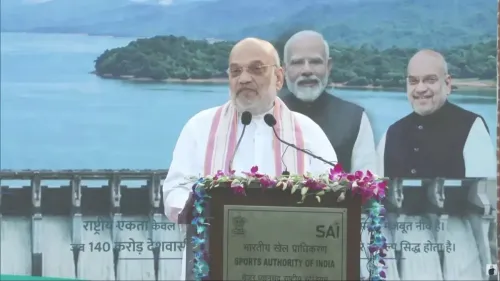
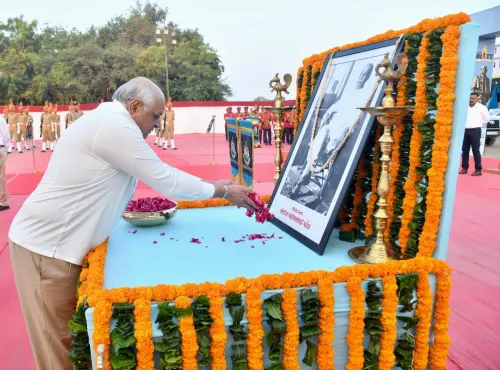
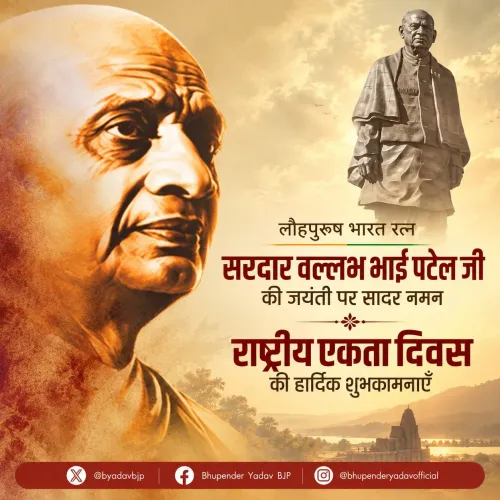
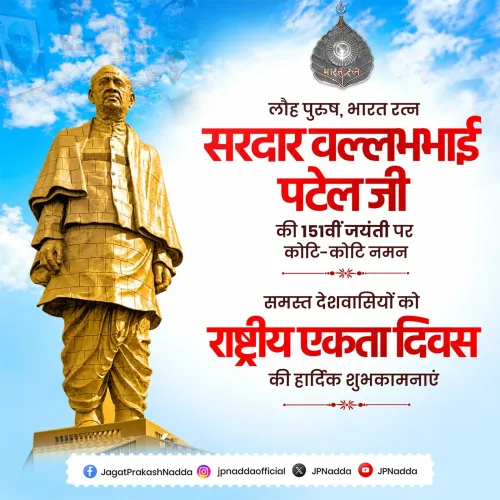
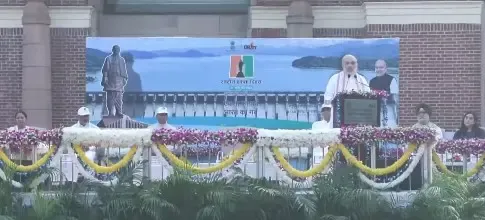
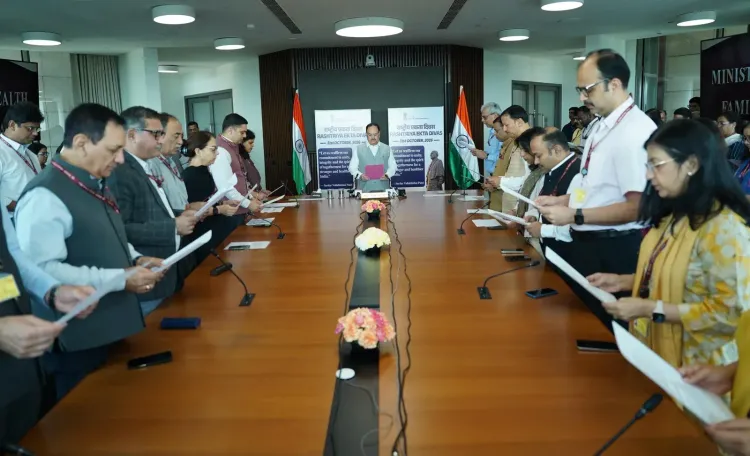
On the birth anniversary of Sardar Vallabhbhai Patel, Union Health Minister J. P. Nadda administered the National Unity Day pledge on 31 October 2026 to officers and officials of the Ministry of Health and Family Welfare and the Ministry of Chemicals and Fertilizers — reaffirming the government's annual commitment to the ideals of unity and national integration.
The pledge and what it invoked
Nadda led the observance of Rashtriya Ekta Diwas — National Unity Day — citing the 'remarkable contributions' of Patel in weaving over 560 princely states into a single Indian Union after independence. The moment served as a formal restatement of collective resolve: 'to uphold India's unity, integrity and sovereignty,' in the minister's own words.
He also invoked two of the government's defining long-horizon themes — Ek Bharat, Shreshtha Bharat (One India, Excellent India) and Viksit Bharat, the official vision of a fully developed India by 2047. Both references placed a ceremonial administrative event inside a larger national-purpose narrative.
Patel's integration legacy and why it anchors this day
Sardar Vallabhbhai Patel, India's first Deputy Prime Minister and Home Minister, is credited with the diplomatic and at times forceful consolidation of the princely states — a feat that shaped modern India's territorial map. Rashtriya Ekta Diwas was instituted by the Government of India in 2014 to mark his birth anniversary and keep that legacy in active public memory.
The day is observed across central ministries, state governments, and public institutions through run-for-unity events, pledge ceremonies, and cultural programmes — making Nadda's ministry-level observance part of a broader, synchronised national exercise.
Ek Bharat, Shreshtha Bharat and the Viksit Bharat frame
Ek Bharat Shreshtha Bharat, launched in 2015, promotes cultural and linguistic exchanges among India's states and union territories to deepen mutual understanding. Its invocation alongside Viksit Bharat signals how the BJP-led government consistently links Patel's integration legacy to its own developmental and unity agenda — threading historical memory into contemporary governance messaging.
For ministry officials who took the pledge on Saturday, the exercise was both administrative and symbolic: a moment to anchor day-to-day governance work in a statement about what the country is building toward.
Sardar Patel unified a nation once; the pledge his memory inspires, taken year after year across every wing of government, is a bet that the unity he forged still needs — and rewards — renewal.
Point of View
Shreshtha Bharat and Viksit Bharat. Nadda's participation as head of two large ministries amplifies the administrative reach of the observance beyond ceremonial optics. Over time, the institutionalisation of this pledge across every ministry signals a deliberate effort to embed national-unity themes into bureaucratic culture, not just political rhetoric. Whether that translates into measurable inter-state cohesion or remains symbolic ritual is the real question the government's own 2047 deadline will eventually have to answer.
NationPress
31 Oct 2026
Frequently Asked Questions
What is Rashtriya Ekta Diwas and why is it celebrated on 31 October?
Rashtriya Ekta Diwas, or National Unity Day, is observed on 31 October every year because it marks the birth anniversary of Sardar Vallabhbhai Patel , India's first Deputy Prime Minister who integrated over 560 princely states into the Indian Union. It was instituted by the Government of India in 2014 .
What did JP Nadda do on Rashtriya Ekta Diwas 2026?
J. P. Nadda administered the National Unity Day pledge to officers and officials of the Ministry of Health and Family Welfare and the Ministry of Chemicals and Fertilizers on 31 October 2026 , honouring Sardar Patel's legacy and reaffirming the country's unity, integrity and sovereignty.
What is Ek Bharat Shreshtha Bharat?
Ek Bharat Shreshtha Bharat is a government initiative launched in 2015 to promote cultural and linguistic exchanges among India's states and union territories, deepening mutual understanding and national integration.
What is the Viksit Bharat vision?
Viksit Bharat is the Government of India's official goal of transforming India into a fully developed nation by 2047 , the centenary of independence. It is frequently referenced in government communications on governance, infrastructure, and national progress.
How many princely states did Sardar Patel integrate into India?
Sardar Vallabhbhai Patel oversaw the integration of over 560 princely states into the Indian Union after independence in 1947, a consolidation that defined the country's territorial map and earned him the title 'Iron Man of India'.