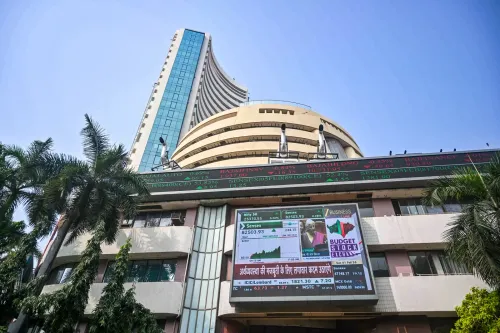
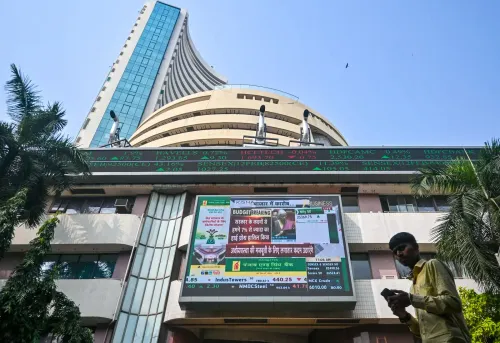
Nifty hits 52-week low, Sensex crashes 1,045 points on crude oil surge

Synopsis
Brent crude cracking the $104-per-barrel level wasn't just an energy story on 8 October — it became the catalyst for India's sharpest market fall in weeks. With the Nifty printing a fresh 52-week low, metal stocks hammered and mid-caps down over 2.5%, the session signals that higher-for-longer rate anxiety is now being priced in hard. The Q2 earnings season will be the next battleground.
Key Takeaways
Sensex closed down 1,045.46 points ( 1.44% ) at 71,593.24 on 8 October 2026 .
Nifty50 fell 371.25 points ( 1.64% ) to 22,231.80 , touching a fresh 52-week low of 22,179.90 intra-day.
Brent crude surged 4 per cent past $104 per barrel , the primary trigger for the sell-off.
ITC , IndiGo , Power Grid Corporation , and Bharat Electronics each shed more than 3 per cent .
Nifty MidCap fell 2.53% ; Nifty SmallCap dropped 2.34% — both deeper than headline indices.
Market focus now shifts to Q2 earnings and management commentary on demand and input costs.
Indian equity benchmarks suffered a severe sell-off on Thursday, 8 October 2026, as Brent crude surged 4 per cent past the $104-per-barrel mark, reigniting inflation fears and deepening concerns over prolonged elevated interest rates. Sustained foreign fund outflows compounded the pressure, pushing the Nifty50 to its lowest level of the year.
Market Damage in Numbers
The BSE Sensex plummeted 1,045.46 points, or 1.44 per cent, to close at 71,593.24, extending losses into a second straight session. At its worst, the index slid to an intra-day trough of 71,327.75.
The Nifty50 fared even worse in percentage terms, shedding 371.25 points, or 1.64 per cent, to settle at 22,231.80. The benchmark touched an intra-day low of 22,179.90 — its deepest point in 2026 and a fresh 52-week low.
What the Charts Are Saying
Technical observers noted that the Nifty closed below its monthly 50-Simple Moving Average (SMA), a development they described as confirming 'deterioration in the medium-term price structure.' The index also snapped through two key support zones — 22,550–22,600 and 22,400 — placing the psychologically significant 22,000 level squarely in focus.
According to market analysts, any near-term recovery attempt is likely to encounter stiff resistance first at 22,400 and subsequently at 22,600.
Biggest Losers and Rare Gainers
The selling was overwhelmingly broad-based among the 30 Sensex constituents. ITC, IndiGo, Power Grid Corporation, and Bharat Electronics each lost more than 3 per cent. NTPC, Reliance Industries, and Maruti Suzuki also featured among the heavier casualties.
Only three blue-chip names managed to close in the green: Tech Mahindra, Axis Bank, and Infosys. Metal stocks bore the sharpest sectoral brunt, making the Nifty Metal index the day's worst-performing sector. The Nifty IT index, in contrast, showed relative resilience and outpaced the broader market.
Mid- and Small-Caps Take a Harder Hit
Risk aversion spread well beyond large caps. The Nifty MidCap index dropped 2.53 per cent and the Nifty SmallCap index fell 2.34 per cent — both underperforming the headline benchmarks and underscoring how indiscriminate the selling pressure was.
What Investors Are Watching Next
With the immediate macro overhang unlikely to clear quickly, market attention is now shifting to the Q2 earnings season. Analysts say management commentary on demand sustainability and the absorption of elevated input costs will be the critical near-term directional signal. A higher-for-longer crude price environment could keep inflationary pressures alive and test corporate margin assumptions well into the second half of the financial year.
Point of View
400 support zone is technically significant, but the more consequential signal is the underperformance of mid- and small-caps: when the risk-off spreads that far down the capitalisation curve, it suggests institutional money — not just retail sentiment — is repositioning. The Q2 earnings season now carries an outsized burden: if management guidance disappoints on margins, the 22,000 level stops looking like a floor and starts looking like a waypoint.
NationPress
8 Oct 2026
Frequently Asked Questions
Why did the Sensex and Nifty fall sharply on 8 October 2026?
The Sensex fell 1,045 points and the Nifty hit a 52-week low on 8 October 2026 primarily because Brent crude surged 4 per cent past $104 per barrel, stoking inflation fears and raising expectations that interest rates could stay elevated for longer. Continued foreign fund outflows added to the selling pressure.
What is the Nifty's fresh 52-week low?
The Nifty50 touched an intra-day low of 22,179.90 on 8 October 2026, its lowest level in 2026 and a fresh 52-week low. It eventually settled at 22,231.80, down 371.25 points or 1.64 per cent.
Which stocks and sectors were the worst hit?
ITC, IndiGo, Power Grid Corporation, and Bharat Electronics each lost more than 3 per cent. The Nifty Metal index was the session's biggest sectoral loser, while NTPC, Reliance Industries, and Maruti Suzuki were also among major laggards.
Were there any gainers in this broad sell-off?
Only three of the 30 Sensex constituents ended in the green: Tech Mahindra, Axis Bank, and Infosys. The Nifty IT index also showed relative resilience and outperformed the broader market on the day.
What should investors watch after this market crash?
Analysts are pointing to the Q2 corporate earnings season as the next key directional trigger. Management commentary on demand sustainability and input cost absorption will be critical, particularly if crude oil prices remain elevated and keep inflation pressures alive.