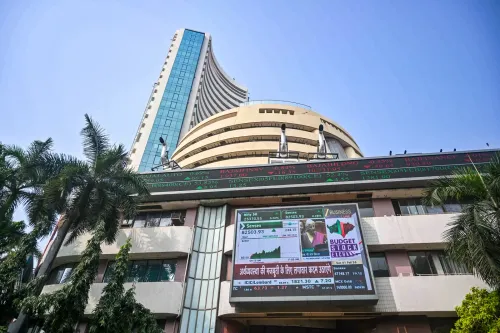
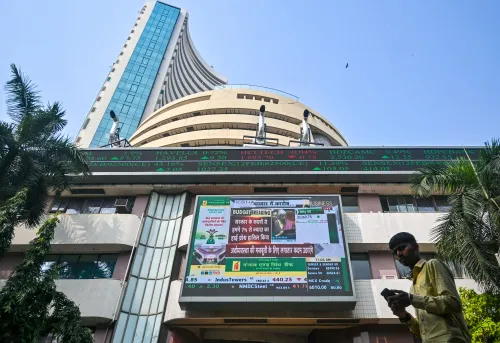
Sensex drops 1,092 points, Nifty slips 1.5% as monsoon fears and FII selling weigh
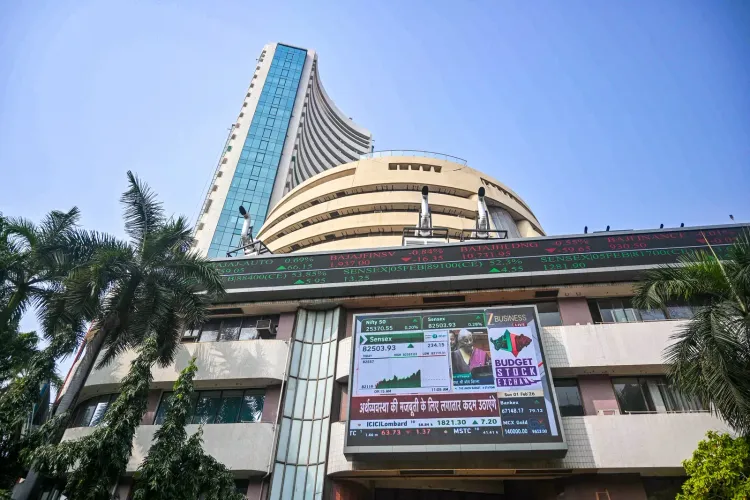
Synopsis
Indian equities posted their steepest weekly loss in recent sessions as ₹23,700 crore in FII outflows collided with a below-normal monsoon warning — a combination that reignited food inflation fears just as crude's fall and RBI's rupee commentary had offered a brief macro reprieve. The divergence between a pressured large-cap index and a midcap index touching all-time highs tells a more complicated story than the headline numbers suggest.
Key Takeaways
Sensex fell 1,092 points to 74,775 on 30 May ; weekly decline of 0.85% .
Nifty50 dropped 1.50% to 23,547 on Friday; weekly loss of 0.72% .
FII cumulative outflows for the week stood at approximately ₹23,700 crore .
IMD 's below-normal monsoon forecast stoked food inflation fears, offsetting crude oil's sharp weekly decline.
Nifty Midcap100 gained 0.54% and Nifty Smallcap100 rose 1.02% for the week, with midcaps briefly hitting an all-time high.
Key upcoming triggers: RBI monetary policy decision , GDP data , PMI , and IIP figures.
Indian equity benchmarks closed sharply lower on Friday, 30 May, with the BSE Sensex shedding 1,092 points or 1.44% to settle at 74,775 and the Nifty50 falling 1.50% to 23,547. For the week, Sensex declined 0.85% while Nifty lost 0.72%, as a combination of sustained foreign institutional investor outflows, the India Meteorological Department's below-normal monsoon forecast, and MSCI index rebalancing-related selling converged to pressure large-cap indices.
Key Drivers of the Decline
Cumulative outflows by foreign institutional investors (FIIs) reached approximately ₹23,700 crore during the week, according to market participants. The IMD's forecast of a below-normal monsoon stoked fears of food inflation, dampening sentiment that had been partially lifted by crude oil's sharp weekly decline. Crude fell on optimism around a potential US–Iran diplomatic breakthrough, but those gains were largely offset by the monsoon outlook.
MSCI index rebalancing adjustments triggered additional institutional selling in the final session of the week, amplifying the day's losses beyond what macro factors alone would have warranted.
Sectoral Divergence
Not all sectors moved in lockstep. PSU Banks outperformed on mark-to-market treasury gains stemming from yield compression, while auto and metals stocks benefited from crude's sharp decline. On the other hand, FMCG, healthcare, and consumer durables retreated as defensive premiums unwound amid improving risk appetite, according to an analyst.
The broader market showed notable resilience relative to benchmarks. The Nifty Midcap100 added 0.54% for the week, while the Nifty Smallcap100 gained 1.02%. Midcaps briefly touched an all-time high during the week, underlining the divergence between large-cap and broader-market momentum.
Rupee and Macro Backdrop
The Indian rupee firmed modestly through the week after the Reserve Bank of India (RBI) signalled in its commentary that the rupee remains undervalued. Market participants noted that the overall macro backdrop is more constructive than it was a fortnight ago, but said confirmation through policy clarity, monsoon normalisation, and geopolitical de-escalation is needed before large-cap conviction builds into the next meaningful leg higher.
Levels to Watch
For the Nifty50, analysts place the 24,000–24,100 zone as a strong resistance area, while 23,300–23,000 is seen as crucial support. In Bank Nifty, immediate resistance is placed around the 54,600–54,800 zone, with 54,200–54,000 acting as near-term support.
Investors are now watching the upcoming RBI monetary policy decision, India's GDP data release, Purchasing Managers' Index (PMI), and Index of Industrial Production (IIP) figures for the next directional cue.
Point of View
And retail conviction tends to be the first casualty when large-cap selling deepens. The ₹23,700 crore FII outflow in a single week is not noise — it is a structural signal that global risk-off is reasserting itself, and India's premium valuation leaves it more exposed than peers when that happens.
NationPress
24 Sept 2026
Frequently Asked Questions
Why did the Sensex and Nifty fall this week?
The Sensex fell 1,092 points to 74,775 and the Nifty dropped 0.72% for the week, driven by sustained FII outflows of approximately ₹23,700 crore, the IMD's below-normal monsoon forecast that raised food inflation concerns, and MSCI index rebalancing-related institutional selling in the final session.
How much did FIIs sell in Indian equities this week?
Foreign institutional investors recorded cumulative outflows of approximately ₹23,700 crore during the week ended 30 May, according to market participants. This sustained selling was a primary factor in the large-cap underperformance.
Why did midcaps outperform large caps this week?
The Nifty Midcap100 gained 0.54% and the Nifty Smallcap100 rose 1.02% for the week, with midcaps briefly touching an all-time high. Analysts attribute the divergence to domestic retail flows holding up the broader market even as FII-driven selling pressured benchmark large-cap indices.
What are the key support and resistance levels for Nifty next week?
Market participants see the 24,000–24,100 zone as strong resistance for the Nifty50 and the 23,300–23,000 band as crucial support. For Bank Nifty, resistance is placed at 54,600–54,800 and support at 54,200–54,000.
What macro events will drive markets in the coming days?
Investors are closely watching the upcoming RBI monetary policy decision, India's GDP data release, the Purchasing Managers' Index (PMI) reading, and Index of Industrial Production (IIP) figures. Policy clarity and any update on the monsoon outlook are seen as key catalysts for the next directional move.