What Caused the Sensex to Plummet Over 2,300 Points Following the Budget Announcement?
Synopsis
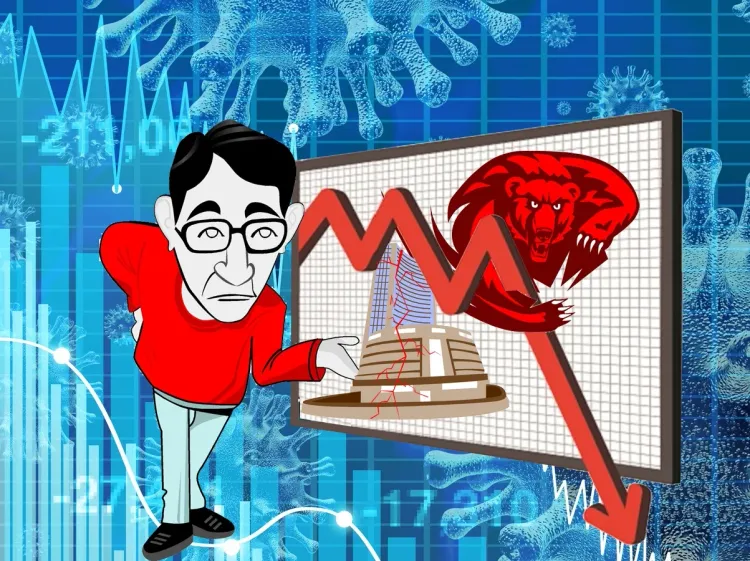
The Indian stock market faced a dramatic fall following the latest Union Budget announcement, with the Sensex crashing over 2,300 points and Nifty dropping more than 600 points. Despite initiatives for economic growth, investor caution prevailed due to the lack of significant tax reliefs. Discover the market's reaction and future expectations.
Key Takeaways
Sensex dropped over 2,300 points post-Budget.
Nifty fell more than 600 points during the trading session.
Investor caution stemmed from the absence of major income tax reliefs.
Sectoral performance was varied, with metals and defense stocks in focus.
Market volatility is anticipated as fiscal policies are scrutinized.
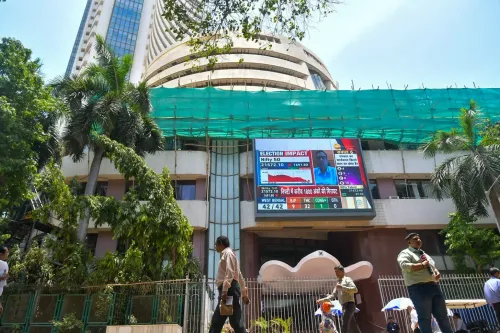
Mumbai, Feb 1 (NationPress) The Indian stock market experienced a significant intra-day decline on Sunday after Finance Minister Nirmala Sitharaman unveiled her ninth consecutive Union Budget.
The Sensex plunged more than 2,300 points from its highest point of the day, while the Nifty fell over 600 points during intra-day trading as investors adopted a cautious stance.
This downturn occurred despite the Budget introducing initiatives aimed at boosting economic growth while ensuring fiscal responsibility.
The markets commenced trade on a nearly stable note, with the Sensex gaining a few points and the Nifty slightly down amid concerns surrounding the Budget and a weakening rupee, which hovered near 92 per dollar.
At the start, sectoral indices predominantly traded in the negative. The Nifty metal sector faced the largest decline, dropping over 3 percent, while sectors like automobiles, private banks, oil and gas, and consumer durables saw slight gains.
Bharat Electronics stood out as one of the top gainers on the Nifty, as investors anticipated increased funding for the defense sector within the Budget.
Market analysts highlighted that the decline reflected investor caution, as significant income tax reliefs were not anticipated in this Budget following considerable tax reductions introduced in 2025.
Although minor adjustments to the tax structure and initiatives promoting long-term growth were perceived positively, they were insufficient to avert the initial sell-off.
“Stocks related to defense and manufacturing exports might gain attention, while announcements regarding PSU bank mergers and disinvestment will be closely monitored,” analysts noted.
The market is expected to remain volatile throughout the day, with sharp fluctuations likely based on announcements related to fiscal policy, capital expenditure, sectoral incentives, and the fiscal deficit target, projected to be around 4.3–4.4 percent of GDP for FY27.
Trading on the stock exchanges will persist until 3:30 p.m., although shares purchased on January 30 cannot be sold today due to the settlement holiday.
Analysts indicated that investors are keenly observing debt metrics, deficit outcomes, and upcoming borrowings to assess the government’s strategic direction.
Point of View
It's crucial to recognize the complexities surrounding the stock market's response to the Union Budget. While the government's initiatives aim to stimulate growth, investor reactions reveal deep-seated concerns regarding fiscal measures and tax reforms. A balanced perspective is essential as we navigate this volatile landscape, ensuring we remain informed and prepared for the implications on our economy.
NationPress
4 Oct 2026
Frequently Asked Questions
What triggered the Sensex drop?
The Sensex dropped sharply following the Union Budget announcement, where investor caution was evident due to the lack of significant tax reliefs.
How did the Nifty perform?
The Nifty fell over 600 points during intra-day trading, reflecting a broader market downturn.
What sectors were affected?
The Nifty metal sector was the biggest loser, dropping over 3 percent, while other sectors showed mixed performance.
What is the market outlook after the Budget?
Market volatility is expected to continue, influenced by fiscal policy announcements and sectoral incentives.
What was the response from analysts?
Analysts noted that while some adjustments in the tax regime were positive, they were not enough to prevent the initial sell-off.