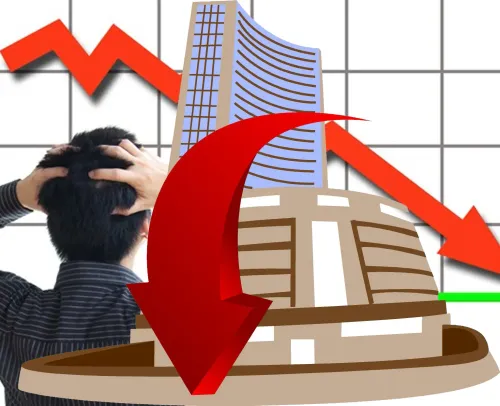
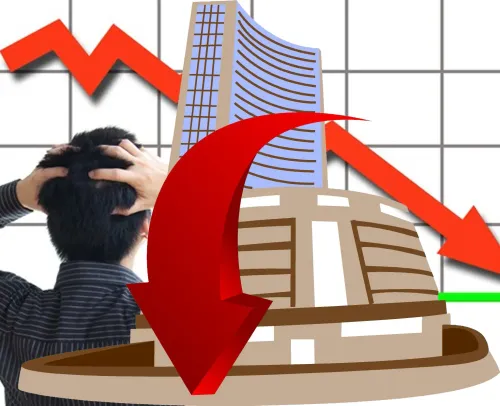
Sensex drops 892 points as US-Iran tensions, oil surge rattle markets

Synopsis
A drone strike on a UAE nuclear plant and Trump's 'clock is ticking' warning on Iran sent Brent crude past $111 and wiped 892 points off the Sensex in a single morning session. With India importing over 85 per cent of its crude and the VIX jumping 6 per cent, this is not just a market wobble — it is a geopolitical risk event with direct fiscal consequences for India.
Key Takeaways
Sensex hit an intraday low of 74,345 , down 892 points or 1.18 per cent , on 18 May .
Nifty50 fell 272 points or 1.15 per cent to 23,371 in early trade.
Brent crude rose 2.37 per cent to $111.86 per barrel ; WTI climbed 3.11 per cent to $108.70 per barrel .
A drone attack on a UAE nuclear power plant and US President Trump's warning to Iran drove the risk-off mood.
India VIX surged nearly 6 per cent to around 20 ; Nifty IT was the only sectoral index in the green, up 0.6 per cent .
Analysts see immediate Nifty support at 23,400–23,500 and resistance near 23,900–24,000 .
The BSE Sensex plunged as much as 892 points or 1.18 per cent to an intraday low of 74,345 on Monday, 18 May, as surging crude oil prices and escalating West Asia tensions following the US-Iran conflict hammered investor sentiment in early trade. The Nifty50 mirrored the slide, falling 272 points or 1.15 per cent to 23,371 in morning trade.
How the Session Opened
The Sensex began the session at 74,807.97, already down 430 points or 0.57 per cent from the previous close, before extending losses through early trade. The Nifty50 opened at 23,482.20, lower by 161 points or 0.68 per cent, before slipping further as selling pressure broadened.
Sectoral Damage
Almost every major sectoral index traded in the red. Nifty Consumer Durables, Realty, Auto, Metal, PSU Bank, Private Bank, FMCG, Cement, and Chemicals indices each declined between 1 and 2 per cent. Among individual Nifty stocks, Power Grid, Tata Steel, Shriram Finance, Maruti Suzuki, Eicher Motors, Mahindra & Mahindra, Titan, HDFC Bank, Bajaj Finance, IndiGo, HDFC Life, Hindustan Unilever, Trent, and Eternal each shed between 1 and 3 per cent.
The lone bright spot was Nifty IT, which bucked the trend to rise 0.6 per cent — likely benefiting from a weaker rupee outlook boosting export-linked earnings expectations. The India VIX, the market's fear gauge, surged nearly 6 per cent to around 20, signalling a sharp spike in near-term uncertainty.
What Triggered the Selloff
Market sentiment was rattled on two fronts. First, a drone attack on a nuclear power plant in the United Arab Emirates deepened the West Asia crisis, sending oil prices sharply higher. Brent crude climbed 2.37 per cent to $111.86 per barrel, while US West Texas Intermediate (WTI) crude rose 3.11 per cent to $108.70 per barrel.
Second, US President Donald Trump warned that 'the clock is ticking' for Iran, signalling that diplomatic efforts to de-escalate the conflict had stalled. Higher oil prices are a direct headwind for India, which imports over 85 per cent of its crude requirements, raising the spectre of wider fiscal and current account deficits.
Analyst View and Key Levels
Analysts noted that the near-term outlook remains 'cautious to negative', with weak global cues, geopolitical risk, and elevated crude prices continuing to weigh on sentiment. Immediate support for the Nifty is seen around the 23,400–23,500 zone, while resistance is placed near the 23,900–24,000 range, according to market analysts.
Asian Markets Also Under Pressure
Japan's Nikkei declined around 1 per cent and Hong Kong's Hang Seng fell over 1 per cent, reflecting broad risk-off sentiment across Asia. South Korea's KOSPI was an outlier, gaining 1 per cent. The broad-based weakness across regional markets underscores that the West Asia crisis is being priced as a global macro risk, not just a regional one.
With crude prices elevated and no immediate diplomatic resolution in sight, markets are likely to remain volatile in the sessions ahead.
Point of View
By extension, an Indian fiscal event — wider current account deficit, rupee pressure, and a Reserve Bank of India caught between inflation and growth. The IT sector's green close is cold comfort; it reflects dollar-earnings optimism, not domestic resilience. The more telling signal is the VIX at 20 — a level that historically precedes sustained institutional de-risking. If Brent holds above $110, the next pressure point will not be equities alone but the government's subsidy arithmetic.
NationPress
23 Sept 2026
Frequently Asked Questions
Why did the Sensex fall sharply on 18 May?
The Sensex dropped 892 points to an intraday low of 74,345 on 18 May due to surging crude oil prices and escalating West Asia tensions, triggered by a drone attack on a UAE nuclear power plant and US President Trump's warning to Iran. Elevated Brent crude at $111.86 per barrel added to the pressure on India's import-heavy economy.
Which sectors were hit hardest in Monday's market fall?
Consumer Durables, Realty, Auto, Metal, PSU Bank, Private Bank, FMCG, Cement, and Chemicals indices each fell between 1 and 2 per cent. Nifty IT was the only sectoral index to gain, rising 0.6 per cent.
What are the key Nifty support and resistance levels to watch?
Analysts place immediate support for the Nifty in the 23,400–23,500 zone and resistance near the 23,900–24,000 range. A breach below 23,400 could accelerate selling pressure.
How did crude oil prices move and why does it matter for India?
Brent crude rose 2.37 per cent to $111.86 per barrel and WTI climbed 3.11 per cent to $108.70 per barrel on 18 May. India imports over 85 per cent of its crude requirements, meaning sustained high oil prices widen the current account deficit and stoke inflation.
How did Asian markets perform alongside the Indian selloff?
Asian markets were broadly weaker, with Japan's Nikkei down around 1 per cent and Hong Kong's Hang Seng falling over 1 per cent. South Korea's KOSPI was an exception, gaining 1 per cent.