Shakti Pumps Q1 FY27 net profit falls 47% to ₹51.6 crore despite 38% revenue surge
Synopsis
Shakti Pumps grew revenue by 38% in Q1 FY27 — yet net profit crashed 47%. The culprit: a 1,340 basis point collapse in EBITDA margin, from 23.1% to just 9.7%. It is a rare case of a company selling more and earning far less, raising hard questions about cost control during its diversification into EV motors and solar rooftop installations.
Key Takeaways
Shakti Pumps net profit fell 46.7 per cent to ₹51.6 crore in Q1 FY27 , down from ₹96.8 crore in Q1 FY26.
Revenue from operations rose 37.9 per cent year-on-year to ₹859 crore .
EBITDA dropped 42.3 per cent to ₹82.9 crore ; EBITDA margin collapsed 1,340 basis points to 9.7 per cent .
The stock is down nearly 39.8 per cent over the past year and 25.33 per cent year-to-date.
The company is a key PM-KUSUM scheme supplier and exports to more than 100 countries .
Shakti Pumps holds more than 120 global patents and is expanding into EV motors and solar rooftop segments.
Shakti Pumps (India) Limited reported a sharp 46.7 per cent year-on-year decline in consolidated net profit for Q1 FY27 (April–June 2025), with earnings falling to ₹51.6 crore from ₹96.8 crore in the same quarter last year. The profit erosion came even as the company posted strong top-line growth, highlighting a widening gap between revenue performance and operational efficiency.
Revenue Growth Masks Margin Collapse
Revenue from operations climbed 37.9 per cent year-on-year to ₹859 crore in Q1 FY27, up from ₹623 crore in Q1 FY26, according to the company's stock exchange filing. However, the strong top-line performance was undermined by a dramatic squeeze in profitability at the operating level.
EBITDA plunged 42.3 per cent to ₹82.9 crore from ₹144 crore a year earlier. More strikingly, the EBITDA margin contracted by 1,340 basis points — falling to 9.7 per cent from 23.1 per cent — signalling that costs rose significantly faster than revenues during the quarter.
Stock Performance Under Pressure
Shares of Shakti Pumps ended 1.61 per cent higher at ₹552 on Friday, 24 July 2025, despite the weak earnings print, suggesting markets had partially priced in the disappointment. The stock has gained 1.71 per cent over the past five trading sessions but has shed 6.61 per cent over the last month.
The longer-term trend is more concerning: the stock has fallen 10.95 per cent over six months, is down 25.33 per cent on a year-to-date basis, and has lost nearly 39.8 per cent of its value over the past year — reflecting sustained investor caution around the company's earnings trajectory.
Company Background and Strategic Bets
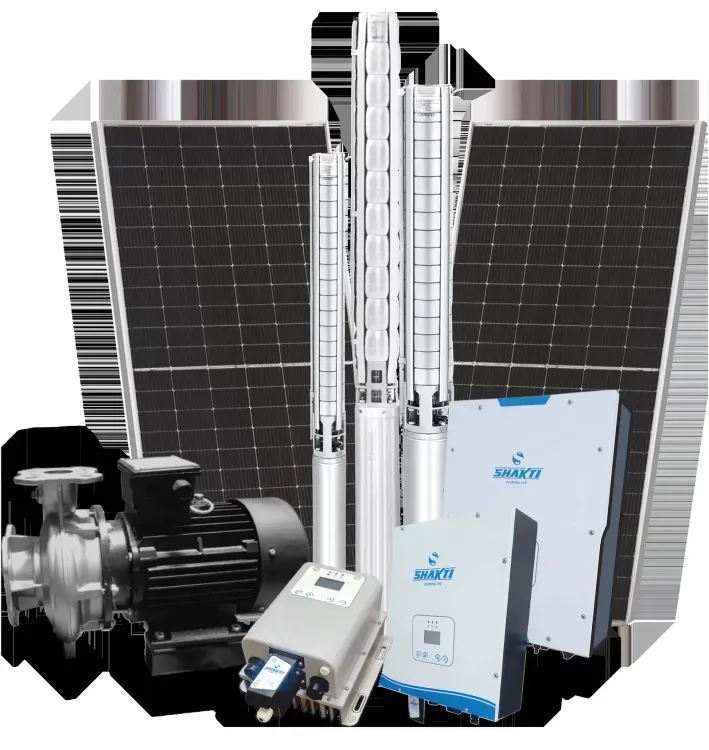
Founded in 1982 and headquartered in Pithampur, Madhya Pradesh, Shakti Pumps is a leading manufacturer of energy-efficient solar pumps, submersible pumps, and motors. The company is a key supplier under the government's PM-KUSUM scheme and exports to more than 100 countries.
Beyond its core pumping solutions business, the company has been expanding into electric vehicle motors and solar rooftop installations, backed by a portfolio of more than 120 global patents. Notably, this diversification push may be contributing to near-term cost pressures even as it positions the company for longer-cycle growth.
What to Watch
The key question for investors is whether the margin compression in Q1 FY27 is structural or transitional. If input cost pressures ease and the PM-KUSUM order pipeline remains strong, margins could recover in subsequent quarters. However, the 1,340 basis point EBITDA margin contraction in a single quarter warrants close monitoring of management commentary on cost normalisation and order execution timelines.
Point of View
340 basis point EBITDA margin compression in a single quarter suggests that Shakti Pumps' diversification into EV motors and solar rooftop is consuming capital faster than it is generating returns. The PM-KUSUM pipeline provides a revenue floor, but government scheme dependency also means pricing power is limited. With the stock already down 40 per cent in a year, the market has been signalling this structural stress for some time — the Q1 FY27 numbers simply confirm it.
NationPress
23 Oct 2026
Frequently Asked Questions
What were Shakti Pumps' Q1 FY27 results?
Shakti Pumps reported a net profit of ₹51.6 crore for Q1 FY27 (April–June 2025), a decline of 46.7 per cent from ₹96.8 crore in Q1 FY26. Revenue from operations rose 37.9 per cent to ₹859 crore, but operating margins collapsed sharply.
Why did Shakti Pumps' profit fall despite higher revenue?
The profit decline was driven by a sharp compression in operating margins — EBITDA margin fell 1,340 basis points to 9.7 per cent from 23.1 per cent a year earlier. This indicates that costs rose significantly faster than revenues during the quarter, eroding profitability despite strong top-line growth.
How has Shakti Pumps' share price performed recently?
The stock closed 1.61 per cent higher at ₹552 on 24 July 2025, but has lost nearly 39.8 per cent of its value over the past year and is down 25.33 per cent on a year-to-date basis. It has also declined 10.95 per cent over the past six months.
What is the PM-KUSUM scheme and how is Shakti Pumps connected?
PM-KUSUM (Pradhan Mantri Kisan Urja Suraksha evam Utthan Mahabhiyan) is a government scheme that promotes solar-powered agricultural pumps for farmers. Shakti Pumps is a key supplier under the scheme, making government procurement a significant revenue driver for the company.
What new businesses is Shakti Pumps expanding into?
Beyond its core solar and submersible pump business, Shakti Pumps is expanding into electric vehicle motors and solar rooftop installations. The company holds more than 120 global patents and exports to over 100 countries.