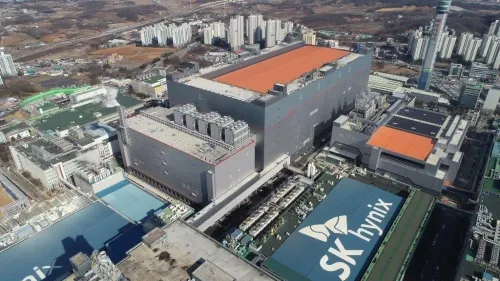
SK Hynix overtakes Samsung Electronics in market cap for 1st time
Synopsis
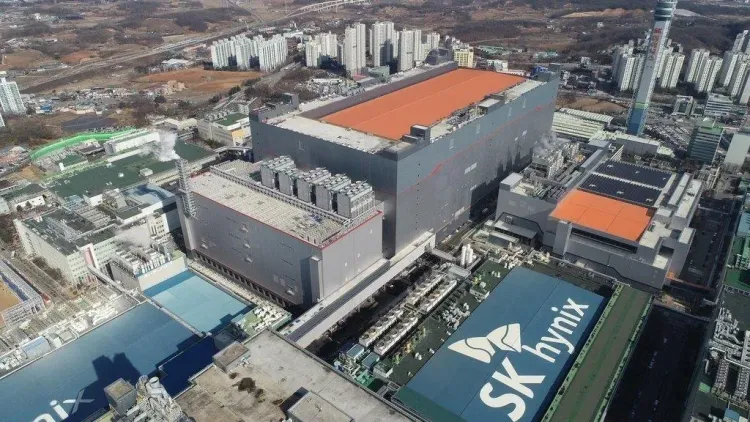
For the first time since 1999, Samsung Electronics is no longer South Korea's most valuable company. SK Hynix's AI memory chip dominance — capped by the debut of its 12-layer HBM4E — pushed its market cap past Samsung's on 22 June, signalling a structural power shift in the global semiconductor race.
Key Takeaways
SK Hynix surpassed Samsung Electronics in market capitalisation on 22 June , reaching 2,091 trillion won vs Samsung's 2,090 trillion won .
It is the first time Samsung has lost the top spot on the KOSPI since it first ranked No.
SK Hynix shares jumped 6.15% to 2,934,000 won ; Samsung Electronics rose a modest 0.99% to 357,500 won .
The company has begun shipping samples of its 12-layer HBM4E chip, offering more than 20% greater power efficiency than its predecessor.
SK Hynix's AI chip customers include Nvidia , AMD , and Google .
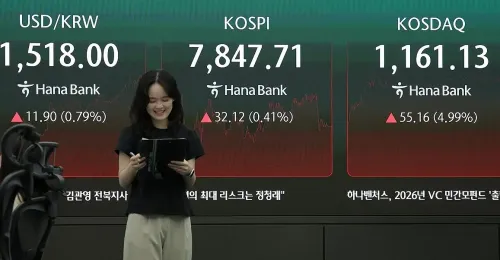
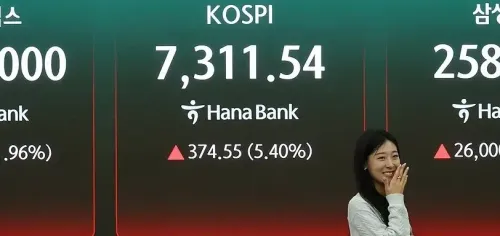
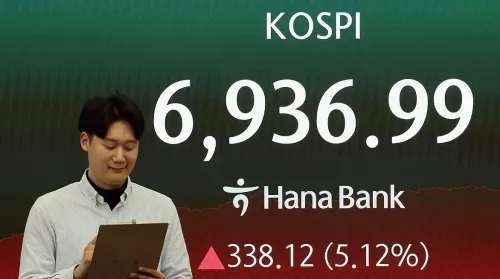
SK Hynix surpassed Samsung Electronics in market capitalisation for the first time on Monday, 22 June, ending a dominance that Samsung had maintained on the Korea Composite Stock Price Index (KOSPI) since 2000. The milestone marks a seismic shift in South Korea's technology landscape, driven by soaring demand for AI memory chips.
The Historic Crossover
At 12:42 pm local time, the market capitalisation of SK Hynix reached 2,091 trillion won (approximately $1,358 billion), edging past Samsung Electronics' 2,090 trillion won, according to the Korea Exchange (KRX). Samsung had first claimed the No. 1 position on KOSPI in 1999 and held it uninterrupted for over two decades.
Shares of SK Hynix surged 6.15 percent to 2,934,000 won on the day, while Samsung Electronics gained a comparatively modest 0.99 percent to 357,500 won.
The AI Memory Edge Driving the Rally
The market re-rating of SK Hynix is closely tied to its dominance in high-bandwidth memory (HBM) chips — the specialised memory stacks that power large-scale AI training and inference systems. The company last week announced it had begun shipping samples of its latest chip, the 12-layer HBM4E, to major global customers.
According to SK Hynix, the HBM4E delivers more than 20 percent greater power efficiency compared to its predecessor, alongside improvements in data processing performance for AI workloads. The company said it was able to deliver samples on schedule, citing its advanced HBM development and production expertise.
'SK Hynix has laid the foundation to strengthen its AI leadership with HBM4E based on its market-leading technological capabilities and manufacturing expertise,' said Ahn Hyun, President and Chief Development Officer, in a statement. 'Through close collaboration with our partners, we will deliver the value needed in the market while reinforcing our technology leadership as a full-stack AI memory creator.'
Who Is Buying the Chips
SK Hynix counts some of the world's most influential AI companies among its customers, including Nvidia Corp., Advanced Micro Devices Inc. (AMD), and Google. With the AI infrastructure buildout accelerating globally, demand for next-generation HBM chips is expected to remain robust through the near term.
The company said it would work closely with partners to move the HBM4E into mass production 'in a timely manner.'
What This Means for Samsung
Samsung's loss of the top KOSPI spot is more than a symbolic setback. The South Korean conglomerate has faced criticism over delays in its own HBM roadmap and quality concerns from key customers — issues that have widened the gap with SK Hynix in the high-margin AI memory segment. This is the first time since 1999 that Samsung has ceded the market cap crown on its home bourse.
Whether SK Hynix can sustain this lead will depend on how quickly it scales HBM4E mass production and whether Samsung can close the technology gap in subsequent generations of AI memory.
Point of View
While trailing on the product that defines the next decade of semiconductor demand, is a signal that its foundry and memory divisions need more than incremental fixes. For SK Hynix, the challenge is execution — converting HBM4E sample shipments into mass-production volumes fast enough to stay ahead of Samsung's inevitable counter-push.
NationPress
22 Jun 2026
Frequently Asked Questions
Why did SK Hynix overtake Samsung Electronics in market capitalisation?
SK Hynix overtook Samsung Electronics on 22 June as its shares surged 6.15%, pushing its market cap to 2,091 trillion won against Samsung's 2,090 trillion won. The rally is driven by investor confidence in SK Hynix's leadership in high-bandwidth memory (HBM) chips, which are critical for AI infrastructure.
When did Samsung Electronics last lose the top KOSPI position?
Samsung Electronics had held the No. 1 market capitalisation position on the KOSPI since 2000, having first claimed the top spot in 1999. The 22 June crossover is the first time it has ceded that position in over two decades.
What is the HBM4E chip that SK Hynix has started shipping?
The HBM4E is SK Hynix's latest 12-layer high-bandwidth memory chip designed for AI training and inference workloads. It offers more than 20% greater power efficiency than the previous generation and has begun sample shipments to major global customers, with mass production planned in collaboration with partners.
Who are SK Hynix's key customers for its AI memory chips?
SK Hynix supplies HBM chips to leading AI companies including Nvidia Corp., Advanced Micro Devices Inc. (AMD), and Google. These customers are among the largest buyers of high-bandwidth memory for AI data centres globally.
What does this mean for Samsung Electronics going forward?
Samsung losing the KOSPI top spot underscores the pressure it faces in the HBM segment, where it has reportedly lagged behind SK Hynix in product qualification and delivery timelines. Closing the gap will require Samsung to accelerate its own next-generation HBM roadmap and address customer concerns about product quality.