KOSPI daily turnover crosses $26.4 billion for first time in record rally
Synopsis
South Korea's KOSPI just rewrote its own record books — daily turnover hit 48.05 trillion won in May, the highest monthly average ever, as the index surged 19% in a single month and briefly touched 8,000 points. Two stocks — Samsung Electronics and SK Hynix — accounted for 43% of all trades, a concentration that tells the real story: this is an AI-semiconductor rally, not a broad market boom.
Key Takeaways
KOSPI average daily turnover hit 48.05 trillion won ($26.4 billion) in the first 22 days of May — the highest monthly average on record.
The previous record was 32.23 trillion won , set in February .
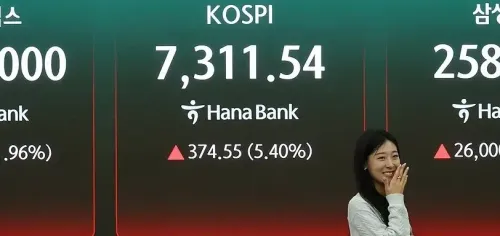
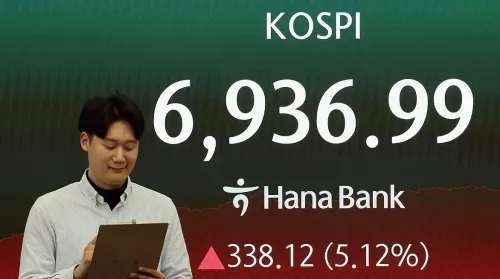
The index crossed 7,000 points for the first time on 6 May and briefly touched 8,000 intraday on 15 May .
Samsung Electronics and SK Hynix together accounted for 43% of total daily turnover, averaging 20.57 trillion won combined.
South Korea's manufacturing PSI rebounded to 107 for June from 95 in May , back above the 100-point optimism threshold.
The chip sector PSI rose to 156 for June , up from 150 for May.
South Korea's benchmark equity index, the Korea Composite Stock Price Index (KOSPI), recorded an average daily turnover of 48.05 trillion won ($26.4 billion) during the first 22 days of May, marking the highest monthly average on record, according to data from the Korea Exchange (KRX). The figure surpassed the previous record of 32.23 trillion won set in February, as the index extended a historic rally to all-time highs.
Record-Breaking Rally Drives Turnover Surge
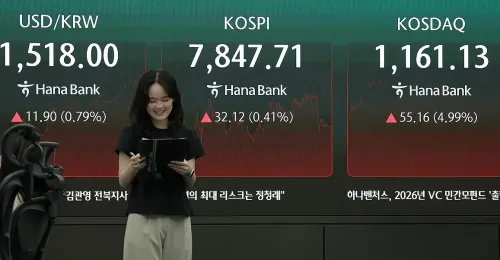
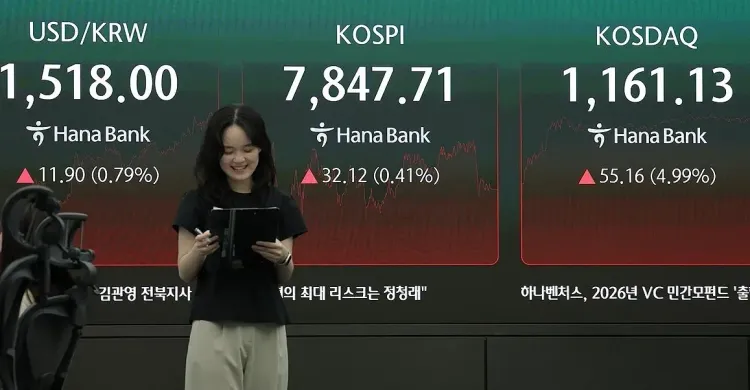
The KOSPI crossed the 7,000-point milestone for the first time on 6 May, and briefly breached the 8,000-point level during intraday trading on 15 May. After a period of volatile trading, the index closed at 7,847.71 on Friday, representing a gain of 19 percent from the end of April. The scale and speed of the rally have few precedents in the bourse's history.
Samsung and SK Hynix Lead the Charge
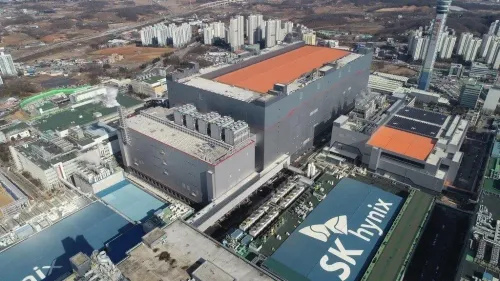
Heavy institutional and retail buying of market bellwethers Samsung Electronics Co. and SK Hynix Inc. was the primary engine behind the turnover surge. Combined daily trading value for the two chipmakers averaged 20.57 trillion won over the cited period, accounting for 43 percent of the KOSPI's total daily turnover. The concentration underscores how narrowly the rally has been led — a dynamic analysts say reflects a global re-rating of AI-linked semiconductor stocks.
AI Investment Thesis Fuels Concentration
'Despite concerns over an economic slowdown, investors are concentrating capital on artificial intelligence (AI)-related industries where growth prospects remain strong,' said Kang Dae-seung, an analyst at SK Securities. 'This concentration has intensified since 2023, when the AI investment rally began.' The remarks highlight a structural shift in how capital is being allocated within the Korean market, with AI and semiconductor names drawing disproportionate flows even as broader economic headwinds persist.
Manufacturing Confidence Rebounds
Separately, South Korea's manufacturing sector confidence rebounded into positive territory for the first time in three months, according to a poll released on Monday. The professional survey index (PSI) for the manufacturing sector's business outlook rose to 107 for June, up from 95 for May, according to the Korea Institute for Industrial Economics and Trade. A PSI reading above 100 indicates optimists outnumber pessimists. The outlook had remained below the 100-mark for both April and May before the June rebound. The chip industry's sub-index rose to 156 for June, up from 150 estimated for May, reinforcing the semiconductor sector's outsized role in Korea's economic narrative.
What to Watch Next
The sustainability of the KOSPI's rally will hinge on whether AI-driven semiconductor demand continues to justify elevated valuations and whether broader manufacturing confidence translates into earnings upgrades. Any reversal in global risk appetite — particularly around US interest rate signals or Middle East tensions — could test the resilience of a market that has run nearly 19 percent in a single month.
Point of View
And while the semiconductor outlook remains strong, a rally this narrow is inherently fragile. South Korea's manufacturing confidence rebounding to 107 is encouraging, but it follows two consecutive sub-100 readings — hardly a confirmed trend. If global AI capex cycles pause or US rate signals turn hawkish, the KOSPI's 19% monthly gain could unwind faster than it accumulated.
NationPress
15 Sept 2026
Frequently Asked Questions
What record did the KOSPI set in May 2025?
The KOSPI set a record for the highest monthly average daily turnover, reaching 48.05 trillion won ($26.4 billion) over the first 22 days of May 2025. This surpassed the previous high of 32.23 trillion won set in February.
How much has the KOSPI risen in May 2025?
The KOSPI rose approximately 19% from the end of April, closing at 7,847.71 on Friday. The index crossed 7,000 points for the first time on 6 May and briefly touched 8,000 during intraday trading on 15 May.
Which stocks drove the KOSPI turnover surge?
Samsung Electronics and SK Hynix were the primary drivers, with their combined daily trading value averaging 20.57 trillion won — accounting for 43% of the KOSPI's total daily turnover during the period.
Why are investors buying Korean stocks so heavily?
According to SK Securities analyst Kang Dae-seung, investors are concentrating capital on AI-related industries where growth prospects remain strong, a trend that has intensified since the AI investment rally began in 2023.
Has South Korea's manufacturing sector also improved?
Yes. The professional survey index for manufacturing's business outlook rose to 107 for June from 95 for May, returning above the 100-point threshold that indicates optimists outnumber pessimists for the first time in three months.