South Korea investor deposits hit 9-month low at 88.6 trillion won amid KOSPI volatility
Synopsis
South Korean investor deposits at brokerages have collapsed by 51 trillion won since June, hitting a nine-month low of 88.6 trillion won — a stark reversal from the KOSPI's 9,000-point high just months ago. With global chip stocks in freefall and foreigners selling, the data raises serious questions about how much retail confidence in Korea's AI-driven market rally has evaporated.
Key Takeaways
South Korean investor deposits fell to 88.6 trillion won ($66.8 billion) as of Thursday — the lowest since 13 January 2026 .
Deposits have dropped by 51 trillion won since their 4 June 2026 peak of 139.6 trillion won .
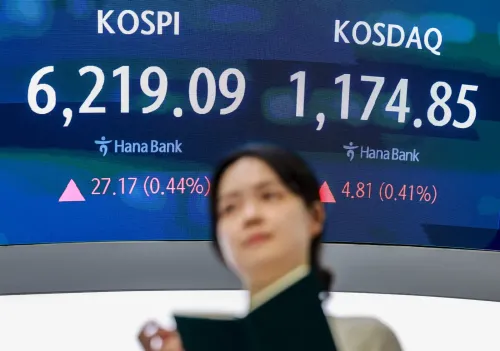
The KOSPI hit 9,000 points in June but has been highly volatile since July; it closed at 5,550.30 on Friday, up 0.3 per cent .
Foreigners sold a net 98.3 billion won on Friday, while domestic institutions and individuals were net buyers.
Global chip stocks including Nvidia (-4.4%) , Intel (-8.04%) , and Micron (-6.26%) weighed on sentiment overnight.
South Korean stock investors' deposits at securities firms plunged to their lowest level in over nine months, according to industry data released on Saturday, 25 October 2026, as prolonged volatility in the country's benchmark equity index continued to erode market confidence. The drop underscores a dramatic shift in retail sentiment since the market's peak earlier this year.
Deposit Levels Hit 2026 Low
Investor deposits stood at 88.6 trillion won (approximately $66.8 billion) as of Thursday, according to data from the Korea Financial Investment Association (KFIA). That marks the lowest figure since 13 January 2026, when deposits were recorded at 88.04 trillion won.
The steepest point of the decline came when compared with 4 June 2026, when deposits had peaked at 139.6 trillion won — a drop of 51 trillion won in less than five months. The collapse in sidelined cash signals that investors are either pulling money out of the market entirely or have already deployed — and lost — capital through recent turbulence.
KOSPI Swings Sharply After June Milestone
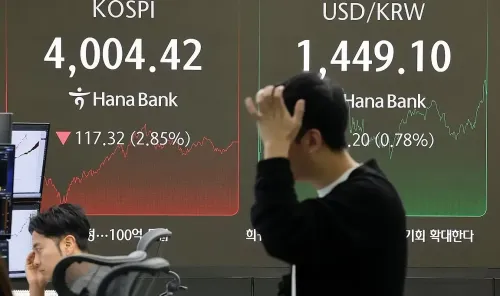
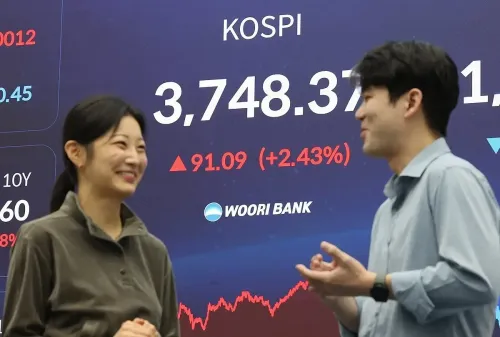
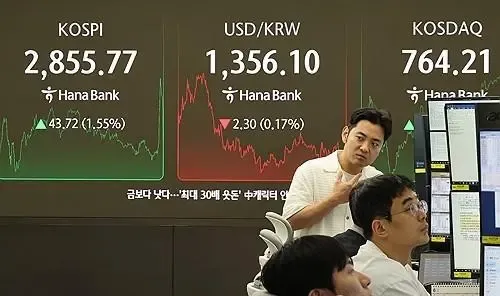
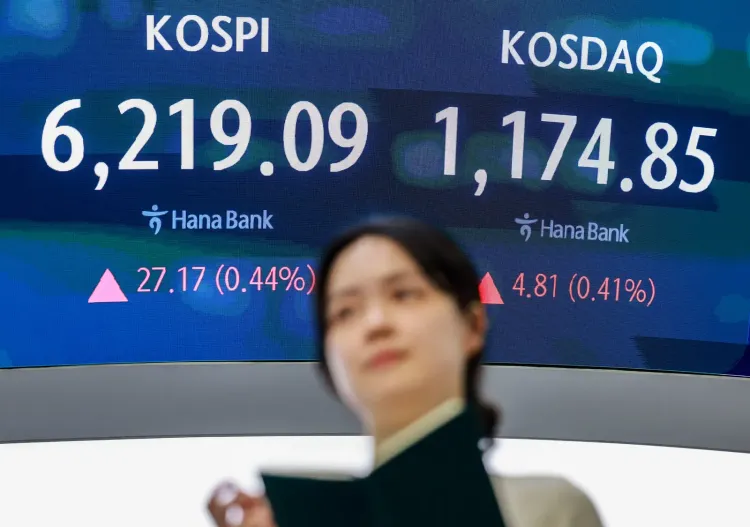
The nation's benchmark Korea Composite Stock Price Index (KOSPI) had hit the historic 9,000-point milestone in June 2026, but has experienced sharp swings and elevated volatility since July. On Friday, the index closed modestly higher, rising 16.53 points, or 0.3 per cent, to end at 5,550.30 — recovering from an intraday low after opening 2.36 per cent lower.
The recovery was driven partly by bargain-hunting in major chip stocks, even as broader concerns over investment returns in the artificial intelligence (AI) value chain persisted. The Korean won also strengthened against the US dollar on the day.
Foreign Sellers, Domestic Buyers
Trade volume remained light at 236 million shares worth 16.5 trillion won (around $12.4 billion), with decliners far outnumbering advancers at 716 to 173. Foreigners offloaded a net 98.3 billion won worth of shares, while institutions and individual investors absorbed a net 86.8 billion won and 4.5 billion won, respectively. The pattern reflects a familiar dynamic: foreign capital retreating while domestic investors step in to cushion the fall.
US Tech Rout Adds to Pressure
Overnight developments on Wall Street added to investor unease. US stocks closed mixed, with Micron Technology plunging 6.26 per cent, Nvidia falling 4.4 per cent, and Intel tumbling 8.04 per cent. The S&P 500 fell 1.21 per cent and the tech-heavy Nasdaq Composite shed 2.6 per cent, though the Dow Jones Industrial Average edged up 0.02 per cent. Given South Korea's semiconductor-heavy equity index, losses in global chip stocks carry an outsized transmission effect on the KOSPI.
What Comes Next
The sharp contraction in investor deposits signals that retail participation — a key pillar of the KOSPI's record run earlier in 2026 — is now under significant stress. Analysts will be watching whether fresh AI spending data or semiconductor order pipelines can restore confidence, or whether the market enters a more prolonged consolidation phase heading into the end of the year.
Point of View
And the KOSPI's June peak at 9,000 seemed to validate it. What followed exposes the structural fragility: a market that depends on retail momentum is inherently vulnerable once that momentum reverses. The fact that foreigners are consistently net sellers while domestic investors absorb the selling pressure suggests the latter may be catching a falling knife. Unless global chip demand fundamentals improve materially, the KOSPI faces a confidence problem that deposit data alone cannot capture.
NationPress
24 Oct 2026
Frequently Asked Questions
Why have South Korean investor deposits at brokerages fallen?
Investor deposits have fallen amid prolonged volatility in the South Korean stock market, declining to 88.6 trillion won as of late October 2026 — down 51 trillion won from the June peak. The sharp swing in the KOSPI since July and weakness in global semiconductor stocks have dampened investor confidence.
What is the KOSPI and how has it performed recently?
The Korea Composite Stock Price Index (KOSPI) is South Korea's benchmark equity index. It reached the milestone of 9,000 points in June 2026 but has experienced sharp swings and high volatility since July; it closed at 5,550.30 on Friday, recovering modestly after a more than 3 per cent drop in the previous session.
Which global tech stocks are affecting South Korean markets?
Overnight losses in US technology stocks — including Nvidia (-4.4%), Intel (-8.04%), Micron (-6.26%), and a 2.6 per cent fall in the Nasdaq — have weighed on South Korean chip-sector sentiment, given the KOSPI's heavy exposure to semiconductors.
Who has been buying and selling South Korean stocks recently?
Foreign investors have been net sellers, offloading 98.3 billion won on Friday alone, while domestic institutions and individual investors stepped in as net buyers, purchasing 86.8 billion won and 4.5 billion won, respectively.
What does the deposit data indicate about future market direction?
A sustained fall in investor deposits typically signals declining retail participation and risk appetite. Analysts are watching semiconductor order trends and AI spending data for signs that confidence may return, though the pace of foreign outflows remains a key risk factor for the KOSPI heading into the final quarter of 2026.