How Will Sovereign AI Empower India’s Real Challenges?

Synopsis
Discover how Sovereign AI is set to transform India’s challenges in healthcare, education, agriculture, and financial inclusion, empowering citizens with access to services in their languages. Policymakers at the India AI Impact Summit 2026 highlight the significance of AI sovereignty in shaping a better future.
Key Takeaways
Sovereign AI grants control over AI governance .
Focus on priority sectors is essential .
Collaboration is key for ecosystem development .
Alignment with national goals is crucial .
Long-term investment in research is necessary .
New Delhi, Feb 17 (NationPress) The concept of sovereignty in artificial intelligence is poised to grant India the authority over the design, implementation, and governance of AI systems, addressing key issues in healthcare, education, agriculture, and financial inclusion. This will allow citizens to access services in their native languages, as highlighted by senior policymakers during the India AI Impact Summit 2026.
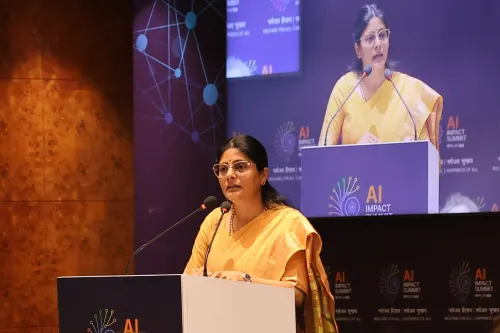
Abhishek Singh, Director General of the National Informatics Centre (NIC) and Additional Secretary at the Ministry of Electronics and Information Technology (MeitY), clarified that sovereign AI doesn't imply working in isolation. Instead, it aims to enhance service accessibility for citizens and elevate their quality of life, as per an official statement.
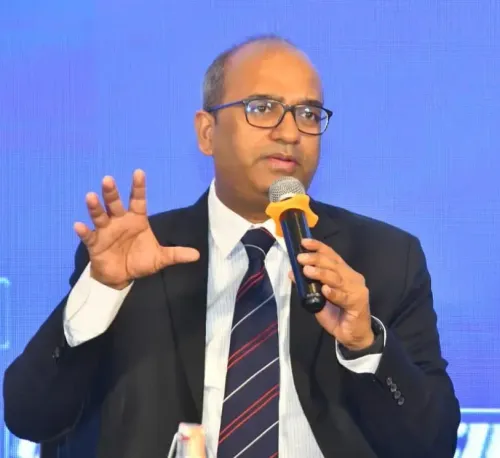
Rishi Bal, CEO of BharatGen, emphasized that the adoption of AI should be gradual, focusing initially on priority sectors like governance, citizen services, and finance. He noted that a shared digital infrastructure and unified models would facilitate rapid and secure innovation, as outlined in a statement from the Ministry of Electronics & IT.
He further stated that achieving AI sovereignty necessitates the establishment of a national ecosystem of models and infrastructure that can be widely utilized while fostering innovation among startups. This ecosystem requires collaborative efforts across the nation.
The insights were shared during a session titled “Scaling Impact from India’s Sovereign AI and Data,” which deliberated on transitioning India from being a consumer of Artificial Intelligence (AI) to its creator, aiming for global relevance.
The discussion underscored the necessity to bridge gaps in deep research talent and long-term investment in innovation. The panel reiterated that true AI capabilities are cultivated through enduring research ecosystems and robust mentorship, rather than fleeting measures.
The session also correlated advanced AI research with national priorities such as financial inclusion, agriculture, healthcare, and education. Speakers pointed out that AI must align with India’s developmental objectives to yield substantial and inclusive outcomes, according to the statement.
The five-day summit, concluding on February 20, is expected to see participation from over 100 government officials, including more than 20 heads of state, 60 ministers and vice ministers, alongside over 500 global AI leaders—including CEOs, founders, academicians, researchers, CTOs, and philanthropic entities.
Point of View
The focus on sovereign AI represents a pivotal shift for India. It signals a commitment to harness technology for the greater good, ensuring that advancements in AI align with national priorities. By fostering collaboration and innovation, India is poised to lead in the global AI landscape while addressing the unique challenges faced by its citizens.
NationPress
20 Oct 2026
Frequently Asked Questions
What is Sovereign AI?
Sovereign AI refers to the control and governance of artificial intelligence systems by a nation, enabling it to address local challenges such as healthcare, education, and agriculture.
How can Sovereign AI benefit citizens?
Sovereign AI can enhance accessibility to essential services in citizens' native languages, improving their quality of life and promoting financial inclusion.
What sectors should prioritize AI adoption?
Initial AI adoption should focus on governance, citizen services, and finance to ensure a phased and effective implementation.
What is the significance of the India AI Impact Summit 2026?
The summit gathers policymakers and AI leaders to discuss strategies for India to transition from a consumer to a creator of AI systems with global relevance.
What role does collaboration play in AI sovereignty?
Collaboration is crucial for developing a national ecosystem that fosters innovation and allows various stakeholders, including startups, to contribute to AI advancements.