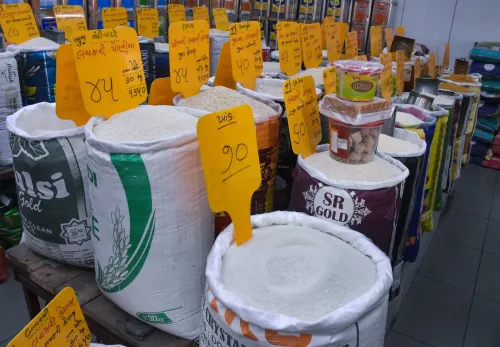
Retail sugar prices down 15% from August peak; Centre tightens dealer stock norms

Synopsis
Retail sugar is now 15% cheaper than its August peak and ex-mill rates have dropped 28% — but the Centre is not leaving it to the market alone. New dealer stock-holding caps of 1,000 quintals and a 15-day holding limit, active from 15 October, are designed to stop hoarding from eroding those gains just as festive-season demand peaks.
Key Takeaways
Average retail sugar prices have fallen 15 per cent from their August 2026 peak, according to the government.
Ex-mill sugar prices have declined by approximately 28 per cent and have remained stable for the past three weeks .
The Centre has capped dealer stock-holding at 1,000 quintals with a maximum holding period of 15 days from date of receipt.
The revised norms are effective from 15 October to 30 November 2026 , covering the peak festive demand period.
A higher limit of 2,000 quintals has been set for Kolkata and its extended metropolitan areas, and the state of Assam , citing logistics and geographical constraints.
Average retail sugar prices have dropped 15 per cent from their August 2026 peak, while ex-mill rates have fallen by approximately 28 per cent and held steady over the past three weeks, the Centre said on Thursday, 1 October 2026. The government also unveiled tighter stock-holding norms for sugar dealers, effective 15 October to 30 November 2026, to ensure smooth supplies during the festive season.
Price Decline and What Is Driving It
The government attributed the drop in sugar prices to a series of supply-side measures that have improved market availability and facilitated orderly movement of the commodity. Retail prices are expected to ease further as the benefit of lower ex-mill rates works its way through the distribution chain, officials indicated.
Ex-mill prices — the rate at which sugar leaves manufacturing units — have stabilised over the last three weeks, a signal that mill-level pricing pressure has broadly subsided. The 15 per cent retail decline and 28 per cent ex-mill fall together represent a significant correction from the elevated levels seen in August.
New Stock-Holding Limits for Dealers
To curb hoarding and prevent speculative accumulation ahead of high-demand festive months, the Centre has revised the stock-holding framework for sugar dealers. Under the new norms, dealers across the country will not be permitted to hold sugar for more than 15 days from the date of receipt, nor stock more than 1,000 quintals at any single location at any point in time.
The revised rules will remain in force from 15 October to 30 November 2026, covering the peak festive demand window. The government said limiting both the quantity and duration of stock-holding is designed to keep sugar moving smoothly from mills through dealers to end consumers, maintaining continuous availability at reasonable prices.
Higher Limits for Kolkata and Assam
Recognising regional logistics realities, the government has set a higher stock-holding ceiling of 2,000 quintals for Kolkata and its extended metropolitan areas, as well as the state of Assam. Officials explained that Kolkata serves as a transit hub, sourcing sugar from Uttar Pradesh, Maharashtra, and Karnataka before redistributing it across eastern India and the North-Eastern region.
The exemption for Assam reflects geographical constraints, longer transportation lead times, and the need to protect consumer interests in a region where supply chains are structurally longer than the national average.
Why This Matters for Consumers
Sugar is a critical household commodity and a key input for the confectionery, beverage, and mithai sectors that see sharp demand spikes during Diwali and other festive occasions. Elevated sugar prices earlier this year had drawn criticism and placed pressure on the government to act. This comes amid broader food inflation concerns that have kept retail price management high on the policy agenda.
With the new norms now in place and ex-mill prices having already stabilised, analysts and trade bodies will watch whether retail prices track lower in the coming weeks — or whether distribution-level margins absorb the benefit before it reaches consumers.
Point of View
But the history of Indian commodity management shows that upstream relief does not always reach the retail counter intact — margins at the wholesale and retail levels can quietly absorb the benefit. The government's 15-day, 1,000-quintal cap is a direct attempt to close that gap by removing the hoarding incentive before festive demand peaks. The real question is enforcement: stock-holding limits have been announced before, and their effectiveness has been uneven across states. Whether this intervention actually translates into lower mithai and confectionery prices for households in October will depend as much on state-level vigilance as on the Centre's notification.
NationPress
1 Oct 2026
Frequently Asked Questions
How much have retail sugar prices fallen in India?
Retail sugar prices have declined by 15 per cent from their August 2026 peak, according to the government. Ex-mill prices have fallen further — by approximately 28 per cent — and have remained stable over the past three weeks.
What are the new sugar stock-holding limits for dealers?
With effect from 15 October 2026, sugar dealers across India cannot hold more than 1,000 quintals of sugar at any location or retain stocks for more than 15 days from the date of receipt. The norms remain in force until 30 November 2026.
Why are higher stock limits allowed for Kolkata and Assam?
The government has set a higher limit of 2,000 quintals for Kolkata and its extended metropolitan areas and for Assam. Kolkata acts as a sugar distribution hub for eastern India and the North-East, while Assam faces geographical and logistics constraints that require larger buffer stocks.
Why has the Centre introduced these measures now?
The measures are timed to the festive season — October and November — when sugar demand spikes for sweets, confectionery, and beverages. The government aims to prevent hoarding and speculative accumulation from reversing the price gains already achieved.
When will consumers see further price relief at retail stores?
The government expects retail prices to ease further as the benefit of the 28 per cent ex-mill price decline passes through the supply chain. The tighter stock-holding norms effective 15 October are designed to accelerate that pass-through to consumers.