TRAI extends V2X consultation deadline to June 4, 2026
Synopsis
TRAI has pushed back the deadline for public comments on its vehicle-to-everything (V2X) consultation paper by a week, to 4 June 2026, as stakeholders sought more time. The move comes as India races to frame regulations for a technology that underpins autonomous driving — in a market that grew 25% in connected car adoption in 2024 alone.
Key Takeaways
TRAI extended the V2X consultation comment deadline to 4 June 2026 and counter-comments to 18 June 2026 .
The original deadlines were 28 May 2026 and 11 June 2026 , respectively.
The V2X consultation paper was released on 30 April 2026 .
India is the fastest-growing connected car market globally, with 25% YoY growth in 2024, according to Counterpoint Research .
Over half of all cars sold globally are projected to feature embedded 5G connectivity by 2028 .
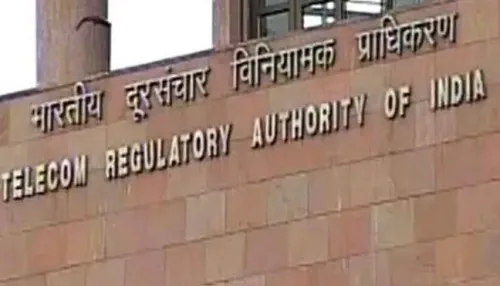
The Telecom Regulatory Authority of India (TRAI) has extended the deadline for submission of written comments on its vehicle-to-everything (V2X) consultation paper to 4 June 2026, and counter-comments to 18 June 2026, according to an official statement from the Ministry of Communications. The extension comes after stakeholders sought more time to respond to the regulatory framework paper released on 30 April 2026.
Background: The V2X Consultation Paper
TRAI released its consultation paper on the regulatory framework for V2X communication on 30 April 2026. The original deadlines were set as 28 May 2026 for written comments and 11 June 2026 for counter-comments. The regulator has now pushed both dates by a week to accommodate stakeholder requests.
'Keeping in view the requests of a few stakeholders for an extension of time for submission of comments, it has been decided to extend the last date for submission,' the Ministry of Communications statement said.
How to Submit Comments
Stakeholders may send their comments or counter-comments, preferably in electronic form, to Akhilesh Kumar Trivedi, Advisor (Networks, Spectrum & Licensing), TRAI, at advmn@trai.gov.in. For clarifications, Trivedi can be reached at +91-11-20907758.
What Is V2X and Why It Matters
Vehicle-to-everything (V2X) communication is a wireless technology enabling vehicles to interact with other vehicles (V2V), road infrastructure (V2I), pedestrians (V2P), and mobile networks (V2N) by sharing real-time data on location, speed, and surroundings. The technology is considered foundational to autonomous driving and smart traffic management.
India's stake in this domain is growing rapidly. The country has emerged as the fastest-growing connected car market globally, recording a 25% year-on-year increase in connected vehicle adoption in 2024, according to data from Counterpoint Research. Domestic automakers integrating connectivity features across vehicle lineups are driving this surge.
Global Connected Car Landscape
Nearly 75% of all passenger cars sold globally in 2024 came with embedded cellular connectivity, up from 71% the previous year, according to the Counterpoint Research report. The global connected car market grew 8% year-on-year overall. The report also projected that over half of all cars sold globally will feature embedded 5G connectivity by 2028, further accelerating V2X capabilities, faster data transmission, and autonomous driving development.
With India's connected vehicle market expanding at pace, TRAI's regulatory framework for V2X will be closely watched by automakers, telecom operators, and road safety authorities alike. The outcome of this consultation is expected to shape spectrum allocation and technology standards for the sector.
Point of View
But the underlying consultation is anything but. India is attempting to frame V2X regulations at a moment when its connected car market is growing at 25% annually — faster than any other country — yet its spectrum and standards architecture for V2X remains unsettled. The regulator's choices here will determine whether Indian automakers and telecom operators can build on a unified framework or fragment across proprietary solutions. Given that global automakers are already committing to 5G-V2X roadmaps for 2028, the window for India to align its regulatory posture with international standards is narrowing.
NationPress
11 Oct 2026
Frequently Asked Questions
What is the new deadline for TRAI's V2X consultation comments?
TRAI has extended the deadline for written comments to 4 June 2026 and for counter-comments to 18 June 2026. The extension was granted following requests from stakeholders who needed more time to respond.
What is vehicle-to-everything (V2X) communication?
V2X is a wireless technology that allows vehicles to communicate with other vehicles (V2V), road infrastructure (V2I), pedestrians (V2P), and mobile networks (V2N) in real time. It is a key enabler of autonomous driving and smart traffic management systems.
Why did TRAI extend the V2X consultation deadline?
TRAI extended the deadline because several stakeholders formally requested additional time to prepare their submissions. The Ministry of Communications cited these requests in its official statement announcing the extension.
How can stakeholders submit comments on the TRAI V2X consultation?
Comments and counter-comments may be sent electronically to Akhilesh Kumar Trivedi, Advisor (Networks, Spectrum & Licensing), TRAI, at advmn@trai.gov.in. He can also be reached at +91-11-20907758 for clarifications.
Why does India's V2X regulatory framework matter?
India is the fastest-growing connected car market in the world, with 25% year-on-year growth in 2024, according to Counterpoint Research. A clear regulatory framework for V2X will shape spectrum allocation, technology standards, and the pace of autonomous vehicle adoption in the country.